
By Nyles Stone, politics reporter

The start of the Spring 2025 semester at Virginia Tech was marked with uncertainty among students and faculty alike due to the January 20th executive order 14151, which was aimed at dismantling diversity, equity, and inclusion initiatives across all federal institutions. Many faculty grappled with the anxiety of the potential changes, while students all around the campus came together and planned for change, the professors, faculty, and staff were struggling to find a voice.
Dr. Brandy Faulkner, Professor in the College of Liberal Arts and Human Sciences talks about the uncertainty the DEI removal brings, and the amount of stress it caused to faculty when it was first announced.
“There was so much uncertainty. Nobody really knew what was going to happen or where we would end up. And so, there was nervousness, there was some fear, there was anxiety.”
Dr. Brandy Faulkner, Professor at Virginia Tech
The executive order, titled “Ending Radical and Wasteful Government DEI Programs and Preferencing,” mandated the termination of all DEI-related mandates, policies, programs, scholarships, funding, and activities associated with federal agencies. Furthermore, all DEI-related workers were forced to go on paid administrative leave Jan. 22. The order characterized DEI as causing a divide, promoting that special treatment was being given instead of equality, a claim that drew backlash from educators nationwide. Public universities like Virginia Tech that rely on federal funding followed suit with the executive orders, with many universities getting rid of grants, academic programs, and student and faculty support services tied to DEI.
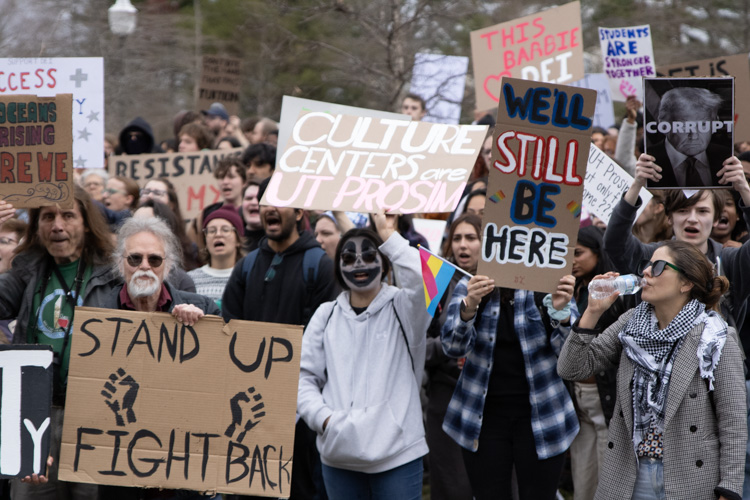
In response to the executive order, the Virginia Tech’s Board of Visitors came together to discuss the potential outcomes, and on March 25, the Board of Visitors voted to dissolve the university’s Office for Inclusive Strategy and Excellence, which oversaw more than 700 DEI programs across the university. This led to speculations of things that could be removed from classes, funding, and student organizations. The Board of Visitors decision sparked outrage around the campus, leading to protest outside of The Inn at Virginia Tech and Skelton Conference Center, where the Board of Visitors gathered to make their decision. Students, Faculty, and Staff all gathered in dismay over the decision to get rid of the DEI programs, with over 1,000 people in attendance.
“Absolutely, there was fear about classes like Africana Studies getting shut down, because we didn’t know,” Dr. Faulkner said. “We don’t yet have the answers to whether some of our courses are going to disappear, whether they might be renamed, whether the content will have to change. So, there is still a whole lot of uncertainty, even as we are at the end of the semester and already thinking about next year.”
The environment of fear and speculation paralyzed many departments, with an alarming amount of distress on whether some faculty were going to able to keep their jobs. “There was a lot of hesitancy. Nobody wants to be a target,” Faulkner explained. “It felt sometimes that to even talk about was to just speculate because we had nothing concrete.”
For Faulkner and other Virginia Tech faculty and staff, the implications of the DEI removal are deeply imbedded into their professional workplace. “That fear of the unknown is still continuing. Some things have been solidified; we know research funding for NSF grants and NEH, much of it has been taken away if it was classified as DEI-related,” she said. “Now there are more conversations about those kinds of things and how we will move forward, but you still see a lot of hesitancy.”
Yet, even with the removal of DEI-related programs and the Office for Inclusive Strategy and Excellence, none of this was new to Dr. Faulkner.
“As a black faculty member at a predominantly white institution, I have to assume day to day that this could happen at any time, that’s my lived experience,” Faulker said. “We know, if we study history, when there are gains, there will always be pushback and plans to undo the progress.”
This semester brought tough conversations into the classroom for Dr. Faulkner. With the loss of a grant and gaining more evidence of what Faulkner calls the university’s “constant and open opposition” she remains determined, aiming to stay vigilant, reminding students and faculty that they must continue moving forward. Dr. Faulkner even expressed happiness for the powerful student leadership seen on campus. “I’ve been so proud to see students decide that they are going to be engaged, to do what they can to protect not only themselves, but their community.”
When reminiscing about a moment of student leadership that stands out, Dr. Faulkner mentioned the We Won’t Go Back March for Civil and Human Rights, highlighting the march as something she was proud of. With the march being organized by multiple student organizations, Faulkner iterated her happiness for Black Mindedness founder Emon Green, with him being at the forefront of many of the university protests.
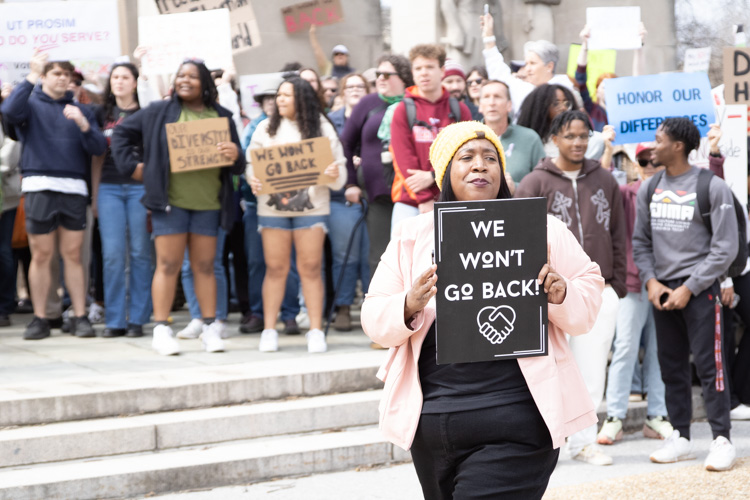
The civil rights march stood as a reminder for Dr. Faulkner, with the thousands of students, faculty, and staff in attendance, it showed Faulkner that she is not alone, saying that “there are plenty of people who don’t want us to take these progressive steps backwards.”
Despite the Board of Visitors decision, organizations like Black Mindedness have continued to advocate for inclusivity and community support. “Honestly, with Black Mindedness, it’s not difficult. Our organization has no affiliation with Virginia Tech, so we aren’t subject to the immediate impact of these type of decisions.” said Emon Green, a senior majoring in philosophy, politics, and economics and founder of Black Mindedness. “I think we will face a generative type of difficulty that comes with the process of building alternatives for what is being taken away with the dismantling of DEI.”
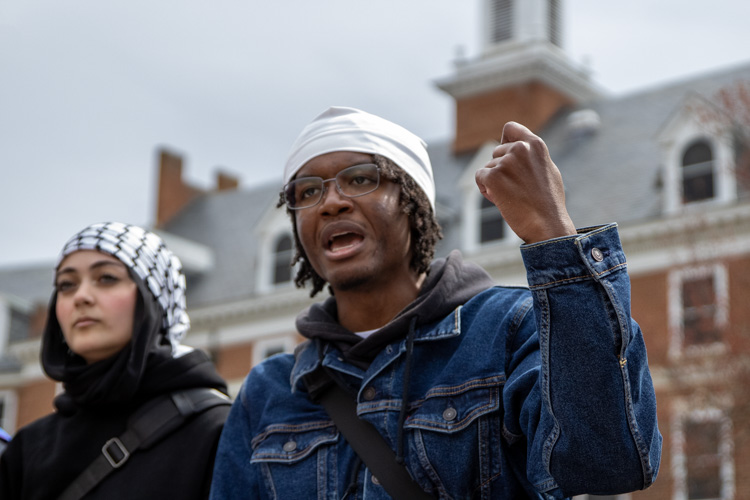
Julia Alexander, a senior majoring in wildlife conservation at Virginia Tech voiced her frustration with the dismantle of DEI and the Board of Visitors decision. I’m disappointed by the removal of DEI positions and the insensitive impression of the Board of Visitors towards the protesting students,” said Alexander.
While Alexander, unlike Emon, is not a part of organizations aimed at building community, she found the use of DEI beneficial when needing someone to talk to. With her majoring lying in the College of Natural Resources and Environment, a college according to an article published by College Factual, 78% of students in the College of Natural Resources and Environment are White, with African American making up only 1.7% of the college.
“As a student at Virginia Tech, I looked to the director of DEI in my college for advice, it felt more comfortable speaking with someone who understands the perspective of a minority at a predominantly white institution,”
Julia Alexander, Wildlife Conservation Student
Alexander elaborated that DEI was something symbolic, talking about the use of cultural centers in the Squires Student Center, the living-learning communities, and the acknowledgements of an inclusive campus all around the university. Alexander, who stayed three-years in the Ujima living-learning community talked about how communities like Ujima helped get opportunities that tailored to minority groups, “It was a way to stand out and get opportunities, DEI has supported my success in college, and I wouldn’t have as many professional and personal development opportunities without it.”
As the spring semester comes to a close and the effects of the executive order continue to unfold, the Virginia Tech campus remains caught between student outcry, and faculty hesitancy. While academic grants, programs, and voices within the institution have dwindled, many within the community are finding ways to speak out, with organizations like Black Mindedness continuing to advocate for civil justice
“It makes me mad as hell. I’m angry. People have poured their hearts, their time, their energy into making Virginia Tech better, a more welcoming, inclusive, fair, and equitable campus, To see that work just wiped away makes me extremely angry.”
Dr. Brandy Faulkner



 > THE NEWS FEED <