The Virginia Tech Climate Action, Sustainability, and Energy Committee met Monday, Feb. 23, at Newman Library to discuss new proposals for how the university should move forward with its Climate Action Commitment. Student representatives are urging others to get involved in their initiatives and to help create a sustainable Virginia Tech community.
As Northern Virginia fills with massive data centers, tech companies are increasingly turning to rural counties for land. Places like Montgomery County, Va., may not have proposals yet, but experts warn that land-use decisions like these can affect communities for generations.
Nearly every Google search, social media post or online purchase passes through a data center somewhere. Companies rely on these facilities to store information, run websites and apps and manage internal operations like payroll, human resources and sales.
Data centers operate at different capacities. Hyperscale facilities differ from traditional data centers in their ability to host and operate at least 5,000 servers and cover at least 10,000 square feet of physical area.
“The number of operational hyperscale data centers continues to grow inexorably, having doubled over the past five years,” according to John Dinsdale, a chief analyst at Synergy Research Group. Not only will numbers increase, but so will their size. Advances in AI (artificial intelligence)-focused, GPU (graphics processing unit)-powered infrastructure are expected to roughly double the computing capacity of the next generation of hyperscale centers.
Companies like Google build at such a massive scale due to the demand for AI, data storage and other big-data computing pursuits. Hyperscale facilities are expanding rapidly across the United States. The number of hyperscale data centers doubled between 2019 and 2024, with more than 135 coming online in 2024 alone.
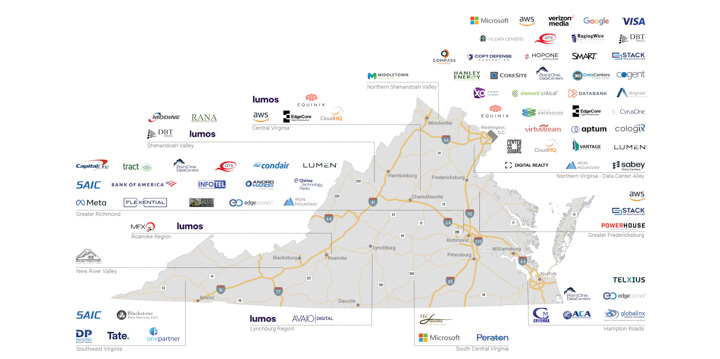
A map depicting the locations of major data centers across Virginia. (Map courtesy of Virginia Economic Development Partnership, vedp.org)
Today, local constituents in these communities are pushing back against projects once considered “guaranteed approvals,” due to economic and political resistance.
For residents like Carlos Balvin, a cinema major at Virginia Tech, the impact is visible. “They’re a real eyesore and a stain on what would often otherwise be a beautiful day,” he says.
With this ongoing growth, companies are shifting to locations that offer large tracts of cheap land compared to dense urban areas.
Jurisdictions in Northern Virginia heavily invested in fiber-optic and network infrastructure to build a higher network capacity, which has helped attract data center development. Many companies in the region overlap with the defense and logistics industry. By developing near Washington D.C., a strategic decision, companies are closer to that infrastructure.
“In many ways, data centers are probably taking advantage of the fact that the infrastructure was prioritized here and developed here,” says Margaret Cowell, associate professor of Urban Affairs and Planning at Virginia Tech.
Rural communities offer reliable grid connections for resource adequacy and open terrain, making line-of-sight transmission easier. Areas with less development become easy targets, potentially swayed by financial incentives.
“In the past, there were debates about whether it was fair to site landfills in poor, rural communities that didn’t have much economic opportunity,” says Cowell. “Waste management companies would approach them and say, ‘You’ve got land, you could make money off it.’” While landfills and data centers are quite different, weighing their strategic approaches may offer insight into the industry’s next moves.
For Montgomery County, the primary operating data center facility is located in Blacksburg. Brush Mountain Data Center, located within the Corporate Research Center at Virginia Tech, is a subsidiary of Advanced Logic Industries, a Virginia-based company. Brush Mountain is a smaller-scale data center compared to the majority of facilities located in Northern Virginia.
Planning commissions approve development for several reasons. Developments could be seen as a way to increase the tax base or improve the economic conditions within your community.
“If you’re doing smart economic development, you’re concerned with the workforce. If you’re going to say yes to one of these companies, ideally, there would be a guarantee of a certain number of jobs being created,” says Cowell.
Michael Cary, research assistant professor in the Department of Agricultural and Applied Economics at Virginia Tech, wrote in an email, “The one area of research that does have some preliminary results that I am aware of is labor markets. There is no evidence of job creation beyond temporary spikes in construction jobs.”
This means that as research further develops, local politicians will still consider these impacts in making economic decisions for their constituents. As data centers continue to grow across the United States, including Virginia, it’s important to remember that if constituents are loud enough, they can have a real influence on what does or does not develop in their communities.
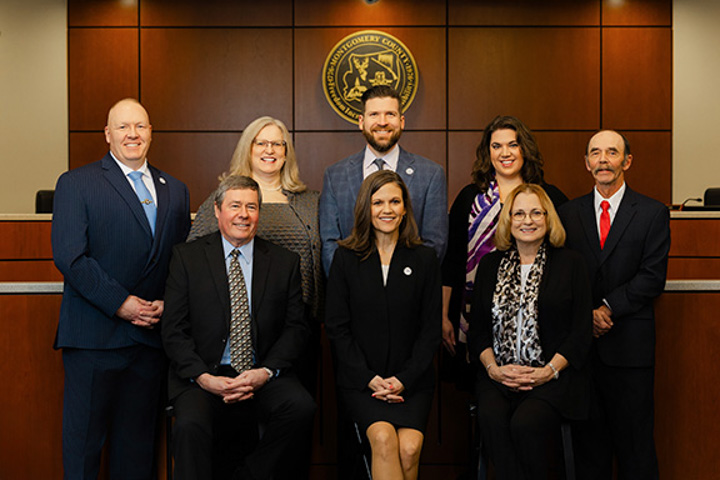
Montgomery County Board of Supervisors pose for a group photo. (Photo courtesy of BoardDocs)
The Montgomery County Planning Commission said there are currently no proposals or zoning changes under consideration for data centers, and the Board of Supervisors has only discussed the issue. Planning staff said no formal action has been taken beyond preliminary discussion.
“Montgomery County probably doesn’t draw much benefit from a data center, but it could be persuaded by promises of revenue,” says Cowell. “There’s a real tension about whether we should allow this in our backyards, because, in some ways, it feels exploitative.”
Local officials say the WHO withdrawal is unlikely to cause changes for Blacksburg’s flu season. Here’s why.
On Jan. 22, 2026, the United States withdrew from the World Health Organization (WHO) through an executive order signed by President Donald Trump. The WHO is a United Nations global health agency with 194 member states and includes public health experts such as doctors, epidemiologists, and scientists. The organization operates in more than 100 countries, with efforts to “respond to health emergencies, promote well-being, prevent disease and expand access to health care,” according to its website.
Since the U.S. joined the WHO back in 1948 as one of the organization’s initial members, the country has played a crucial role in supporting the WHO as the largest single donor and funder. By contributing $1.284 billion during the 2022–2023 biennium, which is 12-15 percent of the organization’s total funding, the U.S. has significantly helped provide assistance to essential health programs in identifying and responding to emergencies, preventing threat of disease spreading across borders and advancing systematic health systems by focusing on more vulnerable populations around the world.
In March 2020, the WHO declared Covid-19 as a global pandemic. This meant working across borders from the initial report of the virus. In crises such as the Covid-19 outbreak, the WHO plays an important role in connecting experts, initiating response protocols and providing guidance on public health concerns across the organization.
On January 10, 2020, WHO provided a package of technical guidance with advice for regional emergency directors to share with WHO representatives in countries on how to “detect, test and manage potential cases.”
The U.S. Centers for Disease Control and Prevention (CDC) is a federal public health institute. It provides resources and science-based guidance to federal, state and local health agencies. During the pandemic, the CDC activated its Emergency Operations Center (EOC) to coordinate response efforts nationally and share information with international partners, including the WHO.
The New River Health District is an example of a jurisdictional public health department that relies on information exchange from the CDC to guide decisions and stay informed about national and international developments.
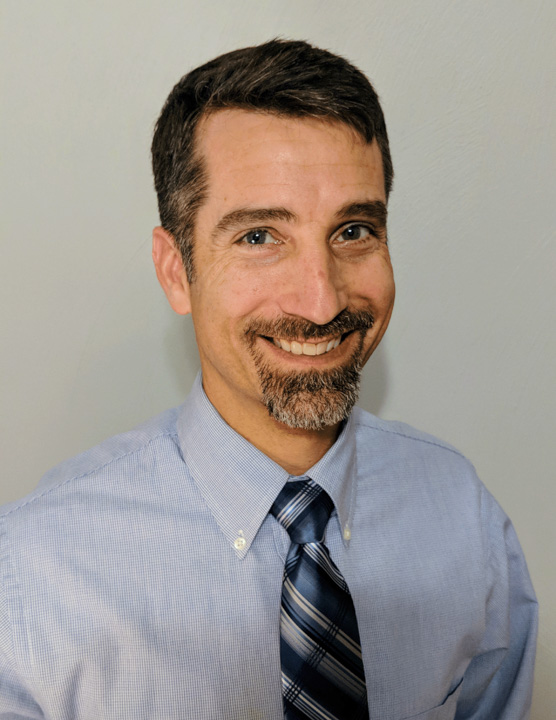
Sr. Epidemiologist Jason Deese from the New River Health District addresses what this might mean for the community and for Virginia Health operations.
His comments have been lightly edited for length and clarity.
Dr. Jason Deese
How does disease surveillance typically work at the local level?
Our surveillance structure starts with a doctor or other provider who has a high suspicion of something on the [reportable disease] list. They can lab-confirm it or report it if they strongly suspect it. Then we do an investigation.
Here’s an example. Say someone with whooping cough gets diagnosed. The provider reports it to us, we in turn find the patient to identify close contacts and bounce it against the CDC’s case definition, a set criteria.
The verified case is then sent to the Virginia Department of Health to look over the work, who will pass it along to the CDC. The CDC collects and verifies this information, which becomes part of the surveillance record.
When would the health district get directly involved with flu cases?
If there’s a novel strain or an outbreak in an institution. If Virginia Tech has a huge number of flu cases and we can relate it to a specific dorm, then we might call it an outbreak of flu, a condition above what’s expected. Our people at the state will evaluate it and offer up resources and if it turns out to be some type of strange flu, then the CDC will offer up resources as well.
Does being in a college town change how you approach public health?
Yes, a lot of communities around the nation are hosting universities… we all have to be conscious of the fact that you’ve got international students and students that will go to another continent for their field work. Sometimes they come back with a disease that’s on this list.
I’ve seen malaria, dengue fever or typhoid, and that kind of just comes with the territory, because people travel, then they can come back with those things.
From your perspective, will the U.S. withdrawal from the WHO change how you do your job locally?
From the Virginia perspective, I personally don’t see my daily job or ability to respond to anything that’s on this list as impacted at this moment.
Disease surveillance starts with a patient. Someone who’s not feeling well will generally go in to see a provider, and if they — the provider — sees or suspects someone of having any of these things (reportable disease), it gets reported to the local health department, and we address them according to CDC protocols. So, I don’t really see it changing at the local level at all.
Some people worry about delays in global communication. Is that a concern locally?
Domestically, the ports of entry with CDC are doing targeted health screenings and reporting those rapidly to state and local jurisdictions. That side of things isn’t going to change. Most of these illnesses have come from overseas, individual cases, and you’re not going to catch every single exposure before they board a plane.
What we’re most concerned about is detecting it rapidly when they arrive here. We have a mantra — it’s called person, place, and time — it begins with an individual. If you ask the right questions in the right way, you get the right answers.
What do you want people to understand about public health locally?
Virginia has a robust public health system, from the local level up, with really good professionals that work in the Virginia Department of Health and strong collaboration with institutions like Virginia Tech.
One Health – connecting human, animal, and environmental health – is a big focus, along with encouraging healthier lifestyles through nutrition, physical activity, and reducing risks like tobacco use and diabetes.
Who this will affect
Although local experts don’t foresee any changes in public health concerns at the state and local levels, the U.S partnership with the WHO was extremely impactful for low- and middle-income countries. These essential health programs rely heavily on global health financing, which allows for improvements that optimize resources, address health disparities and improve equitable access to care.
Even though local communities like Blacksburg are not affected, it’s crucial to consider the impact on the communities that will be affected without the funding previously provided by the United States, and what this could mean for international access to critical healthcare services.

 > THE NEWS FEED <