Michaela Scott, Crime, Safety and Justice Reporter
Pedestrian safety in Blacksburg has become an urgent concern after multiple incidents involving Virginia Tech students. This video explores the real impact of these crashes, highlighting how they have affected the community and the people closest to those involved. Through personal stories and student perspectives, this piece aims to raise awareness and encourage safer practices on the road.
Michaela Scott, crime, safety, and justice reporter
For the first time in county history, Pulaski now has a fire marshal focused solely on the safety of the county’s citizens. Officials say Zach Dunnigan’s new role adds an extra layer of protection for residents, business owners and visitors. For some, this will be the first time their businesses receive consistent, county-level fire inspections.
Michaela Scott, crime, safety and justice reporter
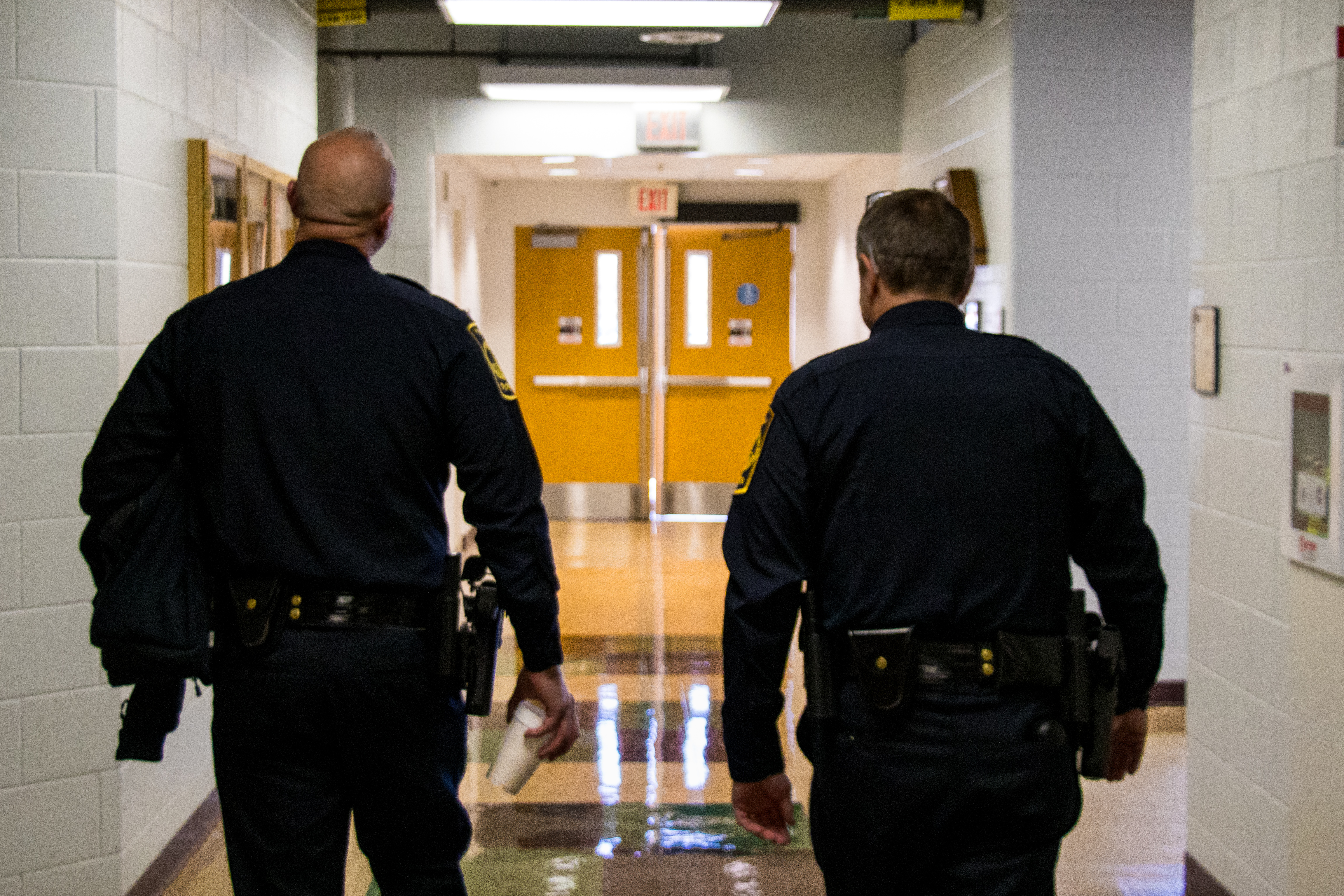
Virginia Tech Police Department Chief Deputy Tony Haga and Chief Mac Babb leave a meeting in the campus Public Safety Building on Feb. 12, 2026. (Michaela Scott/TheNewsFeedNRV.com)
Federal immigration detentions have surged nationwide this year, and the detention of a Virginia Tech student early last July continues to raise questions in the New River Valley about how federal immigration policy intersects with local policing.
As of Dec. 26, 2025, there are 212 active detention centers operated by U.S. Immigration and Customs Enforcement, which is roughly double the number in operation at the start of the year. Some local law enforcement agencies across the country have participated in what are known as 287(g) agreements, which are federal partnerships that allow trained officers to perform certain immigration enforcement functions. Similarly, at some universities, campus police departments have entered agreements with the federal government authorizing officers to assist in immigration enforcement.
According to ABC News, the Trump Administration’s surge in law enforcement has created a chilling effect on student attendance in districts nationwide. Thousands of students in counties across the U.S. are being reported absent from school daily in fear of ICE agents.
In Virginia, however, state policy shifted earlier this year.
On her first day in office, Gov. Abigail Spanberger rescinded Executive Order 47 (2025). It had originally required state law enforcement agencies to cooperate directly with federal immigration authorities and encouraged participation in federal deputization programs.
In essence, the order removes the initial mandate, allowing state law enforcement to refocus on their core responsibilities, such as keeping Virginians safe.
The move marked a shift in state policy and offered reassurance for students. The Virginia Tech Police Department says their mission has always remained the same.
“Nothing changed from the day before to the day after the new executive order,” said Mac Babb, VTPD chief of police. “We’ve been the consistent agency all along in our focus on supporting the community.”
However, social media and conversations across campus have raised questions regarding whether VTPD would honor a criminal ICE detainer.
Anonymous posts warning of ICE sightings have continuously circulated on Yik Yak, a location-based social media, amplifying uncertainty among some students about what authority campus police hold in immigration matters. Babb emphasized that the department encourages students to contact campus police if federal agents are reported nearby, in order to verify legitimacy and to prevent unnecessary escalation.
Babb added that none of these claims have been proven to be true.
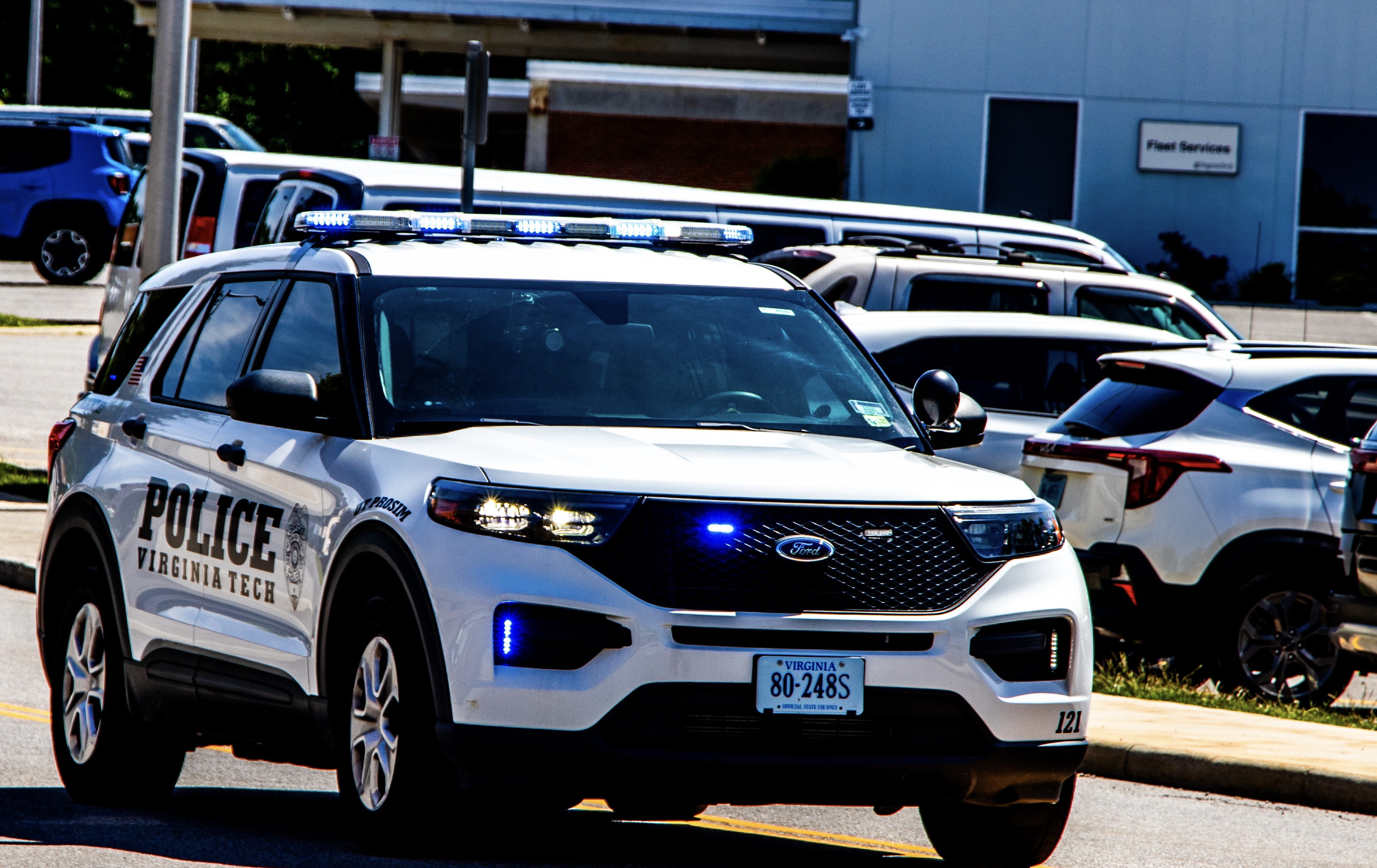
Virginia Tech Police Department officer responds in a patrol vehicle with emergency lights activated on campus on Feb. 12, 2026. (Michaela Scott/TheNewsFeedNRV.com)
“A lot of what VTPD would do is more for the community than it would be for ICE, but it would be perceived as, oh, you’re helping ICE.” Babb said. “If ICE was on campus, our purpose there would be to deescalate the situation, so we don’t expose more people to investigations by ICE and potentially subject additional people to arrest, which doesn’t need to happen.”
In regard to the Virginia Tech student detained in July 2025, Babb explained that VTPD was not a part of the enforcement action but later conducted an internal review to assess preparedness and potential implications.
“I think it’s important that everybody understands that the detention last July occurred after an actual criminal event, and unfortunately, it triggered an inspection during the arrest process,” Babb said. “So those are the types of things that we try to watch out for, and to make sure that we don’t have more people end up in situations where they’re under review as well.”
With international students making up 12% of the total student population at Virginia Tech, Deputy Chief Tony Haga explained that his team has devoted time to connect with the student population to build assurance in students.
“Some of those students are coming from places of origin where there is no relationship with the police department at all,” Haga said. “So already stepping into our community, we are somebody they’re not going to trust.”
To bridge that gap, VTPD has partnered with the Cranwell International Center to provide presentations and informational sessions outlining students’ rights and campus procedures.
University leaders say that those efforts reflect a broader institutional commitment to international students.
“If we’re going to save the environment, cure cancer, and develop the hottest technology in AI, we need to know how the world interacts with it,” said Mark Owczarski, VT university spokesperson. “From the very beginning, we truly welcome and seek out individual international folks from all over the world to come here.”
Babb reiterated that immigration enforcement is a federal responsibility, and that VTPD’s role remains focused strictly on criminal matters and campus safety.
While state policy shifts and national enforcement trends continue to evolve, university officials maintain that their role remains focused on campus safety rather than immigration enforcement. For some students, however, broader national debate means concerns about immigration policy are unlikely to fade.
“In light of current events, say what you will, but the values and the approach that Virginia Tech takes haven’t changed,” Owczarski said.
Michaela Scott, crime, safety, and justice reporter
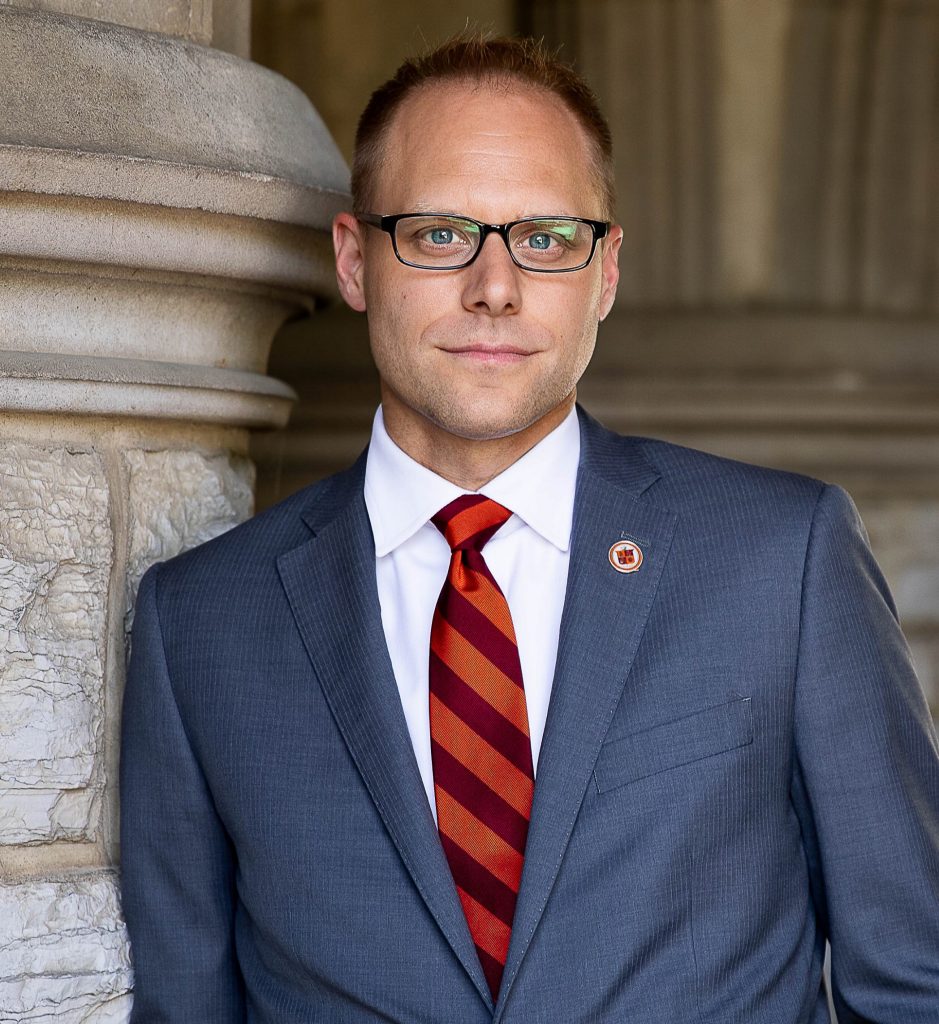
Photo courtesy of VT Emergency Management homepage. Executive Director of VT Emergency Management Andrew Marinik shares a look inside Virginia Tech’s winter weather calls.
As winter weather progresses in the New River Valley and winter storm challenges arise, executive director of Virginia Tech Emergency Management, Andrew Marinik speaks to the critical safety measures and response initiatives overseen by his office.
Over the past two weeks, Virginia Tech has reduced operations three times due to the major East Coast storm. As executive director, Marinik’s responsibilities include setting direction, leading the office, and prioritizing safety on campus and across Blacksburg.
[This story was slightly edited for length and clarity]
When a major winter storm is forecasted, what does the decision-making process actually look like from the first weather alert to a campus-wide decision?
Much of what emergency management does is coordination. We don’t shovel the snow.
We are coordinating across different groups to make sure that we can minimize the impact to the extent we can. Weather is not reliable outside of 48-72 hours at best. The balance of what we do is making people aware there’s the possibility of something.
When something like winter weather comes in, we’re looking at transportation networks. We’re looking at our ability to feed, educate, keep the power on, and make sure that we have public safety assets in place. We can’t cancel emergencies. So even if we’re going to reduce operations today for classes, we still have to make sure to the extent that we possibly can that fire trucks, ambulances and police cars can get around campus.
You’ve been at Virginia Tech since 2007. Can you walk me through a past winter storm that was particularly challenging for the university?
I will say this past weekend was challenging for a couple of reasons. The past weekend’s forecasts were all over the place. At one point, it said 36 inches. Thirty-six inches would be a serious problem for us in a weekend.
Another one that comes to mind is in 2009. It was during commencement and we bring in tons of people along I-81 and 460, and the snow just dumps.
And it got so bad in that storm that cars just got parked on I-81 and people walked into Christiansburg. They gave up on their car, couldn’t move, and were freezing, so they walked into town looking for help.
Commencement, athletics events and stuff that has a bigger audience are much harder to delay or relocate.
You can’t take a basketball game with an ESPN contract and be like, we’ll do it next week. It just doesn’t work that way. For commencement, we can’t just be like, I know your family flew in from Oklahoma. We’re going to do this again next week because it’s bad weather.
Those add some extra challenges to the process.
What preparations are happening on campus before most students even realize a storm is coming? How is your team specifically planning for the uncertainty?
We start with what we call SITREPs, which is just an old military term for situation reports. We’ll do weather briefings if nothing’s actually happened yet, because all we’re really saying is, here’s what we’re expecting to happen.
We start getting everybody to think about it. The different organizational operational people, Facilities on campus, also monitor the weather all the time because they’re responsible for all buildings and grounds. We wrap everybody into the same call or email.
The snow emergency route is part of our preparation. If you look at a map of the snow emergency route, you’ll see that it largely brings us around residence halls, so that if there’s a fire, EMS, law enforcement emergency, we’re prioritizing the ability for those emergency services to get to those buildings, and to get to where our people are.
We try to give everybody time to react. And then the messaging itself takes a while to try and craft each individual word to have the meaning you want it to have.
I know that a lot of students often ask why decisions aren’t made earlier – what goes into determining the timing of alerts and announcements?
The timing is often the nature of the storm. When we make a decision on that, it’s a safety decision, primarily.
We also incorporate if Blacksburg Transit is able to operate. Lots of people use Blacksburg Transit. If the BT says, ‘we’re not going to be operating,’ it makes it difficult.
I don’t know if you noticed this morning, (Jan. 29) we were notified very late, that Blacksburg Transit had an issue with a bunch of their buses, and so very late in the morning, they said, ‘we’re not running a full schedule.’ I’m sure that was impactful.
We tried to scramble and get a message out really quickly for as many people as we could within a few minutes of getting notified about that, in hopes people would realize it.
We have a conversation, a recommendation is made, and then senior leadership makes the ultimate decision on whether we’re open or closed.
After a major storm, how does your team evaluate what worked and what needs improvement?
That’s a very common thing for our office. Emergency management has its own processes and cadences.
We document a lot, keep track, and write SITREPs. We’re documenting who’s doing what and what they’re doing and what kind of issues we’ve had, and have we had accidents or have we had slip and falls on campus?
And then we try to use that to help us improve our process. We put a huge emphasis on continuous improvement. Nobody is perfect. We can always do better.
The idea is to try and do the absolute best you can and then find any opportunities to do better moving forward.
Is there anything that we or haven’t discussed that you would like to touch on before we wrap up this call?
One of the things that we’re always looking for is to try and engage the students on taking more ownership of their safety, security, surroundings, like checking the weather every day and building that habit.
Our hope, our dream, if you will, is that every Hokie, when they graduate, has these really good preparedness habits built in, and that they go off to wherever they work, and everyone’s like, ‘man, you guys are always so prepared.’
We would love for that to be one of the cultural norms of Virginia Tech, that these students leave here fully prepared.

 > THE NEWS FEED <