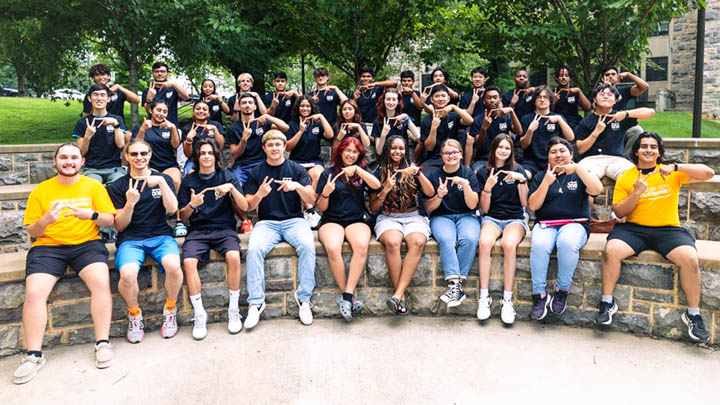
Attacks on media leaves uncertainty for graduating seniors

By Janae Neely, education reporter

It seems that with each passing day, the media industry takes another hit. Whether it’s the cessation of federal funding or banning select news organizations from the Oval Office, the Trump Administration has initiated an attack on the press and media within its first 100 days in office. 

Journalism has been present in society since the beginning of time, with a knack for being able to shift and adapt its business model to fit the needs of its audience. However, these hits to the press have left an overwhelming cloud of uncertainty over the media space. This uncertainty has especially affected graduating college students who are looking to build careers within these spaces. 

For seniors who are looking for advice on how to enter the media industry, luckily, at Virginia Tech, there are events held in an effort to help these students and educate them with the resources available in order to have a long and successful career. One of these events is Comm Week, a week full of professional and networking events to help students prepare for post-grad careers. This year’s Comm Week was organized by Brandi Quesenberry, Undergraduate Director and Senior Instructor in the School of Communications. 
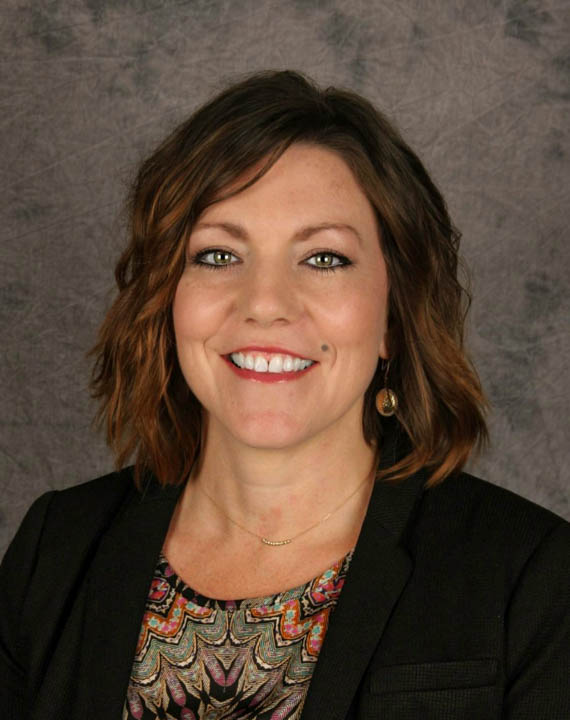
Brandi Quesenberry. Image Credits: Virginia Tech

“Comm Week is something that we started in 2018. We took a hiatus for a couple of years because of COVID, and it really is an opportunity for the School of Communication to offer all of our majors, so journalism, sports media analytics, comm, PR, and advertising, as well as any of our minors, to engage with us as a falculty or as a school, as well as our organizations” said Quesenberry. “What we want to do through an event like Comm Week is highlight our student organizations, provide those organizations opportunities to better promote or have a wider promotion of events and connections that they have, and what their goals and missions are”. 

This year’s event included partnerships with Lambda Pi Eta, the Communications Honor Society on campus, and the Society of Professional Journalists. One of the major events featured guest speaker Ryan Ripken, a former baseball player who now owns his own media company. Navigating the post-graduate world can be tricky and confusing, Quesenberry gives this advice to those enetering the media and press space during this fragile time, “I do think it’s important to develop relationships with your faculty members, who have either worked in the industry or potentially still work in the industry, and who have their finger on the pulse of research and current trends in the industry, even if they are full time faculty members.” Quesenberry also noted that, “You can lean into their networks, and certainly pick their brains and find out more information from them.” 

Lastly, Quesenberry wants students to keep in mind that forging connections and networking is important at these times, “Make sure you stay marketable with your skills. So, the skills that we are teaching in our classes, making sure that you’re taking full advantage, Virginia Tech has tons of resources through LinkedIn Learning. There are just a wide variety of options to help you hone your skills, so regardless of what the landscape is politically or what the economy looks like, you’re gonna be marketable, you’re gonna be employable in a wide variety of industries”. 

The Trump Administration’s continuous attack on the press and media has left a lot of questions surrounding the legality of these executive orders and how this affects the meaning of freedom of speech and freedom of the press. There are also several questions regarding President Trump’s ultimate goal in his slow but steady attempts to censor the press. Understanding what this means is essential to graduating seniors who are building their careers within the media space. 

Dr. Cayce Myers is an author and professor of Communication Law at Virginia Tech. When speaking on these executive orders, Dr. Myers stated, “I don’t know if it has infringement rights on freedom of speech, but it certainly does pivot the business model of those organizations.” he continued stating, “I would expect that in some ways, these platforms will survive through a different model. The public television model and also the public radio model come out of an era that is pre-streaming cable reality. And so, the way they find their marketplace is very different than the world they entered.” 

Dr. Cayce Myers. Image Credits: WDBJ7.

In terms of what these orders mean for the quality of news sharing, Dr. Myers commented, “Now what does this look like in terms of programming quality, what does this mean in terms of some of the things they’ll be able to do? That likely will change.” Myers continued, “But, I think that this overall will be a shift that’ll change the nature of their business. I don’t know that it will eliminate them completely, I think they may be able to function, and their content will get out in other ways, but that remains to be seen.” 

Many have wondered what the end goal is for the Trump Administration, and what it is exactly that they want to come out of this. Dr. Myers has two different reasonings for why President Trump has set his sights on the press, “Well, I think the ultimate goal is reduction of cost of government, and that’s an overarching goal that like I said, this has been a Republican talking point for a long time, cutting the bureaucracy of the government and streamlining it and providing services that are essential, and then cutting extraneous services. I think another part of it is that there is an underlying criticism of television, of public radio, that it has a very left-winged bent to it and it’s not a nonpartisan outlet, it’s a partisan outlet. And so, I think there is this sense of a lack of support for continuing funding for something that is kind of seen as antithetical to many of the Republican talking points.” 

One of the most interesting things about President Trump’s time in office thus far is not only the surplus of executive orders he has signed, but the quickness of these orders.

“The problem with executive orders is that they don’t have the staying power that a law does. The staying power is just not the same. So there’s this immediacy, but there’s not that long-term effect. It gives, I think, in some ways, in that context, you can have a sort of whiplash for people to kind of figure out ‘What is the norm here?’” – Dr. Cayce Myers, Communication Law Professor 

Many view Trump’s orders as a way to control the narrative and only push out the stories that he believes are worthy of being news. For graduating students who are worried about the uncertainty surrounding the press, Myers says keep these things in mind “I think for students entering the media world, what they should be more concerned about is the economics behind the media structure. Because this is a small subset of media when you’re talking about public funded media. When you’re talking about media in general, we’re in a world of convergence, and we’re in a world where the most interesting thing is that you used to have these big corporations like CBS News or ABC. And they’re being competed with and being outdone by individual podcasters and people who have no infrastructure or very little, and it is like they are able to compete with these multi-million dollar industries.” Myers continued, “I think that is the bigger challenge is how do you keep up with this changing economic structure of the media.” 

“In the creative fields, you have to market yourself differently. A lot of other fields don’t require a portfolio, because you want to be able to showcase your work. I think you also have to learn to describe things a little bit differently, because you have to describe your art.” – Leigh Anne Byrd, Assistant Director for Career Development and College Relations 

Byrd advises that flexibility, persistence, and perseverance are the most important qualities to have when attracting employers in the changing media world. “The keyword that we always heard during Covid was pivot, so thinking about different avenues or different places that you didn’t have in mind at first.” Byrd also discussed the increasing importance of networking and prioritizing quality over quantity when it comes to filling out job applications. 

The media world has seen many changes over the past five months, and a lot of these changes don’t have solid outcomes or solutions. But this isn’t anything new. Journalism and the media have consistently revamped themselves and have still survived despite it all. Media will always have a place in society, and no amount of censoring can change that.

Virginia Tech continues the fight against hazing

As hazing continues to have a prevalent role on college campuses, Virginia Tech is taking steps to prevent hazing where they can. Adam’s Law, a Virginia anti-hazing law passed in 2022 has been included in Virginia Tech’s hazing education. These preventions are made in the hope of stopping hazing at Virginia Tech and within higher education.

On The Chopping Block: Where DEI Stands During Black History Month 

By Janae Neely, Education reporter 

Universities and higher education are left with uncertainty after President Trump’s executive order, calling for the elimination of diversity, equity, and inclusion in all spaces of the federal government. The executive order conveniently dropped less than two weeks before Black History Month. 

Virginia Tech’s Black History Month post Photo Credits: Virginia Tech Instagram

Why it matters: President Trump has yet to clearly define what is viewed as DEI programs which leaves heritage months like Black History Month hanging in question of whether that violates the executive order. 

  • Virginia Tech has several organizations dedicated to diversity and inclusion. One is the Student Opportunity & Achievement Resources Program, more commonly known as SOAR. This support program is “dedicated to welcoming and retaining underrepresented minority students at Virginia Tech and promoting their success through campus collaborations.” 

The big picture: The Virginia Tech campus has been left in a state of confusion as the state of its DEI programs has been threatened. Zora Dancy a student intern with SOAR noted that diversity, equity, and inclusion span much broader than people realize. 

  • “A lot of people are realizing that DEI isn’t just about race. It’s about people with disabilities, it’s about veterans, and a lot of aspects of this presidency that we’ve seen in the last few weeks, you’ve seen a lot of people say “Oh well I didn’t know’ yeah because you didn’t do your research, you’re just going based off of what you think and what you hear.” Dancy said. 
  • When speaking about the misconceptions regarding DEI, Dancy noted, “…DEI is more than just a ‘Black vs. White’ issue. There’s so many layers to the people who are affected by DEI.” 
  • “This idea that DEI is somehow saying that it’s not allowed or open to white people is really interesting to me because a lot of these spaces did have to start and be developed because Black people and other people of color were not welcomed into white spaces,” Dancy concluded. 

The push for answers: Virginia Tech President Tim Sands, officially addressed Trump’s executive orders at his State of the University Address this past week. 

  • “I would like to acknowledge the challenges that many of you are facing as we interpret and respond to a flurry of executive orders that impact higher education.” Sands continued, “We will follow the law, but we’ll do so once we fully understand the directives and the applications to Virginia Tech. 
  • Sands concluded his statement, “We do not yet have many of those answers, but we are collecting information and providing guidance where we can.
President Tim Sands at the 2025 State of the University Address

Zoom in: Mark Owczarski, Interim Vice President of Communications and Marketing provided insight on the future of inclusion at Virginia Tech and the institution’s stance. 

  • “We believe that in order to do our very best teaching, research, and engagement which is our three missions, it’s why we exist, we need to be able to attract the very best talent. Everybody and anybody who wishes to engage, regardless of who or what they are and what they believe in…” Owczarski stated when asked about the state of DEI at Virginia Tech. 
  • The university’s biggest challenge is that a clear definition of what is classified as DEI has yet to be stated by the Trump administration, “It’s interesting because, the fundamental response is ‘Okay, so we have these orders, what are we doing?’ and really at this point we’re at the stage, we’re trying to understand what they mean.”

What we’re watching for: The town of Blacksburg is going to hold upcoming meetings to further address the executive orders made by President Trump once more details are released. 

  • “I think when you start to take away Black people and people of color when you start to take them out of whatever space, they’re gonna realize how necessary they were in that space. Any person of color, especially Black people, have to work twice as hard, three times as hard to get to where you wanna go. So you put in all that work and make it to that position, you get your degree, and then they’re pulling you out of these spaces, obviously, it’s frustrating but just wait and see because they will quickly realize how much you are needed.” said Dancy.

The Price of Education: Unpacking the Financial Strain on First-Generation College Students 

Image Credits: Virginia Polytechnic Institute and State University

By Janae Neely, Education reporter 

The bold “Congratulations!” and confetti bursting from a college acceptance letter evoke feelings of exhilaration, pride, and the promise of endless opportunities. However, for first-generation students, those initial feelings quickly fade as they are faced with an overwhelming question; how are they going to pay for it? 

According to a 2024 study, the average cost of college tuition has risen 141% over the last 20 years. And while resources such as student loans and grants are available, those systems can be faulty and don’t succeed in helping first-generation students. Citizens and Everfi reported, “51% of first-generation students said they were nervous about paying for college” and 11% of students said that the price of college wasn’t worth it. 

Over 6,000 first-generation students have found a home at Virginia Tech, and the university has taken strides to make sure that first-generation students have easy access to education and resources regarding finances and how to pay for higher education. 

GenerationOne, a living-learning community created solely to provide a support system for first-generation college students, held an event this Thursday called Thinkful Thursday: Being Fruitful with Your Finances/FAFSA. This event, hosted in collaboration with Virginia Tech’s Financial Aid Office, educated students on the federal student loan process and provided tips on how first-generation students can manage their finances over the next four years. Hannah Banks, a sophomore at Virginia Tech and a Student Leader in GenerationOne is extremely familiar with the stresses of the financial aid process, “On a scale of one to ten, I would say the stress of financials was a seven when I was deciding where to go to college. Finances were my deciding factor to come to Virginia Tech rather than JMU because they gave me more money.” 

Financial Aid Specialist, Diane Roberson headlined the event and gave thorough tips on how to navigate FAFSA, scholarships, grants, and questions from other students on how to navigate the strain of finances on the college experience. 

“It’s extremely important to have events like this,” said Banks, “When you’re coming to a large university like this, it is refreshing to be in a community where people have gone through the same experience as you.” A 2022 study conducted by The Ohio State University found, “First-generation students were significantly more likely to use federal student loans, private student loans, money from a job, scholarships/grants, and credit cards to fund their education…” (Rehr et al., 2022). However, the study also showed that first-generation students have less knowledge than their counterparts when it comes to financial literacy and financial self-efficacy. This highlights a clear issue in the education and resources that first-generation students receive. 

Image Credits: Ellucian

One of the resources that first-generation students have access to is scholarships. However, only two scholarships out of the 3,000 that Virginia Tech offers are designed for first-generation students. This by far is not enough to help first-generation students with grants and funds. Savannah Stephens, a first-generation senior felt like she didn’t receive the proper education when applying to college, “The FAFSA process was so confusing, and no one in my family had done it before, it was hard trying to find the right information and figure out what to do.” The lack of resources only felt like it continued once Stephens reached Blacksburg, “There were and are plenty of social, emotional, and academic resources but I didn’t need any of those, which wasn’t helpful. I received no financial help as a first-generation student which was extremely stressful at the time.” 

In a 2024 article discussing the difficulties of the FAFSA process, the CEO of iMentor, Heather Washington explained, “…I think students are generally sort of frustrated, but I think the real frustration starts to set in, and I think we’re starting to see this with each passing day as the acceptances come in,” Washington continued, “It almost undermines their excitement about getting in and going, because they either haven’t completed the FAFSA, they’re stuck getting it in, or they just submitted it so they know that this acceptance letter isn’t really telling them yet what they can do with this college acceptance that they have” (Anderson, 2024). 

In almost every area, first-generation students are starting at a disadvantage. It is constantly an uphill battle that needs to be recognized by universities, advisors, and organizations like FAFSA. There needs to be sectors to help these students so that they can succeed to the best of their ability.  Experiences continue to show the significant impact that finances have on first-generation students, highlighting the delicate balance between their success and discouraging them from pursuing higher education altogether. “There is definitely more to be done,” Banks concluded, “ First-generation students still don’t have the resources we need. I think it would be interesting to see a first-generation center where thousands of Virginia Tech students who are first-generation can have access to more resources.”