Since 2016, Virginia Tech turfgrass researchers have been studying “Bluemuda”, a grass seeding system meant to keep grass green all year. While it shows promise, managers say it can be tricky to maintain in practice.
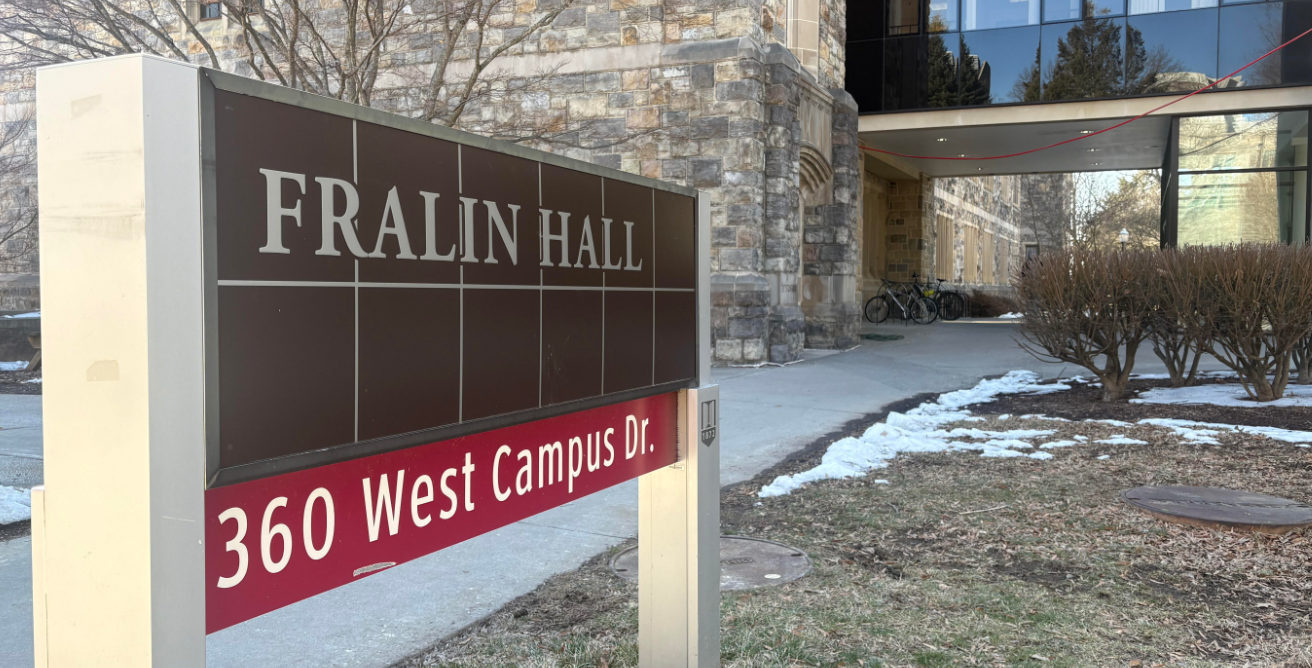
Fralin Hall at Virginia Tech, named for donors William and Ann Fralin. The Fralin name also represents the Fralin Biomedical Research Institute in Roanoke, home to Dr. Ryan Purcell’s lab. Blacksburg, Va. Feb 13 2026
For Dr. Ryan Purcell and his team at Purcell Labs, CRISPR is a key tool for understanding the genetic roots of psychiatric disorders. By engineering neurons with high-risk mutations, including the 3q29 deletion, the lab can see how tiny changes in DNA affect the developing brain, laying the groundwork for future discoveries.
CRISPR, a powerful gene-editing technology, allows Virginia Tech researchers to precisely modify DNA to uncover how it affects neurological disorders such as schizophrenia and autism. At the Fralin Biomedical Research Institute, Purcell and his team engineer human neural cells that mimic high-risk genetic mutations. This process allows them to directly observe how specific DNA changes affect brain development and function. One of the lab’s major projects focuses on the 3q29 deletion, a rare chromosomal region strongly associated with schizophrenia and other neurodevelopmental disorders.
Photo of Dr. Ryan Purcell. Photo by Fralin Biomedical Research Institute
Purcell has been studying the 3q29 deletion since 2017. In late 2025, he was awarded the Seale Innovation Fund, created by Virginia Tech alumni Bill and Carol Seale to support high-risk and innovative biomedical research. The fund provided $275,000 to six projects studying the heart, memory, and mental health.
“We continue to study that in our lab,” Purcell said. “We have a mouse model that we use because they have the same set of genes on their chromosome 16, which is useful when studying the mammalian brain.”
Purcell discovered an interest in neuroscience during classes at Johns Hopkins University but didn’t begin working in psychiatric genetics until his postdoctoral work, when he started studying the 3q29 deletion.
Inside the lab, rows of incubators quietly house developing cells while researchers move between microscopes and computer screens analyzing genetic data. The work unfolds slowly as stem cells are edited with CRISPR and compared with healthy control neurons. The goal is incremental, but the work is transformative, helping build a biological roadmap of psychiatric risk for future research.
Patience and precision are essential. Each experiment builds on the last, helping the team determine what is working and what is not. Answers often take weeks or even years to emerge.
Without CRISPR, the process would take much longer. Its technology allows the team to isolate specific DNA changes much faster than traditional methods such as selective breeding or random mutagenesis. “It’s a major convenience for us,” Purcell said. “We can generate cells that have specific edits to the genome much faster, and it allows us to address questions more efficiently.”
Currently, Purcell Labs is studying the 3q29 deletion and another variant called the 22q11 deletion, which is more common and involves a larger DNA segment. The team is exploring how these deletions affect protein levels and how environmental factors influence outcomes.
“It’s a rare disorder, but we’re still probably talking about 10,000 people in the United States alone, which is a lot,” Purcell said.
Purcell emphasizes that the goal is understanding, not immediate cures. Each experiment adds to a growing foundation for future researchers to explore how genetic changes influence brain function and development. This work could one day guide more effective diagnostics and therapies for psychiatric and neurodevelopmental disorders.
“If we’re able to make progress in our cell culture work, it could translate into people having better outcomes and being able to live more productive, independent, and healthier lives,” he said. “That’s really the long-term goal.”
With continued support from initiatives like the Seale Innovation Fund, Purcell Labs continues to push the boundaries of what CRISPR can reveal about the brain. By modeling the 3q29 deletion in human stem cells and mouse models, his team is uncovering how missing DNA segments disrupt neuron growth, communication, and other cognitive and physical functions. Studying these mutations in detail contributes to shifting psychiatric diagnoses from symptom-based assessments to more biologically informed approaches, helping with early detection, risk assessment, and understanding how these disorders develop.
Over the past couple of years the popular social media app TikTok has become a “political football” among U.S. lawmakers and state governments. Now, with TikTok’s new ownership and Virginia’s new governor, Virginians might see some changes regarding regulation and app usage, but the future is still uncertain.
TikTok’s new ownership deal had been underway for a couple of years but was officially enacted on January 22nd, 2026. The app’s U.S. operations were transferred to a newly created company called TikTok USDS Joint Venture LLC. The change was made in order to keep the app unbanned in the U.S. and to give lawmakers more domestic control. After suspicions arose of information being stolen and anti-American propaganda being fed through the app, it was important to the U.S. government to see the app banned if kept in foreign hands.
With the change in ownership now finalized, attention in Virginia has shifted toward how the state’s new governor plans to approach TikTok and similar platforms moving forward. Governor Abigail Spanberger emphasized data security, transparency, and the protection of public institutions in the past, signaling that Virginia’s policies would likely coincide with federal suggestions. This could mean continued restrictions on government-issued devices and state networks, as well as an overall increased push for accountability. However, at this stage, not much is known about Virginia’s plans for mandating the app or what federal guidance might suggest.
For more information, I spoke with Dr. Megan Duncan, an associate professor in the School of Communication at Virginia Tech. The following interview has been edited for clarity and length.
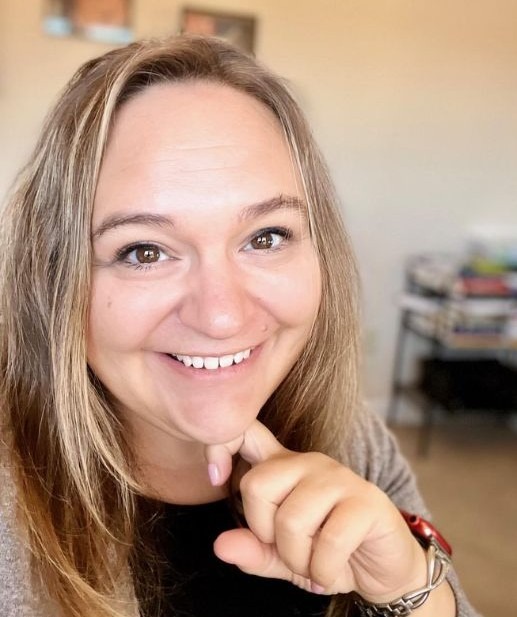
Dr. Megan Duncan, professor of communications and social media at Virginia Tech
How has TikTok’s role changed in the U.S. political and cultural landscape over the years?
TikTok has become a political football in the sense that debates at the national and state level often aren’t really about the app itself. While the push for a U.S. buyer was initially framed as a national security issue, much of the discussion—especially early in this administration—shifted toward using TikTok as leverage in negotiations over things like tariffs or taxation. As a result, the focus among policymakers has drifted away from national security and toward broader political goals.
How does TikTok’s new owner and Virginia’s new governor change the conversation about the app’s regulations as a whole?
I think we have yet to see what Governor Spanberger is going to do specifically about TikTok. She’s addressing some other concerns first. But there are a lot of concerns about regulation and policy around TikTok, especially at public institutions like Virginia Tech, where it’s banned and where there’s related legislation.
There are also broader concerns because in Richmond there are many state employees, and in Northern Virginia there are many federal employees who are still banned from having TikTok on their devices. A lot of this policy directly affects Virginia residents, federal workers, and people who work and learn at places like Virginia Tech.
The laws Virginia passed regarding state employees don’t include any trigger that would lift the ban if TikTok were sold to a U.S. buyer. Even if legislators believe a sale resolves the security concerns, fixing that issue appears to be a low priority right now, as they’re focused on other matters at different levels of government.
That said, there’s an opportunity to raise awareness with Governor Spanberger and state delegates to address this at the state policy level. As for new ownership, lawmakers are likely to trust the president and the executive administration to determine whether it resolves the security concerns outlined in the law.
How does new ownership for TikTok matter to the US lawmakers, and what concerns do you think they might have with that?
It seems like lawmakers are going to trust the president and the executive administration to say that the new ownership fixes the security concerns addressed in the law. There was a mechanism in the law that said Congress was supposed to determine whether a new deal resolved those concerns, but instead we got an executive order saying that it does.
Congress could push back and argue that certification is their responsibility, but it doesn’t look like they’re going to. At the same time, we could see other legislation depending on how international relations develop. Part of how we got the law in Virginia was increased awareness, especially after the surveillance balloon incidents raised broader national security concerns.
What kind of authority does Abigail Spanberger have to regulate this kind of thing for Virginians?
In conjunction with the state legislature, she can issue some executive orders, but mostly we’ll have to wait for legislation. Reversing the ban at public institutions or for public employees would require going through the legislature because it was passed by the delegates and state senators and signed into law by Governor Youngkin. If it had been just an executive order, she could have undone it easily, but changing a law requires legislative action.
Do you think Virginia’s approach to TikTok at all is going to change within the next couple of years?
In a couple of years, we might see a change. There are a lot of organizations that go state to state to influence social media policy and law. That’s how we got the ban that went into effect on January 1st, limiting screen time for users 16 and under to just one hour. One advocacy group focuses on reducing mental health harms and screen time for that age group.
Because federal policy can move slowly, a common strategy is to get multiple states to implement similar policies. That’s exactly what this group did—they coordinated a consortium of states to pass similar legislation. You could think of these advocacy groups as lobbyists, but without the negative connotations; they have a mission to change policy. When they can’t influence federal law effectively, they target several states to achieve similar outcomes.


 > THE NEWS FEED <