
by Gracie Gosier, environment and climate reporter
Over the past decade, the Mountain Valley Pipeline has emerged as one of the most controversial energy infrastructure projects in the US. The MVP was first suggested in 2014 with the goal of delivering fracked natural gas specifically from West Virginia’s Marcellus and Utica shale formations to Virginian and Southeast U.S. markets. Both the Marcellus and Utica shales are geological formations located in the Appalachian Basin. The Marcellus Shale is a significant source of natural gas in the United States. While the Utica shale is regarded as a deeper resource and has substantial potential for the production of oil and natural gas. Today, the Mountain Valley Pipeline is a 42-inch-diameter, 303-mile fracked gas pipeline that crosses through the forests, wetlands, private lands, and mountains of North Carolina, Virginia, and West Virginia, all within the Appalachian region. The pipeline has faced regulatory delays, legal challenges, and widespread backlash from environmentalists, local communities, and landowners.

After the early 2000s fracking boom in Appalachia, the Mountain Valley Pipeline leaped at the opportunity to make money off of fossil fuel extraction in the region through a new fracked gas, large-diameter pipeline. This began the long controversy of the pipeline. In their hurry to get the project done, the MVP did not take adequate care of the pipes before construction and did not consider risks that would put the environment and local communities in danger if the pipeline was built.
The MVP still filed their application with the Federal Energy Regulatory Commission (FERC) in 2015 with a goal to complete the project by late 2018. It took two years for MVP to get its key permits, after deciding to revisit their initial proposal to add an extension to the main pipeline from Pittsylvania County, Virginia into North Carolina’s Rockingham and Alamance counties, called the MVP Southgate Extension. Construction of the pipeline began in 2018 and developers moved its target completion date to the fourth quarter of 2019. Critics became angry and argued that oil from that region isn’t needed anymore and that the pipeline is now simply a cash grab for oil companies.
The MVP’s impact during its construction and operation continues to negatively affect the environment. The construction and operation of the pipeline in steep mountainous terrain has led to soil erosion, landslides, and sediment runoff into nearby waterways. Sediment pollution in water sources leads to degradation of water quality, which has left surrounding areas that used to rely on these rivers and streams for clean drinking water now contaminated. Hydrologists, geologists, and scientists warned about the possibility of damage to water sources along the route, particularly high-quality streams, which are already under threat. Sediment runoff also damages aquatic environments by suffocating fish, lowering oxygen levels, and preventing sunlight from reaching aquatic plants.
More than 500 water quality violations were reported during construction.
Water pollution isn’t the only environmental concern. The MVP is more vulnerable to explosions since it passes through more than 200 miles of dangerous landslide risk and 75 miles of the steepest slopes in Appalachia, which is the first time a big gas pipeline has tried this. The MVP already had dozens of slips before its operation during construction, where a slope had become unstable, including slopes outside of the pipeline’s right-of-way. In 2019, the MVP reported that a landslide along the pipeline route had reached the point where a residence directly downslope was no longer safe to occupy. The impact radius of an MVP explosion is 1,100 feet. This is the distance from the explosion where death or serious injury is likely. The area of the MVP blast zone is about seven times as large as the San Bruno pipeline blast zone, where an explosion killed eight people.
“The land we had purchased for homesites for our children now has a 42 inch natural gas pipeline under it or near it. The site and our existing home are in the incineration zone should there be a leak and explosion.” – Becky Crabtree, landowner and Appalachians Against Pipelines volunteer

The MVP also has negative impacts outside the environment. The MVP passes through rural and indigenous communities, which were often taken by the power of eminent domain, forcing landowners in the surrounding area to give up their property rights. At the time of the project’s planning, most landowners did not want the pipeline on their property, but because the federal government handed MVP developers the authority of eminent domain, they were able to seize their private property for “public use.” The proposal from developers at the time was that transferring natural gas over state boundaries would benefit the public by lowering energy costs, increasing energy reliability, and promoting regional power generation.
The MVP began pressuring and suing landowners for access to their land often before the project received complete approval. Courts allowed this because the Natural Gas Act allows developers to begin condemnation proceedings as soon as they have an approval from Federal Energy Regulatory Commission (FERC), even if other legal challenges are still in progress. The FERC does not require widespread public support or evidence that the pipeline is the best or only choice. If the developer demonstrates that it has shipping contracts in place, FERC usually concludes it’s “in the public interest”.
“They should have never taken this property by eminent domain. They rubber stamp every pipeline company like 99% of the time. They believe exactly what the pipeline company comes back to them with. So they don’t really go and check it out themselves.” – Karolyn Givens, landowner
The MVP’s use of eminent domain raised conflicts over property rights, corporate power, and environmental justice. Many saw it as a misuse of eminent domain, which was originally intended for roads, schools, or utilities, and argued that legal processes were highly stacked in favor of pipeline operators, especially since landowners have no real way to say no once FERC approves the certificate.
For many landowners along the pipeline route, the forced loss of some of their property, unfortunately, was not the worst of their troubles. Landowners suffered financially from property value loss as a result of signing over their land or resisting the pipeline’s use of eminent domain. For many landowners along the Mountain Valley pipeline route, the forced loss of some of their property was not the end of their troubles. Many people suffered property loss as a result of signing land easements or resisting the pipeline’s use of eminent domain. Landowners were underpaid or misled about the project’s impact. Compensation for the pipeline often failed in covering the full cost to their land, livelihoods, or safety since it is generally limited and based on “fair market value,” which excludes personal loss, pipeline accidents, and livelihood harm.
In June of 2024 after the completion of the pipeline, the MVP reported to federal regulators that it had found more than one hundred problems that require repair and analysis. 24 hours later, the pipeline was operational and began pumping methane gas. Community members have been extremely frustrated with lack of action from the government against the countless unethical and dangerous choices being made from oil developers. Today, there are many environmental groups and coalitions advocating for renewable energy and investors to defund the MVP Southgate extension. The Pipeline and Hazardous Materials Safety Administration (PHMSA) has been notoriously underfunded, and as more pipelines are installed, their regulatory control is expanding when they simply don’t have enough staff to guarantee that operators follow the requirements. The MVP officially applied for a new certificate to make the extension pipeline wider, and the permits needed for the extension in February 2025.
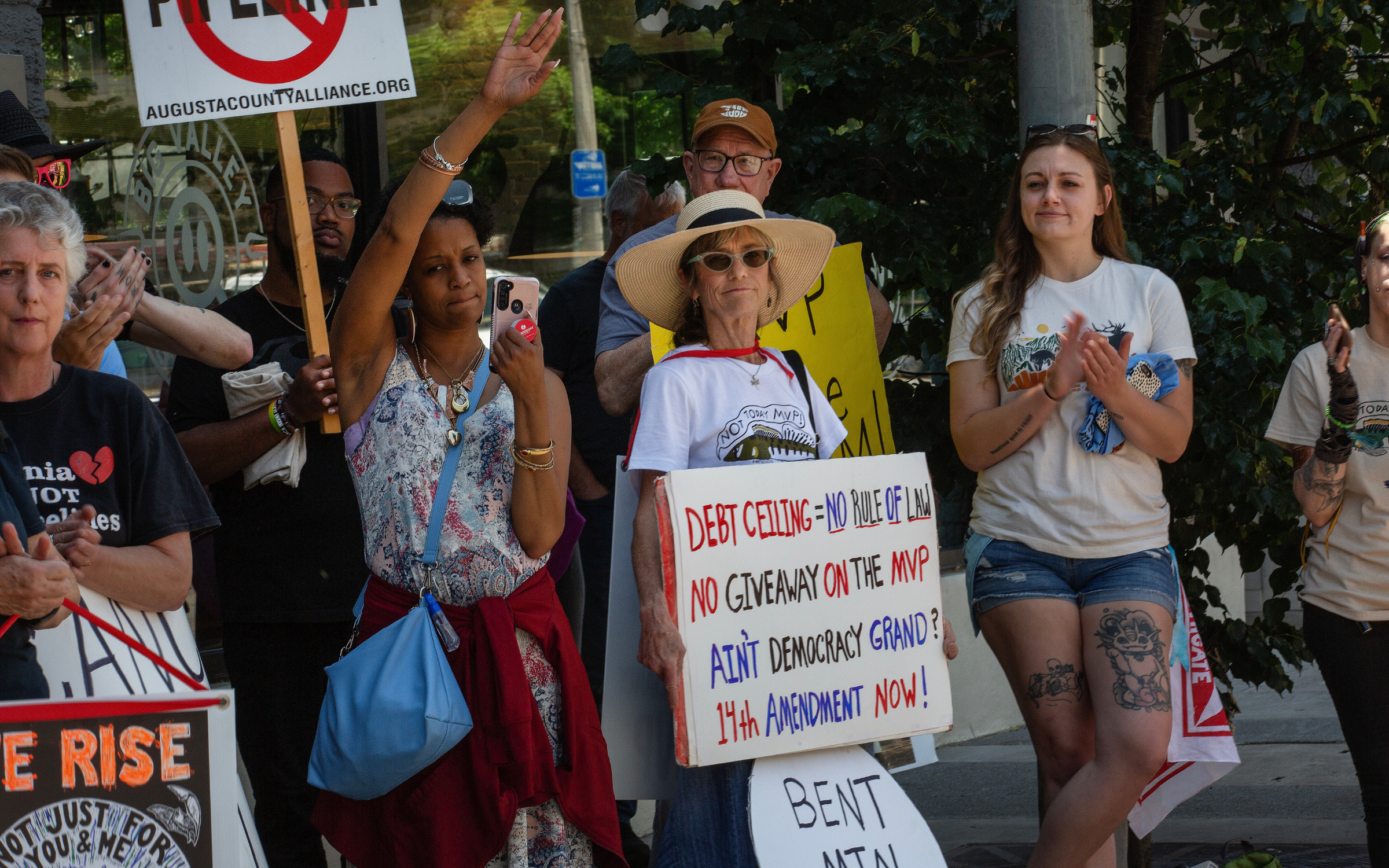
Critics have filed thousands of public complaints, either individually or in groups through petitions, urging FERC to reject Mountain Valley’s request to modify the certificate it requires for Southgate. Southgate opponents claim that Mountain Valley should be required to apply for a new certificate because its altered plan takes a different route and transports more gas than what has already been allowed. Eight environmental groups have filed a petition in federal court challenging the approval of a planned extension of the Mountain Valley Pipeline, claiming that the project’s purpose has shifted so significantly that an earlier permit is no longer applicable.
“The federal government needs to hear from members of the public when crafting rules and regulations. There’s a systemic imbalance since the industries they regulate employ people with a lot of money to protect industry interests. We all need to do the same in the public’s interest. The safety of our communities depends on it.” – Bill Caram, Executive Director of Pipeline Safety Trust.
Public opinion should always be a vital part of government decision-making processes. Holding regulators and oil companies accountable through our commitment to environmental justice is crucial if we want to dismantle the system that is actively killing our planet.



 > THE NEWS FEED <