When Virginia Tech students have learning disabilities, they aren’t alone in their quest for academic excellence. The Werth Testing Center, operated out of Services for Students with Disabilities, provides exam accommodations that reduce distractions and ease anxiety during testing. Funded by Virginia Tech alumnus Robbie Werth, the center is an on-campus example of Ut Prosim.
Floral Design class at Virginia Tech invites students to learn the art of flower arranging. From bouquets and centerpieces to wreaths and baskets, Hokies create designs that are full of life. As Senior Instructor Barbara Leshyn prepares for retirement, she reflects on 16 years of teaching along with her students, teaching assistants and successor.
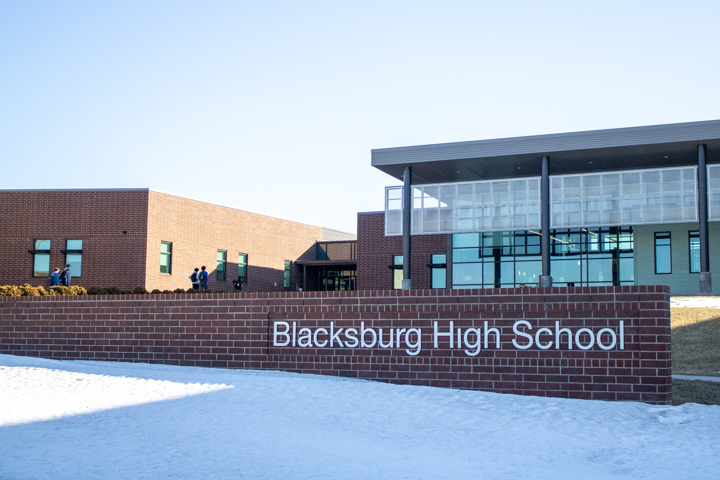
Students walk into Blacksburg High School for class on Friday, Feb. 13 in Blacksburg, Va (Photo by Emma Duncan, TheNewsFeedNRV).
Montgomery County goes by many titles—rural community, persistent-poverty county, the greater Blacksburg area, home. Some of these titles carry more weight than others.
For Montgomery County Public Schools, being classified as a rural area or not can stand between receiving federal funding and benefits.
The National Center for Education Statistics, a division of the Department of Education, uses a 12-category classification system to define locales as one of four categories: city, suburban, town and rural. Locales are different from counties: counties house an entire school district of locales, while locales typically represent one community or 1-3 schools.
According to the June 2007 NCES Status of Education in Rural America report, “The new measures or locale codes are assigned to each school according to the school’s physical longitude and latitude. Thus, these new locale codes make school data more consistent, accurate, and useful to policymakers, researchers, and educators concerned with rural education issues.”
The NCES Locale Lookup map shows that Montgomery County is majority rural, with most of the county falling in the rural fringe category. At the center of the county, two bubblegum pink regions dictate small cities, better known as Blacksburg and Christiansburg.
This map and data from NCES are used by other government agencies and departments as the basis for resource allocation. The U.S. Department of Agriculture has its own FNS Rural Designation Map used to qualify students for free or reduced lunch and the summer meals program. On this map, all of Montgomery County is green and classified as rural, except for Blacksburg and Christiansburg.
“We have four unique strands in our county: Blacksburg, Christiansburg, Shallsville-Elliston, and Reiner,” said Andrew Webb, coordinator of communications and public relations for MCPS. “Shawsville and Reiner qualify. Christiansburg does not. Blacksburg Middle and High schools don’t necessarily qualify, but Price’s Fork Elementary School does; it’s not necessarily within the town of Blacksburg limits, but it’s got a Blacksburg address.”
Webb explained that MCPS bases its internal classification and allocation on this map, acknowledging that most of the county is rural. However, some scholarship and financial aid programs don’t agree.
The George Washington Carver Assistantship Program through Virginia Tech’s College of Agriculture and Life Sciences “[supports] the development of high-achieving graduate students with varied, diverse experiences and backgrounds.” U.S. resident graduate students in this college can apply for the scholarship if they meet at least one of the following criteria: are a first-generation student, have a disability, are a veteran or come from a disadvantaged background, such as a rural area.
While the HRSA does not consider Montgomery County rural, the county is classified as a persistent poverty county, an area “in which poverty rates of 20 percent or higher have persisted for 30 years or more,” according to an article from the USDA. This definition may cause some to conclude that, if an area is rural for so long, it can lose its rural status and be redefined by its poverty, limiting scholarship access to a county that historically needs it.
The HRSA was contacted for a comment, but only referenced their “How We Define Rural” website. One aspect of the administration’s rural definition read, “outlying metropolitan counties with no population from an urban area of 50,000 or more people.” This is where the bubble gum pink regions come into play.
The Town of Blacksburg defines itself as “a vibrant college community with a daily population of over 50,000 people.” When Virginia Tech is in session, over 30,000 students call Blacksburg home. The population of Blacksburg disqualifies Montgomery County as a rural area.
As a tax-exempt organization, Virginia Tech does not pay local taxes to Montgomery County. However, the university still impacts its community and serves Montgomery County students economically and through development and education efforts.
“Virginia Tech gives in so many different ways and we can’t limit ourselves just to one measure,” said Mark Owczarski, chief spokesperson. “At our university, impact is about bringing families together, empowering students, bringing faculty into the local schools and hosting programming, not to mention living here. Faculty and staff have kids in the Montgomery County school system. When they decide to live here, they bring whatever talents and gifts they have to the community at large, along with investing their salaries in the area. Virginia Tech is Montgomery County, so as Virginia Tech changes, our impact changes.”
Many classes, including Community Writing in the Department of English, visit county schools weekly to teach students, host programming and support the development of Montgomery County. Clubs such as Primeros Pasos mentor disadvantaged students as they navigate post-secondary education and life.
While the Office of Undergraduate Admissions in Blacksburg, Va sits empty on Friday. Feb. 13, the building was full of hopeful Hokie applicants in November as onsite admission decisions were announced (Photo by Emma Duncan, TheNewsFeedNRV).
Although students from Montgomery County may not qualify for state and federal scholarships based on rural status, the Virginia Tech Office of Undergraduate Admissions offers onsite admission, a service that gives early application review and decision to high schools in the New River Valley and Roanoke Valley.
“They have their own process just for local kids,” Owczarski said.” “They don’t do it because they have to, they do it because they want to. We want Virginia Tech to be an obvious choice for students in surrounding areas.”
In mid-February, Virginia Tech will receive its economic impact report, completed by Tripp Umbach, which will detail the location and reach of the university’s cited multi-billion-dollar impact. Owczarski shared that he will be briefed on the report and able to answer questions about it beginning Wednesday, Feb. 18.
With a mixture of classifications, resources, and support services in Montgomery County’s reach, Webb clarified that the school district doesn’t let titles prevent its students from succeeding.
“Equity is a big part of what we do here,” Webb said. “We have a director of equity who strives to make education as accessible as possible, reducing barriers, whether it be transportation, meals, anything we can do to help level the playing field. If you don’t have a fair share, it’s hard to want to go to school every day, and we want to make our schools a place where every kid feels welcome and wanted.”
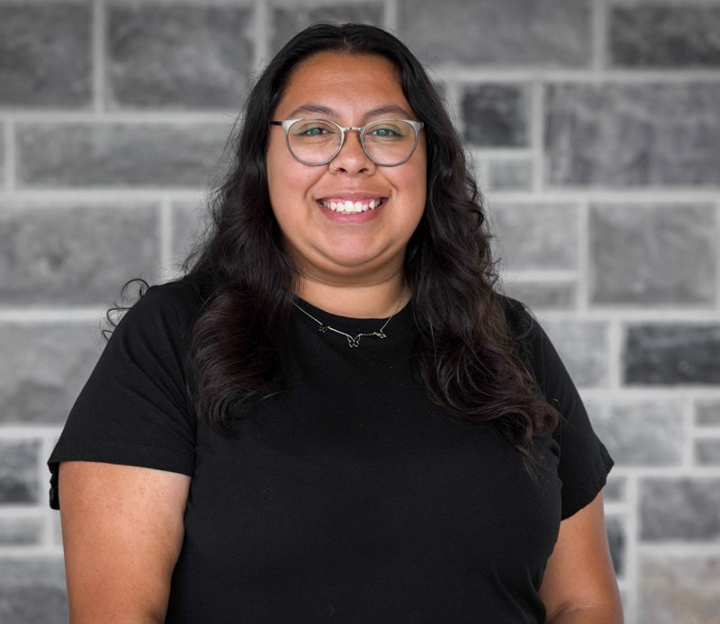
As an engagement engineer, Jazmyne Barron designs student experiences, coordinates partnerships and develops new programming strategies. (Photo Courtesy of Virginia Tech)
One year after its launch, The Chillfield has changed how Virginia Tech students find entertainment, bringing events to Hokies where they are through mobile programming.
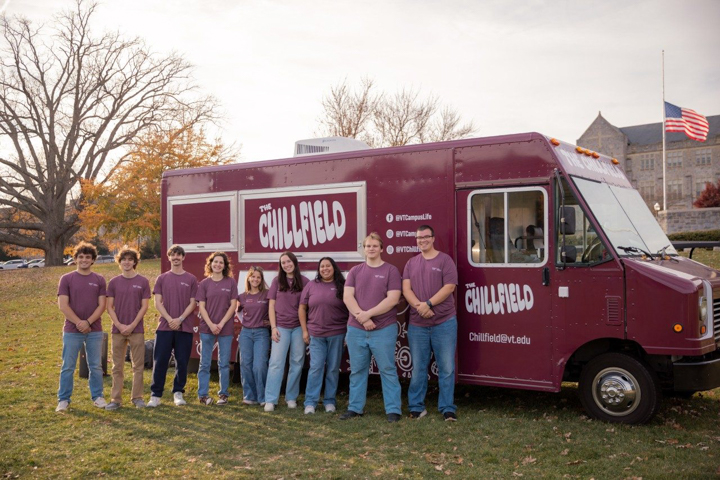
Designed by Ben Evans, lead engagement engineer at Student Engagement and Campus Life, The Chillfield uses interactive activities to connect students to campus partners and each other. The truck hosts events in Blacksburg once a week, at the Roanoke campus once a month and in the D.C. area once a semester.
Hokies can play Tetris Tumble or Connect 4, compete in Nintendo Switch games, customize tote bags and koozies using a heat press, decorate vinyl records and more. In its first year, The Chillfield hosted approximately 52 events and reached over 10,000 students. Jazmyne Barron, coordinator for student experiences, shares her team’s highlights from year one and aspirations for the future.
[This interview was edited for clarity and content.]
What gap did The Chillfield fill in the SECL office?
During the pandemic, there was a large gap in student programming. It was harder to engage students because we needed to follow safety guidelines like social distancing. As we transitioned into a more normal sense of campus life and programming, we noticed it was harder to get students to come to things because they hadn’t been doing anything for such a long time. So, the idea was to go to them instead.
Think back to The Chillfield’s very first event. How did you feel when it ended?
The Chillfield’s very first event was the launch party. Honestly, I had no real expectations at the time. The event ended up being very successful and ran smoothly. We hosted it on the Drillfield and had a lot of different activities available, some of which have become staples in our programming. I think it really set a positive tone for what was to come in the year ahead.
The Chillfield often hosts events on the Drillfield and outside of Squires Student Center. (Photo Courtesy of Virginia Tech)
Can you share a story that illustrates the impact of The Chillfield?
When the truck launched, we were a team of three undergraduate students and one graduate student assistant. Now, our team has doubled. One of those undergraduate students, Filip DeHaven, is now my graduate assistant. Seeing them grow from last year to this year has been very rewarding.
We wanted to culminate all our success during the first year into our first birthday party, which was a collective effort. Each of my student staff put all of themselves into that event for it to be so successful. I think it really shows how they are passionate about this work and want to share fun experiences with other students. They continue to return every semester and I’m proud to work with them.
What have you and your team learned about designing events that resonate with students across such diverse schedules and interests?
When you work in student programming, it’s important to ask yourself how you can create an experience for everybody. We try to provide a variety of options for people, some that are very low stakes, like our grab-and-go goodies, but also opportunities for people to sit with their friends and do a fun craft. We try to play around with the times to reach different students and allow everyone to attend our events.
Has there been an activity or event that didn’t work as planned? What did the team learn from that experience?
I can definitely say weather is our biggest enemy. Our most recent event, National Lego Day, was supposed to be outside. However, we had to shift inside because of the huge snowstorm.
When we’re hosting events on the Drillfield, a little bit of wind can make everything go flying. Even if the forecast is decent, wind can keep students away. The weather definitely keeps us on our toes.
As you enter year two, what are your biggest goals for The Chillfield?
Our team is trying to constantly think outside the box. My student employees really want to bring in new people and expand what we can offer. We have our favorites that we know the truck can easily do, but I think we’re getting to a point where we’re ready to branch out. A new location could help us reach hundreds of new students. My personal goal is to eventually start working with some community partners.
I read that enhancements like a better backup camera and accessible storage are being discussed. What is the status of these upgrades and how will they improve events or operations?
The Chillfield is a pretty old truck, so many parts are outdated. Over the break, we got new seats installed and the dashboard rewired with CarPlay. The heating and conditioning actually work now; that’s very nice to have. We are working to get a new horn installed that will play the intro to “Enter Sandman.” We also installed a jump seat in the back for when we’re driving around campus. The truck has its quirks, and we’ve learned to work with them.
In March, you and Ben will be presenting at the 2026 NASPA conference. What does it mean to bring The Chillfield story to a national audience, and what do you hope other campuses take away from it?
I’m only a year and a half out of graduate school and I’m presenting at a national conference, which, to me, is insane. Our goal is to provide these campuses with a packet of resources and say, ‘Here’s what we did, take it, replicate it with what works for you.’ We’ll make a point to tell people that you don’t need this big truck to do mobile programming if you’re on a smaller campus. You could build out a really cool golf cart. Our emphasis is make it work for your campus.
As someone who has worked with The Chillfield since its first event, how do you hope you feel one year from now?
This is gonna sound funny, but it’s true. Every time we’re out, students love to come up to us and ask what food we’re serving. I’m trying to sell this idea that we’re not a food truck, but a fun truck. I hope that, by the time we’re entering year three, people know that we’re not a food truck. We like to make jokes and make light of the situation that we’re in. However, we purposefully avoid food for our events.
Is there anything else you would like to share?
The Chillfield is truly one of a kind. It’s not on any other campus, which I think is really cool. Going to one of our events should be a bucket list item for students during their time here, especially since, if they decided to attend another school, they would never get a Chillfield experience.

 > THE NEWS FEED <