Robin Reed, professor of practice in the School of Communication at Virginia Tech, and Tara Williamson, co-owner and operator of Williamson Farms, co-host “The Forgotten Fields Project”, a podcast that explores the stories, struggles and shifting landscapes of local agriculture. This mini-documentary looks at how the podcast began, how its evolving and how it’s helping audiences understand the environmental and human challenges facing farmers today.
Editor’s note: Robin Reed is a Professor of Practice in the Virginia Tech School of Communication. The News Feed NRV is produced by the Virginia Tech School of Communication.
Learn about microplastics, how they form and how they’re showing up in the New River Valley. Local researchers are uncovering their presence in wildlife, raising important questions about environmental health and what communities can do to combat this growing issue.
With energy costs on the rise, more homeowners and businesses in the New River Valley are turning to solar power. But what’s driving this shift, and what challenges could impact its future? Experts weigh in on what this means for affordability, sustainability and the future of the region’s energy.
Blacksburg, VA, Feb. 14, 2025 – Newly planted native trees line the riparian restoration area near Stroubles Creek, part of a vital effort to enhance biodiversity and stabilize the ecosystem in response to urban expansion and climate variability. (Photo by Alana Powell)
by Alana Powell, environment and climate reporter
In the quest for ecological balance, the critical role of native plants has surged to the forefront. With urban expansion and climate variability reshaping landscapes, local ecosystems in the New River Valley increasingly depend on these species to maintain biodiversity and ecological stability.
Why it matters:
Native plants are pivotal for their ecological benefits, supporting local wildlife and stabilizing ecosystems.
They improve water quality and reduce erosion, directly benefiting the environment and communities.
Initiatives like Homegrown National Park highlight the need to transform personal spaces into wildlife-supportive landscapes.
The big picture: Leighton Reed, a professor of Ecological Restoration at Virginia Tech, emphasizes the foundational role of native species:
“Native plant species are the biodiversity of the New River Valley. These species not only enhance local biodiversity but also support critical trophic interactions that non-native species cannot match, which are essential for maintaining diverse and stable ecosystems,” says Reed.
Zoom in: Nicole Hersch, campaign coordinator for the Plant Southwest Virginia Natives initiative, discusses the specific advantages of native plants:
“Native plants typically have deeper root systems, which help reduce runoff and erosion, maintaining clearer and healthier water systems,” Hersch notes.
Their ability to manage stormwater and conserve river ecosystems by slowing down water flow during heavy rain events prevents soil erosion and water pollution, crucial for maintaining clean waterways and healthy aquatic life.
Yes, but: Despite their ecological benefits, widespread adoption of native plants faces challenges:
“Understanding what a native plant is remains a major hurdle. Many people mistakenly believe that commonly seen plants in commercial and residential landscapes are native due to their prevalence,” explains Hersch.
Shifting from traditional mowing and landscaping to practices that support sustainable, native-focused ecosystems is seen as more complex and unfamiliar to most property owners.
What we’re watching:
Virginia House Bill 1941 aims to promote native plant use by requiring nurseries to label invasive species, enhancing consumer awareness and encouraging more environmentally responsible purchasing decisions
The bill has not yet passed.
It was last referred to the Committee on Education and Health January 29, 2025.
Currently in the process of engrossment, facing discussions and revisions.
Zoom out:
Projects across Virginia, highlighted by the Virginia Native Plant Society offer templates for integrating native flora into public and private spaces. These gardens serve as educational and inspirational resources that encourage community members to consider native species for their landscaping needs.
Research cited in Desiree Narango’s study on the impact of native plants on pollinators underscores the ecological benefits of maintaining native plant populations, especially in supporting biodiversity and food web stability.
Blacksburg, VA, Feb. 14, 2025 – The Heritage Park Nature Play Space stands bare in winter, hinting at its usual bustling state with native plants that thrive in warmer months. (Photo by Alana Powell)
By fostering native plant growth and supporting initiatives that encourage their use, communities can significantly enhance ecological sustainability and resilience. This movement not only preserves the local environmental heritage but also provides a framework for engaging with nature in ways that enrich both the land and community life.
Dublin, VA, Feb. 1, 2025 – Heavy machinery remains at Claytor Lake following the completion of cleanup efforts. Photo by Alana Powell
by Alana Powell, environment and climate reporter
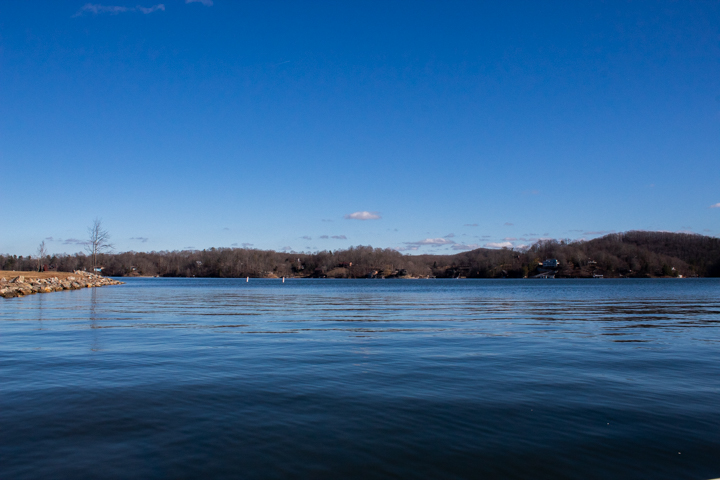
A usually serene Claytor Lake was turned into a debris-laden nightmare following Hurricane Helene back in October. Luckily, concerted efforts by federal agencies and local volunteers have successfully restored its recreational availability.
In the wake of the natural disaster, Claytor Lake was submerged under 300 acre-feet of debris, disrupting the ecosystem and local recreation. Over the past two months, the Norfolk District of U.S. Army Corps of Engineers and Friends of Claytor Lake have diligently removed over 27,000 cubic yards of debris and transported 6,000 tons to the landfill, concluding their efforts on Dec. 21, 2024. This extensive cleanup has not only cleared the waste and litter, but also reinstated the lake as an important community hub.
According to the USACE, this was the largest debris removal mission in Virginia since Hurricane Isabel struck in September 2003. The team provided specialized equipment such as survey vessels and hydraulic excavators to help the non-profit, Friends of Claytor Lake, with the overwhelming task.
Amanda Bishop, a ranger at Claytor Lake State Park, gave a chilling description of the lake immediately following the hurricane. “If you were here a couple of days after it hit, I personally compare it to what a horror movie kind of would look like.” She adds, “Usually when you look at the lake, you can see how the water’s moving. It was so still and debris sticking out of it and trash, propane tanks, just all kinds of people’s belongings that they didn’t think the flood would take.”
Jacob Ward, a local resident and frequent visitor, shared his initial shock at the damage. “I was so surprised. I was not expecting [the hurricane] at all and then I came here the day after and saw like everything floating in the water and I was just shocked because usually that doesn’t happen,” he recounted, highlighting the unexpected devastation to the region.
The cleanup process involved not just trash removal but also significant safety measures due to hazardous materials. “We had men in hazmat suits working to remove dangerous waste, making sure that the lake was safe for public use again,” Bishop added, indicating the complexities involved in making the area safe for visitors and wildlife.
Local businesses felt the economic impact deeply, especially those reliant on lake tourism. “There’s a guy who runs a business down here renting out boats, he was hit pretty hard,” Bishop noted, “he saw a huge decrease in funds.” This downturn reflected the broader economic challenges posed by the lake’s temporary closure.
In an inspiring display of community solidarity, volunteers of all ages offered to assist in the cleanup, specifically helping with shoreline debris. “Our local middle school came and there were like over 150 kids that showed up and asked, ‘What can we do?’ There was a lot of trash that came in with the flood and plugged our shoreline with all the rocks,” Bishop stated.
Community members found other ways to assist if they were unable to participate in clean-up efforts. Several local churches provided meals daily to those who had extensive damage or lost their homes completely along the water.
“The lake means a lot to the community. We get our electric from the dam and people from all over come to visit. It’s a relief to see it back to its normal state.” Ward added.
Photo by Alana Powell
With the cleanup complete, the park’s management has worked hard to keep the public informed. “We have a website that is, if you search Claytor Lake State Park, it comes up within DCR, which is the Department of Conservation and Recreation. We try to keep alerts on our page of what’s going on, what can you do or not do, where can you go, where can you not go, please stay out of these areas,” Bishop explained about the ongoing communication efforts to ensure visitor safety.
Dublin, VA, Feb. 1, 2025 – A man is seen boating on the lake now that it has reopened for recreational use. Photo by Alana Powell
The reopening of Claytor Lake has been met with enthusiasm from the community, eager to return to their normal activities. “Now that we’re open again, people are coming back, eager to enjoy the lake. It’s great to see the community bounce back after such a challenging time,” Bishop concluded.
The collective efforts at Claytor Lake are a testament to what can be achieved through collaboration and community engagement, effectively addressing, and overcoming the aftermath of natural disasters to restore and strengthen communal bonds and natural resources.



 > THE NEWS FEED <