Shortly after moving to their new home last year, Dona and Steven Durham discovered structural damage under their house. Extreme rain from Hurricane Helene flooded and deepened the existing cracks, weakening the foundation of their home. Now they’ve turned to FEMA for emergency funds to help repair storm damage that can’t be covered by insurance. Jeff Jones, FEMA Federal Coordinating Officer, sheds light on FEMA’s over-the-phone assistance program.
Produced for The News Feed Podcast by: Ainsley Cragin and Kennedy Gooden
Economics expert Jadrian Wooten discusses upcoming changes for consumers following the 2024 presidential election. As grocery prices increase and Generation Z’s earning power comes into question, he says to turn to experts – not influencers – for insight.
FEMA assistance is now available for Giles County residents affected by extreme flooding from the New River following Hurricane Helene. Two assistance programs are available for residents to apply for financial relief.
BLACKSBURG, V.A. – The Blacksburg Town Council considers a special zoning exception for homeowner Anthony Grafsky’s pet pig and two goats.
Grafsky shared pet pig Brutus’ heartwarming adoption story with town leaders at their Sep. 24 meeting in hopes that they would allow his four-legged family members to continue living in his backyard. Councilman Liam Watson expressed may look to broaden updates to Blacksburg’s agricultural zoning policies.
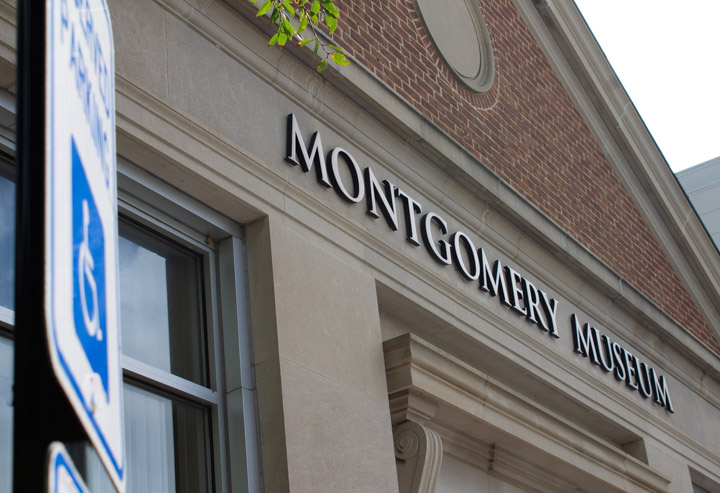
The Montgomery County Board of Supervisors looks to award $117,000 to support the installation of an elevator in the Montgomery Museum of Art and History ahead of 2026 celebrations of America’s 250th anniversary.
Why it matters: The proposed contribution from the county will support the museum’s application for special grant funds from the Virginia Department of Historic Resources (DHR).
If the grant is approved by the DHR, the Montgomery Museum will receive funds from both state and county governments to support the installation of an ADA-compliant elevator and a one-of-a-kind Montgomery County semiquincentennial anniversary exhibit.
In July, Governor Youngkin and the Virginia DHR announced a $20 million special grant program to prepare historic landmarks and history museums for the 250th anniversary of the 1776 Declaration of Independence.
Projects that are “shovel-ready” and can demonstrate local buy-in through the commitment of at least one-third cash match will be given priority for Virginia 250 Preservation Fund (VA250) grant awards.
Applications for the grant are due on Oct 14, awards will be announced in late 2024.
Casey Jenkins, executive director of the Montgomery Museum, received an uncontested thumbs-up response from all seven County Supervisors during his presentation at a Sept. 9 Montgomery Board meeting.
Zoom in: The installation of an ADA-only elevator will allow visitors with limited mobility to access exhibits in the community room on the museum’s lower level.
Disabled visitors and those with limited mobility cannot currently enter the community room without need to exit and re-enter the building at a side door, traversing at least ten stairs before reaching the basement.
The cost to design and install an ADA-compliant elevator is projected to be about $300,000.
Montgomery County’s $117,000 decision could cover one-third of the total $350,000 requested in the museum’s grant application, fulfilling both local buy-in and one-third cost matching prerequisites outlined in the applicant requirements for VA250.
According to Sara R. Bohn, Montgomery County Supervisor, the county’s fiscally responsible budgeting process creates a small annual surplus of a few hundred-thousand dollars for the board to spend on community-serving projects.
Zoom out: VA250 funds should be allocated to ADA accessibility and exhibit installation projects to help draw tourists toward recipients’ regions in Virginia.
The opportunity to apply for the grant is open to Virginia localities, non-profit organizations, and state or federally recognized Indian tribes.
According to Jenkins, 83% of Montgomery Museum’s annual visitors are locals, primarily residents of Blacksburg and Christiansburg.
Montgomery County’s unique position as the only county in Virginia to be founded in 1776 – sharing an anniversary with both the state and the nation – may prompt an specially significant increase in tourism as visitors travel from counties across the state for semiquincentennial celebrations in 2026.
What we’re watching: If the board approves the resolution at their next meeting on Sep. 23, the county’s commitment to cash-match $117,000 will only go through if the museum is awarded the VA250 grant.
Ahead of the meeting, Bohn and Jenkins anticipate an affirmative vote on the resolution.
According to Mary Biggs, chair of the Montgomery County Board of Supervisors, the county government and the Montgomery Museum have maintained a strong relationship for more than two decades.
“The County is delighted to partner with the Montgomery Museum,” she said, “to help lead the planning for such a significant celebration for our community and the Commonwealth of Virginia.”
“As early as January of this year, we were told there was no way that Norfolk Southern is going to let us on their tracks,” said D. Michael Barber, Mayor of Christiansburg.
Colin Burch, senior planning manager for the VPRA, described the transaction as “an in-kind exchange of roughly 28 miles of the Virginian Line (V-Line) for about 24 miles of the Manassas Line (M-Line).”
“This new agreement with Norfolk Southern allows passenger rail to reach Christiansburg years earlier and at a better location,” said Secretary of Transportation Shep Miller after the VPRA announcement Thursday.
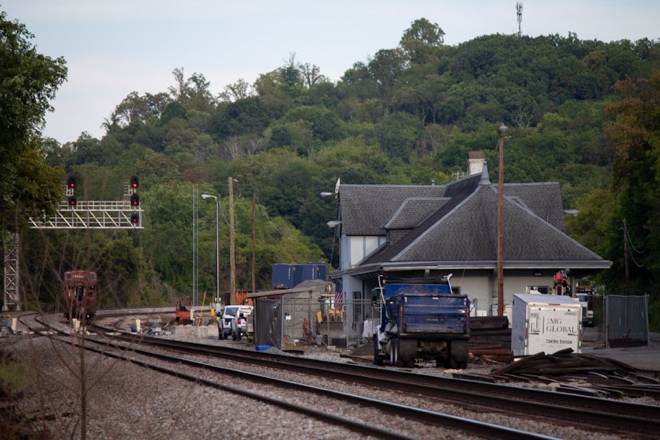
Barber says it will take about one and a half years to prepare the site and restore the 1906 Passenger Rail Station in Cambria to full operation. If the project stays on track, the doors to the new NRV passenger station will open in 2027.
“We’d like to think sooner,” Barber said, “but we don’t know. We’re just much closer than we were when we started.”
In 2022, the VPRA purchased the V-Line from Norfolk Southern as part of a plan to build a passenger station in the NRV.
“Just to renovate that tunnel was going to be $740 million – in addition to another $350 million to build the station and the other tracks,” Barber said, “And so it was a $1 billion set-up. The VPRA and the state, rightfully so, didn’t want to commit that kind of money.”
Barber said Norfolk Southern decided in May of this year that they were interested in making a deal with the VPRA to buy back the V-Line.
Burch explained the new trade deal offered an opportunity to exchange the V-Line track for a portion of Norfolk Southern’s Seminary Passage, a section of the M-Line tracks in Northern Virginia.
“The Seminary Passage piece of the agreement was important for the Commonwealth,” Burch said, “because it would allow Virginia Railway Express (VRE) – which is the commuter rail line serving Northern Virginia and D.C. commuters – to improve service with weekend and late-night service.”
The trade provides an opportunity for the Commonwealth to maintain the NRV budget while supporting intercity rail and enabling additional services in Northern Virginia.
Sec. Miller said, “the deal achieves all of this while saving nearly $100 million.”
As Chairman of the Passenger Rail Station Authority, Barber made it a priority to avoid spending unnecessary funds to create an artfully designed passenger station.
“They projected the cost of that station to get everything ready is about $4.5 million, but we were looking at the potential of hundreds of millions to build a station,” Barber said, “I told my group we’re not going to build a monument to an architect.”
According to Barber, 20 of 29 possible sites for the New River Valley project were in Christiansburg, VA. The coveted Cambria location – made possible by the track exchange deal – served the Cambria neighborhood in Christiansburg from 1906-1979.
“I’m just over the moon that we’re going to be able to restore that building,” Barber said, “My goal all along has been to restore that station because, when I was a kid, I rode that train every so often going out to Lynchburg.”
Located on a well-kept road near the Christiansburg Aquatic Center, the rail station will be easy to access by car and will continue to be served by public transportation.
According to Barber, the renovation project will include the addition of about 150 parking spaces and two canopy-covered areas. In the coming months, crews will begin the process of cleaning and restoring the existing building to meet safety and ADA standards.
The new Cambria station could prompt a steady migration of travelers toward Christiansburg.
According to Burch, “when gas prices are higher, people tend to take the train more. And we typically see higher ridership during the holidays, summer travel months, and college spring breaks.”
“Essentially they determined that roughly 1 million people travel from the NRV to Washington, D.C. and the Northeast Corridor every year,” Burch said.
“I think the increased traffic in the Cambria section of Christiansburg will be very beneficial,” Barber said, “they’re figuring around 40,000 riders a year.”
According to Barber, two trains will come through the station each day. One will depart from the station at 4:30 a.m. and the other will likely depart around midday.
“We could see a coffee shop or even a train related sales type thing, that would be great,” Barber said.
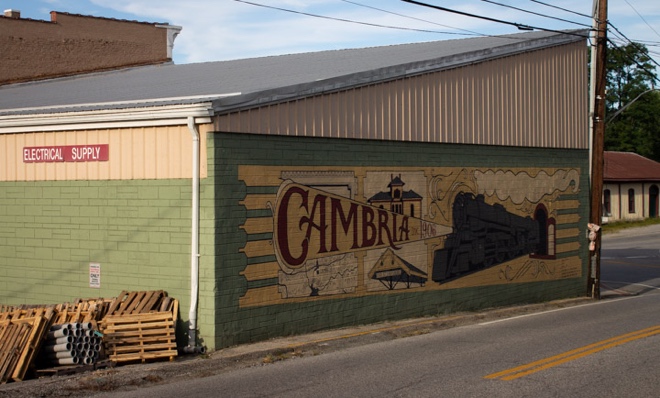
In 2023 the Town of Christiansburg commissioned a mural depicting the station’s history.
“We’ve already been kind of anticipating this, there is a beautiful mural depicting Cambria and the train history and all this kind of stuff,” Barber said, “it’s right next to the station, right where the train will come.”
According to Barber, there have likely been no people allowed to enter the 1906 station since late 1979.
“They’ve got to clean up and build another maintenance shop and do some maintenence type things.” Barber said, “So it’ll, I don’t really expect see any personality to the station itself for at least another year and a half, possibly.”
Adding a passenger train station near the Virginia Tech and Radford University campuses may increase student ridership, reducing the heavy traffic associated with college events in the NRV.
Mary Biggs, the legislative liaison for Montgomery County to the New River Valley Passenger Rail Station Authority and chair of the Montgomery County Board of Supervisors, said, “The investment from the state, Norfolk Southern, and our localities will benefit our citizens, our universities and their students, businesses and economic development for our region. It is a much needed asset for our area.”



 > THE NEWS FEED <