
By Aaliyah Kinsler, arts, culture, and sports reporter
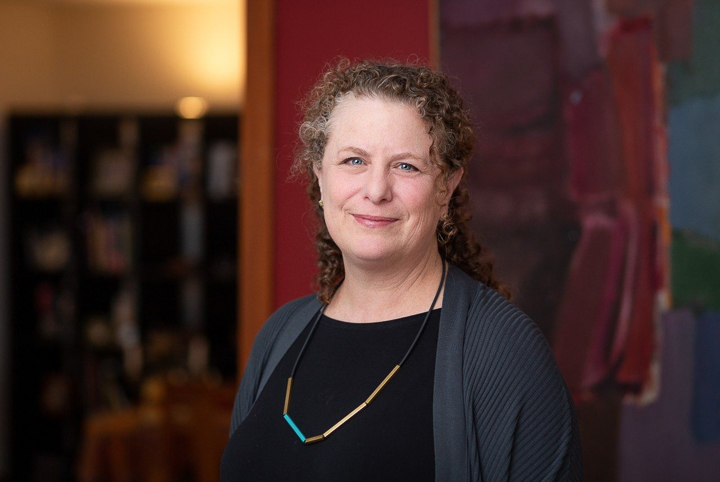
Margaret Lawrence, Director of Programming for the Center for the Arts at Virginia Tech. Photo Courtesy of Rob Strong and Virginia Tech
As universities face increasing questions about representation, audience engagement and institutional responsibility, arts programming has become a large reflection of broader cultural values.
At Virginia Tech, the Center for the Arts brings professional performers from around the world to campus stages and shapes how students and the New River Valley community encounter the arts.
In an interview, Margaret Lawrence, director of programming for the Center for the Arts, discussed how those decisions are made, how audiences influence programming and why representation matters.
Her comments were edited slightly for length and clarity.
How does Virginia Tech and the Center for the Arts decide which artists and performers are featured on campus?
I can only speak for the Center for the Arts, because of course there’s lots of other stuff happening in the arts on this vast campus. We are really the center for bringing professional American and international touring performing artists, and top-notch professional visual artists.
I’m the person involved with performing artists specifically. We produce a series of between 25 and 30 performances each year, kind of balanced between the two semesters. We don’t really present much in the summer when the students aren’t here.
Our mission is to really bring the most extraordinary arts experiences here and to celebrate the diversity of kinds of art forms, of kinds of artists, of individuals. This might be the only chance a student at Virginia Tech has to see a full philharmonic orchestra, or a contemporary American dance company, or a very famous jazz artist they’ve heard of but never saw in person. This is a really formative time for students here.
What goes into deciding which artists make it into a season?
I’ve been a curator for more than 40 years. I have a lot of knowledge of the artists who are out there, not only in the U.S. but across the globe, and a lot of networks in the field with other performing arts centers.
What we try to bring together are some artists who are at the top of their game and very well known, and then artists who are emerging, who you may never have heard about. That proximity to those artists and their work is really exciting.
We’re just as interested in presenting really important music of the past as we are in premiering brand-new compositions. We even helped commission a brand-new piece that premiered here by a living composer.
Do artists reach out to you, or do you reach out to them?
All of the above. Almost all professional artists are represented by agents and management companies. They know who I am. I often pursue somebody for years before it finally comes true.
I might be in New York and have a whole bunch of meetings. We had a trio here recently that was a new project. Those artists thought of it and put it together. The minute I heard about it; I was pursuing it.
Some artists are incredibly expensive to bring, and it might take years and really creative thinking to raise the funds. When we brought Yo-Yo Ma here, the cellist, that didn’t happen overnight.
How much influence do students and community members have in programming decisions?
I’m working for at least a year and a half in advance. Right now, I’m almost done programming 2026–27, and I’m starting to work on 2027–28. That automatically changes how we approach things.
If I only brought artists that I personally love, some of those things are really esoteric. That doesn’t mean I’m going to bring it to Blacksburg. So, I try to create a real balance.
We do national touring Broadway shows because people want to see them. We see people there we might not see at any other kind of performance. That’s really important to us.
Do engagement and education factor into programming choices?
We’re not only presenting performances. We’re creating what we call engagement activities. We ask artists to do workshops, come into classes, teach master classes and do school-time matinee.
For some kids, it might be the first time they’ve ever been to a theater. Those experiences are incredibly important for showing people what the world around them is.
Have you noticed shifts in audiences over time?
We’ve built a very strong subscription base from the community. Many of them will sign up for the entire season and trust us to have a great experience.
The student percentage of attendees is very healthy. It tends to be around 23% of the audience, which is quite high. I think that’s partly because we do so much engagement with the artists.
Have any performances sparked reflection about whose voices are being elevated?
Several years ago, we brought a trans theater artist from London who did a piece about their identity. People told me, “You never would have seen a piece like this when I was a student here.”
For students and community members, it creates a sense of belonging. For everybody else, it’s about learning about the people we share this globe with.
We also brought a dance company from India collaborating with a company from Sri Lanka. A student told me it was the first year they were able to form a Sri Lankan student organization. The artists were from her hometown. Seeing that on the stage here was incredibly powerful.
Looking ahead, how should Virginia Tech continue evolving in how it presents artistic voices?
The arts are about entertainment, but they’re also about truth and self-expression. College is when people are figuring out what they stand for and what’s important to them.
The more arts we have on campus, whether through the Center for the Arts or elsewhere, the better.
 > THE NEWS FEED <