
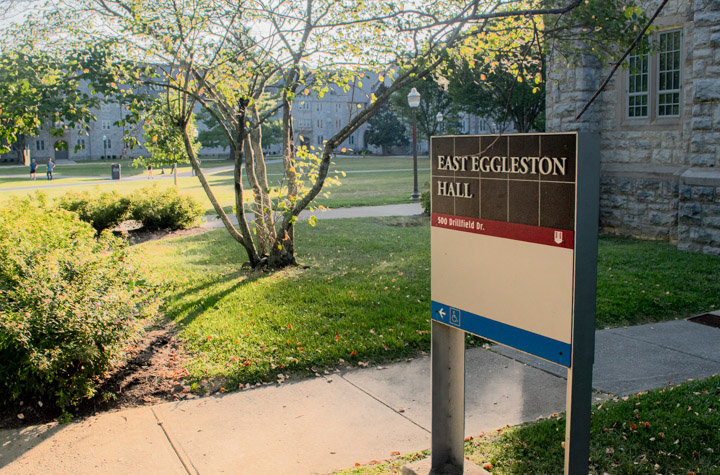
Virginia Tech freshmen now have live-in therapists. One of these therapists, Annie Clay, was hired to serve as an embedded counselor when Virginia Tech redesigned their student wellness programming in 2022. “Embedded” meaning these counselors live on campus, in the very same dorms students live in.
“The Residential Well-being Embedded Counselor program is part of the bigger Residential Well-being initiative model that [Virginia Tech] implemented two years ago,” Clay explained. “Most other universities don’t offer the Residential Well-being model to begin with … it’s a relatively new development.”
The school had faced backlash in recent years for its inadequate mental health resources, with students complaining of monthslong appointment waiting lists and unhelpful providers. But it seems that Virginia Tech took students’ feedback seriously; Clay relayed that Tech’s current Residential Well-being model is considered one of the most innovative in the country.
The Covid-19 pandemic challenged people’s mental health in a way that had never been seen before. Even in the fall of 2020, as restrictions slowly lifted and Tech welcomed students back to campus, the repercussions of lockdown remained. Realizing they weren’t meeting the needs of students, the school reworked their Residential Well-being program from the ground up. Clay explained that this involved breaking up the school’s on-campus student population into five districts.
“Each district has a set of professional staff that ensure the well-being of the students that live on campus, so they have case managers as well as other professionals that have expertise in different areas,” Clay said. “They work with students to check in on them [and] make sure they’re thriving.”
In addition to case managers, each district has an ExperienceVT coordinator, an Inclusion and Belonging coordinator, and a coordinator for Well-being. Describing how these different departments intersect in residence halls, Clay said, “the idea is if we can make the experience of living on campus good and we can help [students] thrive and feel a part of the community and do well, then they’re going to want to continue on at Virginia Tech.”
Even the Student Leaders–known as RAs at many other colleges and universities–have slightly different roles under the model. With the embedded counselors on staff, Student Leaders have a bit of a lighter load and no longer have to be the sole points of contact for batches of 25+ student residents.
“They’re heavily involved in checking on the students in their hallways,” Clay said, “making sure they’re okay. And if they think something’s come up, they will frequently get them connected with one of the coordinators. Or, frequently, Student Leaders will also bring students here if they’re in need of mental health services.”
Clay also credits the Student Leaders as being a major source of advertisement for the embedded counselors. “Student Leaders are a big help in letting students be aware that, ‘You have counselors right around the corner. We can take you right now,’ helping bring awareness that way.”
Student Leaders are students themselves, of course, and juggle their own course loads and social and personal lives, on top of their almost full-time jobs as Student Leaders. Residential Well-being’s Embedded Counselors are particularly helpful in swooping in during those late-night times of crisis, when a resident may need someone to talk to, but their Student Leader has exhausted all available resources.
“Our hours are different to make [counseling] more convenient for the students,” Clay said. “So, we have those evening hours open and available for the students, as well as having those drop-in and crisis [appointments].” Unlike counselors at Cook Counseling’s main offices, Clay and the other embedded counselors work 2-11 p.m., Monday through Thursday, and 1-4 p.m. on Fridays.
The embedded counselors have offices in East Eggleston Hall, situated between a dining hall and Virginia Tech’s famous Drillfield, directly across the street from the campus library and bookstore. While East Eggleston is residential, the embedded counselors don’t all live in it, as they serve students in all residence halls on campus. “The location’s on purpose,” Clay clarified. “It’s more convenient for the students that live on campus just to walk here, as opposed to the Gilbert Street location.”
Gilbert Street is where the main Cook Counseling Center is located, housing the majority of its other counselors and their corresponding offices. However, while Clay and her colleagues don’t work there and were fresh hires for the embedded program, she said it doesn’t limit the work they’re able to do.
“We’re just an extension of Cook Counseling Center, we’re just made more accessible to students that live on campus,” she explained. “We offer almost the full range of services of Cook Counseling Center here, meaning we do ongoing, individual counseling. We also have crisis and drop-in appointment times on almost a daily basis.”
As per Cook Counseling Center’s policy, Clay and her colleagues meet with their individual counseling clients every two to three weeks. They also host weekly meetings of the same kinds of therapeutic and support groups that the Cook Counseling Center does, just out of their East Eggleston location instead.

Clay believes the embedded counselors’ East Eggleston location actually offers certain insights to student life that the main Cook Counseling Center doesn’t benefit from. “Because we live on campus and we’re so aware and connected with what’s happening–because we work very closely with the professional staff and the coordinators and the case managers, as well–we have a bigger knowledge of the systems in place that, you know, could be contributing to mental health needs, or, also, that we can activate to help [students] deal with what’s going on.”
As far as what topics she most commonly covers with clients, Clay described the challenges students are expected to face when transitioning to college: new housing environments, conflicts with roommates, etc. But treating anxiety and depression is what she does most, Clay said. “Frequently we’ll see a lot of [students for] adjusting to college, ‘How do I deal with X, Y, or Z factor,’ ‘How do I deal with academics if my mental health is getting in the way of that?’ Of course, anxiety and depression are extremely common, we see that a lot.”
While students who live off-campus are only able to take advantage of Cook Counseling services at their main site, Residential Well-being does have plans to continue to expand the reach of their Embedded Counselors in the future. “It’s Virginia Tech’s goal to get a counselor embedded in every school and location,” Clay said.
Currently, there are counselors embedded for the Pamplin College of Business, the College of Engineering, and the College of Liberal Arts and Human Sciences. There are also embedded counselors in the Corps of Cadets and several in Virginia Tech Athletics.
Clay confirmed that she and her colleagues out of East Eggleston are able to manage student demand comfortably at this time. However, she said, “We’re in the process of getting two more counselors added to our program, so we’re doing interviews for that … to meet more student demand and have more availability.”
 > THE NEWS FEED <