By Ainsley Cragin
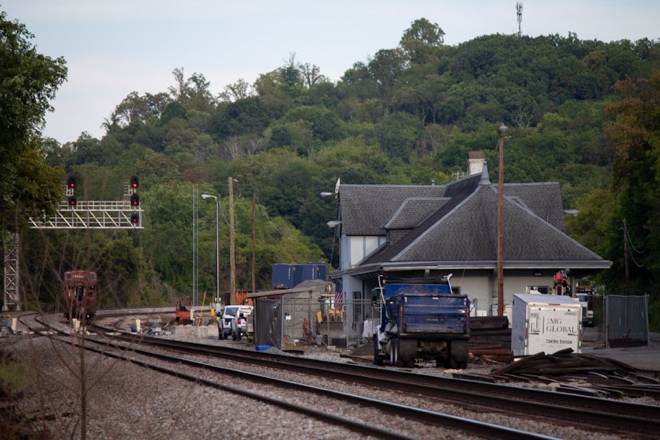
CHRISTIANSBURG, V.A. – An exchange of train tracks in Northern Virginia will bring a 121-year-old Christiansburg train station back to life.
1906 Rail Station in Christiansburg, VA
Virginia Passenger Rail Authority (VPRA) announced updates Sep. 5 to the New River Valley (NRV) Passenger Rail project after an unexpected purchase agreement with Norfolk Southern.
“As early as January of this year, we were told there was no way that Norfolk Southern is going to let us on their tracks,” said D. Michael Barber, Mayor of Christiansburg.
Colin Burch, senior planning manager for the VPRA, described the transaction as “an in-kind exchange of roughly 28 miles of the Virginian Line (V-Line) for about 24 miles of the Manassas Line (M-Line).”
“This new agreement with Norfolk Southern allows passenger rail to reach Christiansburg years earlier and at a better location,” said Secretary of Transportation Shep Miller after the VPRA announcement Thursday.
Barber says it will take about one and a half years to prepare the site and restore the 1906 Passenger Rail Station in Cambria to full operation. If the project stays on track, the doors to the new NRV passenger station will open in 2027.
“We’d like to think sooner,” Barber said, “but we don’t know. We’re just much closer than we were when we started.”
In 2022, the VPRA purchased the V-Line from Norfolk Southern as part of a plan to build a passenger station in the NRV.
According to Barber, the discovery of a mile-long freight tunnel under Route 460 derailed plans to bring passenger rail to Christiansburg using the V-Line section of track.
“Just to renovate that tunnel was going to be $740 million – in addition to another $350 million to build the station and the other tracks,” Barber said, “And so it was a $1 billion set-up. The VPRA and the state, rightfully so, didn’t want to commit that kind of money.”
Barber said Norfolk Southern decided in May of this year that they were interested in making a deal with the VPRA to buy back the V-Line.
Burch explained the new trade deal offered an opportunity to exchange the V-Line track for a portion of Norfolk Southern’s Seminary Passage, a section of the M-Line tracks in Northern Virginia.
“The Seminary Passage piece of the agreement was important for the Commonwealth,” Burch said, “because it would allow Virginia Railway Express (VRE) – which is the commuter rail line serving Northern Virginia and D.C. commuters – to improve service with weekend and late-night service.”
The trade provides an opportunity for the Commonwealth to maintain the NRV budget while supporting intercity rail and enabling additional services in Northern Virginia.
Sec. Miller said, “the deal achieves all of this while saving nearly $100 million.”
As Chairman of the Passenger Rail Station Authority, Barber made it a priority to avoid spending unnecessary funds to create an artfully designed passenger station.
“They projected the cost of that station to get everything ready is about $4.5 million, but we were looking at the potential of hundreds of millions to build a station,” Barber said, “I told my group we’re not going to build a monument to an architect.”
According to Barber, 20 of 29 possible sites for the New River Valley project were in Christiansburg, VA. The coveted Cambria location – made possible by the track exchange deal – served the Cambria neighborhood in Christiansburg from 1906-1979.
“I’m just over the moon that we’re going to be able to restore that building,” Barber said, “My goal all along has been to restore that station because, when I was a kid, I rode that train every so often going out to Lynchburg.”
Located on a well-kept road near the Christiansburg Aquatic Center, the rail station will be easy to access by car and will continue to be served by public transportation.
According to Barber, the renovation project will include the addition of about 150 parking spaces and two canopy-covered areas. In the coming months, crews will begin the process of cleaning and restoring the existing building to meet safety and ADA standards.
The new Cambria station could prompt a steady migration of travelers toward Christiansburg.
According to Burch, “when gas prices are higher, people tend to take the train more. And we typically see higher ridership during the holidays, summer travel months, and college spring breaks.”
The New River Valley Regional Commision assisted in forecasting passenger demand by using public transportation data.
“Essentially they determined that roughly 1 million people travel from the NRV to Washington, D.C. and the Northeast Corridor every year,” Burch said.
“I think the increased traffic in the Cambria section of Christiansburg will be very beneficial,” Barber said, “they’re figuring around 40,000 riders a year.”
According to Barber, two trains will come through the station each day. One will depart from the station at 4:30 a.m. and the other will likely depart around midday.
“We could see a coffee shop or even a train related sales type thing, that would be great,” Barber said.
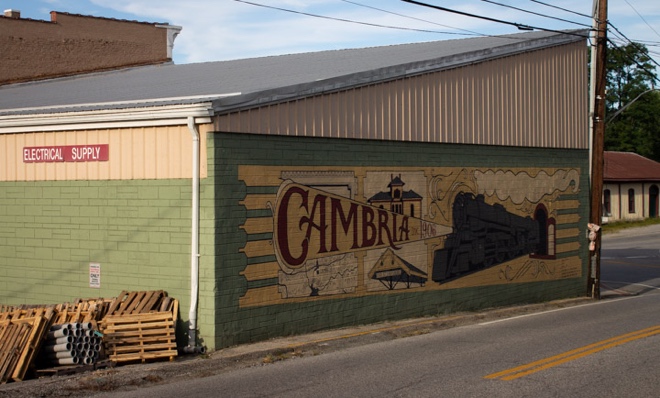
In 2023 the Town of Christiansburg commissioned a mural depicting the station’s history.
“We’ve already been kind of anticipating this, there is a beautiful mural depicting Cambria and the train history and all this kind of stuff,” Barber said, “it’s right next to the station, right where the train will come.”
According to Barber, there have likely been no people allowed to enter the 1906 station since late 1979.
“They’ve got to clean up and build another maintenance shop and do some maintenence type things.” Barber said, “So it’ll, I don’t really expect see any personality to the station itself for at least another year and a half, possibly.”
Adding a passenger train station near the Virginia Tech and Radford University campuses may increase student ridership, reducing the heavy traffic associated with college events in the NRV.
Mary Biggs, the legislative liaison for Montgomery County to the New River Valley Passenger Rail Station Authority and chair of the Montgomery County Board of Supervisors, said, “The investment from the state, Norfolk Southern, and our localities will benefit our citizens, our universities and their students, businesses and economic development for our region. It is a much needed asset for our area.”
 > THE NEWS FEED <