Dining out vs. cooking in as inflation rises

by Emaryi Williams-

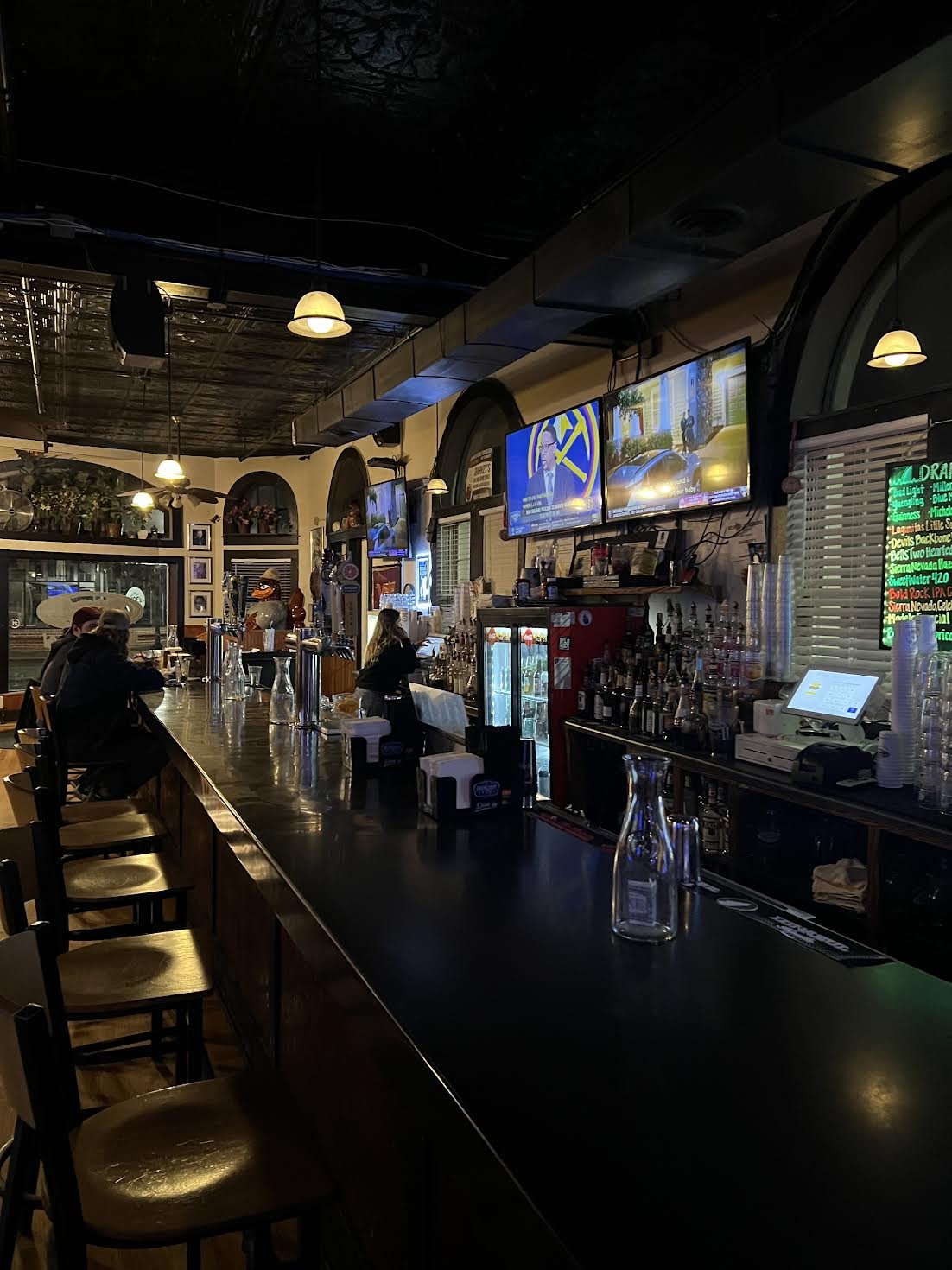
Restaurants are still open for business on Main Street in Blacksburg, even as inflation rises on Jan. 30, 2023. (Photo: Emaryi Williams)

BLACKSBURG — The prices for food increased last year by 10.4%, the largest yearly increase since 1981, according to the U.S. Bureau of Labor and Statistics’s Economics Daily

The Consumer Price Index refers to the ​​measure of economy-wide inflation, which has impacted many consumer goods and services, including food prices.

“This is important because it gave us important information about cost of living,” said Virginia Tech economic professor Shaowen Luo about the relevance of the consumer price index.

Luo explains that it is not the absolute price changes that are affecting the everyday American, but the relative price change.

“If everything in the U.S. market increased by 10.4%, including your wage, then your life is not affected,” she explained. For those who did not see a 10.4% income increase, Lou says the rise in food prices may impact their lives.

According to Blacksburg officials, the city is currently seeking ways to combat food insecurity in the area.

“We got some ARPA funds from the federal government,” said Blacksburg Town Manager, Marc Verniel. “One of the projects we’re looking at is to fund local nonprofits that are already helping people get good healthy food.”

Virginia Tech Professor of Finance Derek Klock list many factors to consider that have affected inflation, including the coronavirus, the war in Ukraine and increased demand.

“Whenever you have a supply chain disruption to the extent we’ve had over the past three years globally, all prices are going to rise,” he said.

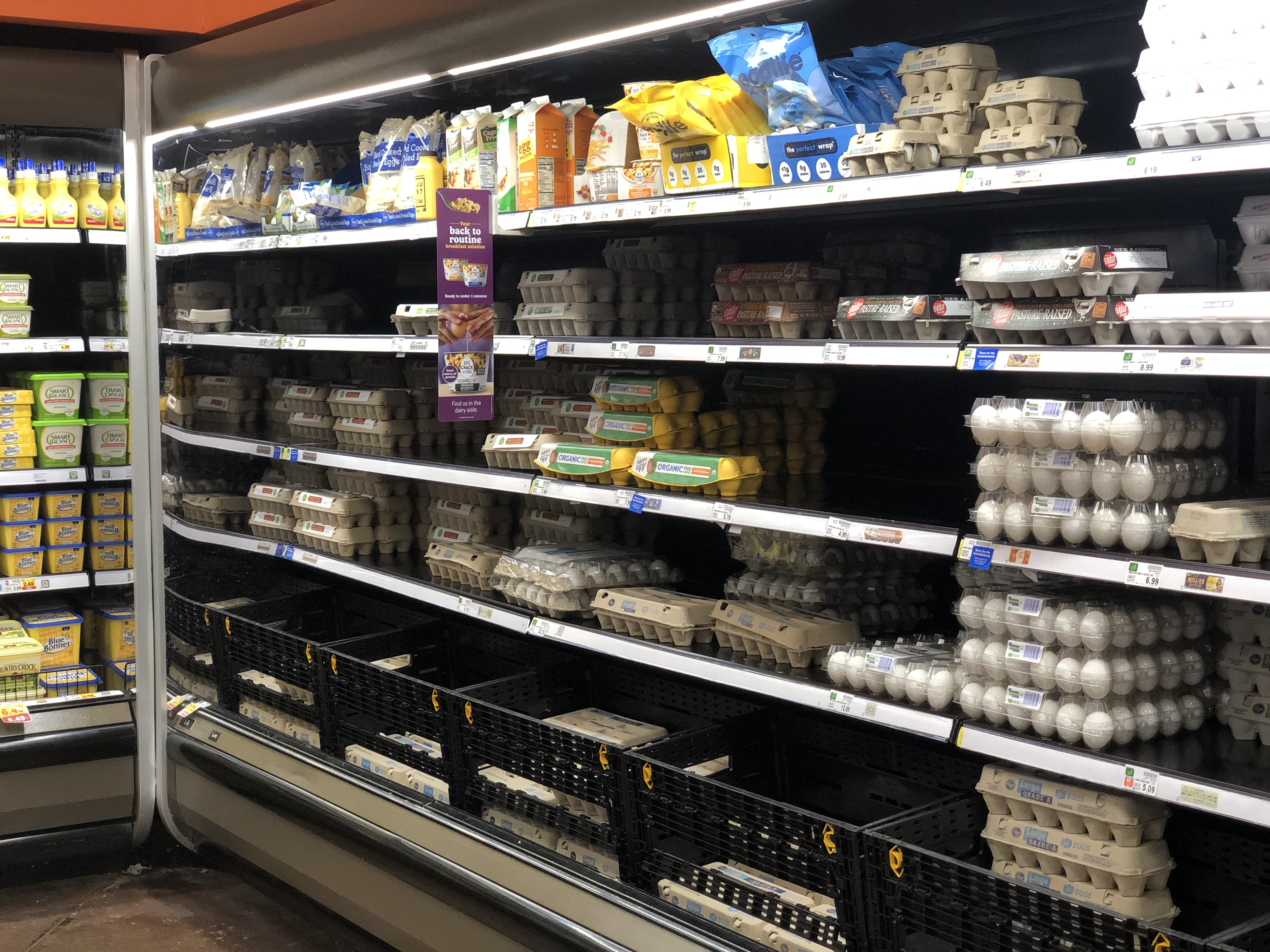
The cost of a dozen large eggs at a grocery store chain in Blacksburg has risen to more than seven dollars due to inflation on Jan. 30, 2023. (Photo: Emaryi Williams)

While both stores and restaurants have seen spikes in food prices, according to a 2023 Food Price Outlook created by the U.S. Department of Agriculture’s Economic Research Service, between September 2021 and September 2022, the prices of food in restaurants increased up to 8.5%, while the prices of food at stores increased 13%.

“I feel like going out and eating in ends up costing the same in the end because groceries are pretty expensive,” said Emma Larkin, a Virginia Tech off-campus student who frequents Kroger.

Despite price differences, Professor Klock warns the public about assuming that prices at restaurants will always compare better than those at the grocery store.

“Grocery store prices have gone up a lot, and restaurants will have to follow suit. Eventually, restaurants are going to have to pass on those increased prices to consumers,” he predicts.

Klock explains that since the pandemic, restaurants have held back passing raised prices to customers because people have just started eating out again. He says, for restaurants to stay in business, they are going to have to raise their prices soon.

Jan. 30, 2023 – Despite prices in Blacksburg, drivers and customers can be seen flocking to restaurants and bars on Main Street. (Photo: Emaryi Williams)

Professor Luo says, there are many aspects to consider when determining whether eating in or eating out is more costly.

Diet is one that she specified as a critical factor. A vegan and vegetarian diet could cut a person’s food costs by up to one-third, according to a study done by the Lancet Planetary Health.

“Some people may value having food outside much higher than cooking at home,” Luo said. “It also depends on your budget constraint – whether you are high-income people or low-income people. So, it’s complicated.”

Constant congestion on I-81: Are college students to blame?

by Deanna Driver-

Travelers drive on a relatively empty Interstate 81 in Christiansburg, Va. on Sunday, Jan. 29.  Photo by Deanna Driver, Jan. 29, 2023.

Around 48,000 vehicles pass through Virginia on Interstate 81 (I-81) in a given day, with 26-35% of that traffic being tractor trailers, according to the Virginia Department of Transportation. With this influx of people and large vehicles, 50% of delays on I-81 are due to accidents, compared to only 16% on other major Virginia highways. 

Congestion has long been an issue on I-81, especially in areas around Christiansburg and Roanoke. Dan Brugh, executive director of the New River Valley Metropolitan Planning Organization (MPO), said that interstates like I-495 in Northern Virginia have traffic more so because of volume, not accidents, like I-81.

I-81 cuts through the New River Valley (NRV), which has a population of around 180,000, via their informational site. Included is Virginia Tech, a large state-run university, which houses around 37,000 students and over 2,000 employees, according to their official website. With this many people only miles away from I-81, congestion linked to Virginia Tech students seems to be likely.

While approximately 100,000 students are on the I-81 corridor in Virginia, surprisingly, they don’t necessarily contribute much to accident statistics in the NRV specifically. However, Brugh did state that a lot of accidents on this major roadway can be attributed to “inexperienced drivers,” which is a category college students could arguably fall into.

This is not the case for every area in the state. Ann Cundy, Director of Transportation with the Central Shenandoah Planning District Commission, attributed congestion in the Harrisonburg area more to James Madison University (JMU), especially since the school straddles the major roadway, whereas Virginia Tech does not. 

“JMU employs nearly 3,000 people. They are what we call a major trip generator and attractor, so yes, JMU employees and others who live outside Harrisonburg and drive in each day contribute to congestion on I-81,” Cundy stated. 

Between the mile markers of 240-250 in Harrisonburg, there is significant congestion in the morning and evening, not only attributable to JMU, but also to large businesses in the area, such as the Cargill and Marshall plants. 

One of the main problem areas on I-81 in the NRV is from Christiansburg (exit 114) to Ironto (exit 128) going southbound. Here, the road is two lanes wide and twists through the mountains at differing grades with a speed limit recommending 65 miles per hour. 

Though constant congestion is an ongoing problem on many parts of I-81, there are solutions transportation experts have explored. According to the “Virginia Places” website, in 2019, former governor Ralph Northam proposed a toll system on I-81 that would provide funding for roadway improvement projects. This proposal was unfavorable for many, including locals and truckers, and ultimately, didn’t go through.

Despite Interstate 81 being the major roadway in the New River Valley, there are other alternative or connecting routes travelers can take to get from place to place that are likely to be less congested. Photo by Deanna Driver, Jan. 29, 2023.

Despite housing 29 universities/colleges on the I-81 corridor in Virginia, for the NRV, student and faculty runoff does not attribute to a large portion of stoppage concerns. Solutions do not include pushing for reduced student traffic on the roadway.

Ultimately, projects to improve I-81 and overall, reduce traffic incidents, will require a lot of funding and time to fully improve the vehicular flow in these highly congested areas. Transportation directors and officers are actively working to combat this problem and hope to find solutions in the upcoming years.

Managing mental health as a first responder

By Anthony Cusat-

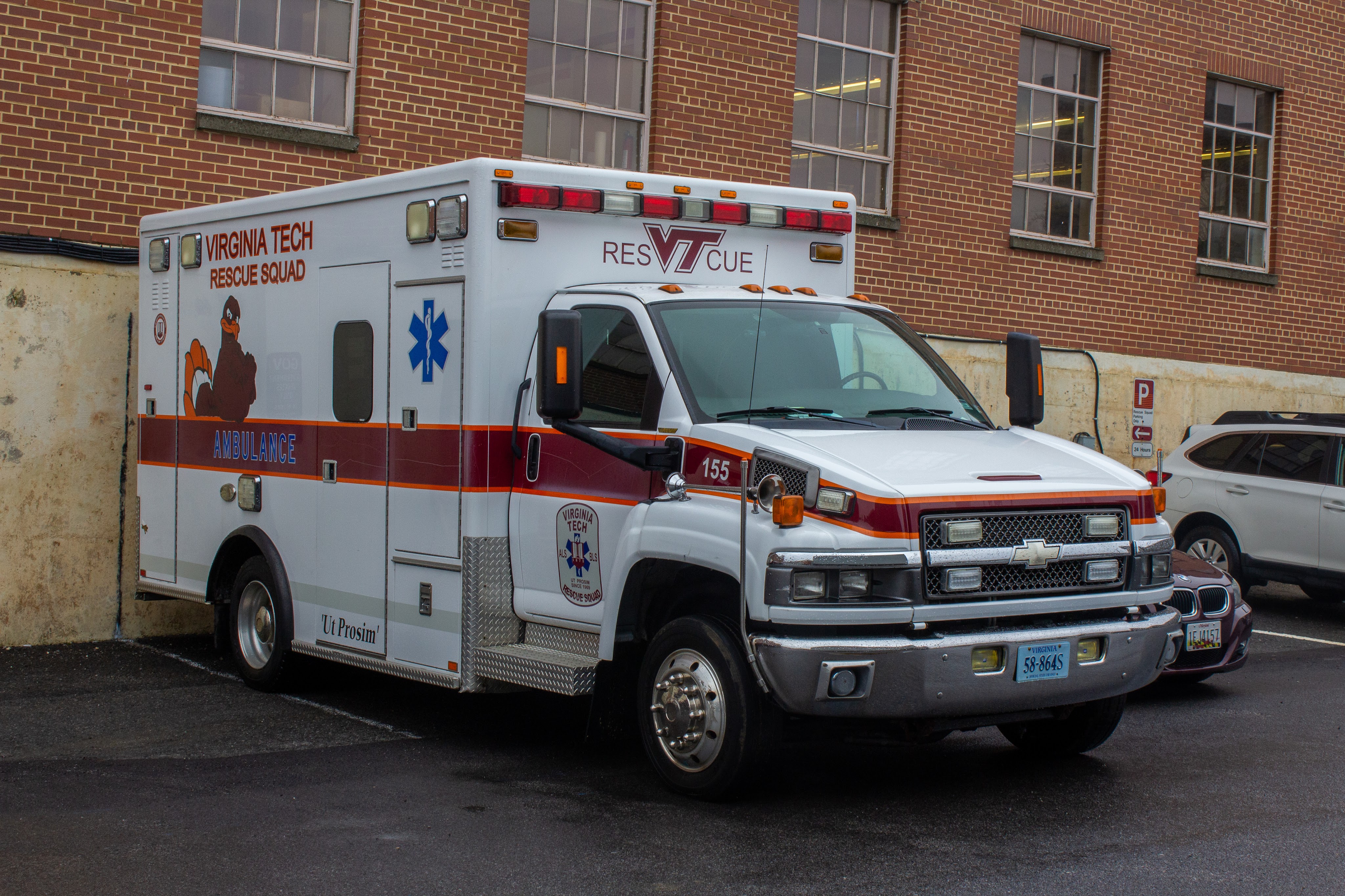
A Virginia Tech Rescue Squad ambulance is parked outside the station in preparation for a call in Blacksburg, Va., Wednesday, Jan. 25, 2023. (Photo: Anthony Cusat)

In the event of some of the scariest medical emergencies, first responders can be seen as pillars of hope and strength. However, it is impossible to assume there is not a mental toll that comes at the price of helping others.

Riley*, an emergency medical technician located in the Harrisonburg area, is one of many emergency medical service (EMS) providers who has seen the intersection between mental health and the job firsthand. When discussing the effect of traumatic calls, Riley said that it is not necessarily the anxiety of performing duties in the moment but the aftermath that leaves a lasting impression. 

“When you see family members and friends grieving over the loss of someone, especially in such a traumatic way, it really really takes a toll on you,” said Riley, after detailing a gruesome on-call death. Even years later, Riley still experiences reminders of the incident when passing the spot where it took place.

Unfortunately, Riley’s experience is not unique to first responders. According to the Substance Abuse and Mental Health Services Administration, 30 percent of first responders develop mental health conditions like depression and posttraumatic stress disorder which is 10 percent higher than the general population. 

In one study, it was concluded that first responders are at an increased risk of alcohol consumption after incidents that involve the death of citizens or coworkers. Use rose incrementally for eight days and returned to normal after eight months. Riley said, “Something that I feel like has been normalized is coping unhealthily with that stress… It [drinking alcohol] kind of has turned into, for some people, a legitimate problem.”

With these numbers, there is an increased importance for first responders to have access to adequate mental health resources.

Administrative captain of Virginia Tech Rescue, Isabella Filippone, said, “It’s not about experiencing a traumatic event and then taking care of yourself, it’s about taking care of yourself so that you’re prepared to see those types of things.” While the vast majority of calls tend to be minor incidents, Filippone said finding ways to healthily cope with the stress of major emergencies makes a difference on well-being.

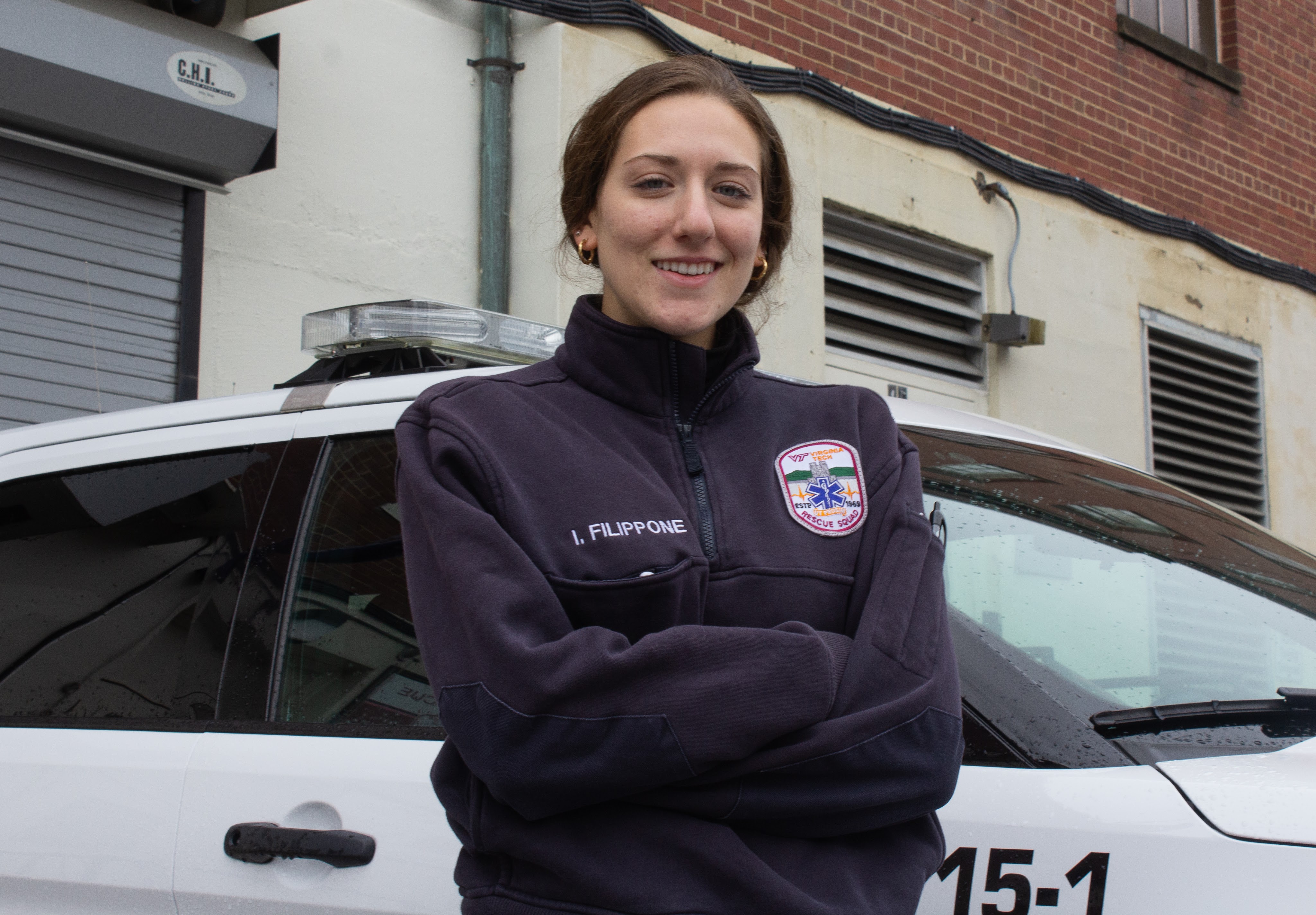
Isabella Filippone standing outside a Virginia Tech Rescue Vehicle in Blacksburg, Va., Wednesday, Jan. 25, 2023. (Photo: Anthony Cusat)

Among first responders, consistent themes for positive coping included having outlets to talk to and fostering a culture of openness. Riley, for example, is able to see a therapist that specializes in EMS-related trauma which they said helped them recognize lingering mental wounds.

Additionally, squad members rely on one another for needed support. Cameron Buck, assistant deputy chief of field operations at Blacksburg Volunteer Rescue Squad said, “I would feel comfortable myself going to any of our officers and talking about a tough call, but I would also feel completely comfortable sending someone else to any of our officers.”

When referring to first responders, Buck said, “It’s a group of people who collectively want to serve something bigger than themselves.” Despite the potential tribulations, those who serve as EMS professionals still have unbounded love for what they do. 

*For confidentiality purposes, the name Riley is an alias.

Without state assistance, Pulaski County’s business development moves forward

The Pulaski County Administration Building in Pulaski, Virginia houses the office of Jonathan Sweet–the county administrator. Sweet has had his role since 2016. January 25, 2023.

By: Ben Walls

Though the county remains ineligible for state assistance for communities that once heavily relied on a tobacco economy, Pulaski County has proved to support their business-related growth.

Members of the House of Delegates Committee on Agriculture, Chesapeake and Natural Resources in the 2023 legislative session voted to table the General Assembly bill which would have added both Pulaski and Giles counties to the Tobacco Indemnification and Community Revitalization Fund.

“I don’t know why these counties were not included in the original designation as we both have raised tobacco since the beginning of the colonies,” Pulaski County Board of Supervisors Chairwoman Laura Walters said. “We are a hole in the middle.”

The commission’s funding specifically applies to economic growth projects in member counties. Officials from both counties–like Chairwoman Walters and Giles County Board of Supervisors Chairman Jeffrey Morris–said personally they did not know where they would implement their assistance money.

County Administrator Jonathan Sweet says the county has worked extensively for Pulaski to reach eligibility that their neighboring counties have, however. Though Bland, Wythe, Carroll and Floyd are eligible for assistance, Sweet says it is just as important for Pulaski to give back to Southwest Virginia and the residents as it is for them to join the commission itself.

“Though Pulaski County is not in the region, we support through employment opportunities for a lot of citizens who do live in the tobacco region,” Sweet said.

If the tobacco commission were to grant Pulaski its kind of state assistance, the county would like to build a new community college, a regional airport and a regional industrial park. Along with its other priorities with or without the tobacco commission status, Pulaski has a goal for 40,000 residents to call it home by the year 2030 under Sweet’s leadership.

“It just makes more sense to have the resources from that commission to further invest in employment opportunities, educational opportunities and foundational community opportunities for the greater benefit for the citizens,” Sweet said. “Ultimately, that’s what we’re all working toward.”

According to Sweet, Pulaski must enter multi-faceted reform to reach their goal by 2030, including economic, workforce and retail development. Meanwhile, the county economic development authority and its small business solutions subsidiary have a strong presence in the community by helping newer small businesses and startups obtain permits. The small business solutions center also assists established businesses with marketing plans and reviews business plans for county organizations.

“We’ve received a lot of recognition locally for our small business efforts specifically just because not a lot of companies have a person or an office dedicated to small business,” said Pulaski County Small Business Solutions Director Lydia Gilmer, who has become the county’s go-to person for business owners navigating red tape. “What we want to see is a business moving in for a few years, kind of get their feet wet, take advantage of cheaper rent in a small space and then eventually grow out in the community. That’s what we really want to see.”

The Pulaski County Innovation Center in Fairlawn, Virginia houses the county small business solution center. According to county officials, not many counties have similar offices. January 30, 2023.

According to Gilmer, Pulaski has become an ideal locality for businesses for its affordability and accessibility for citizens. 40 of the county’s small businesses today are housed in the county’s innovation center where tenants can take advantage of the small business services and smaller amenities like a kitchen and gym. Gilmer says her attention to small business makes all the difference for business owners.

Under county leadership, Gilmer is confident for Pulaski to look “unrecognizable” within 3 to 5 years.

The real cost of diabetes

By: Tyler McAnany

Blacksburg, Va., Jan. 24 – An overwhelming supply: A look at all of the different things that go into daily and weekly diabetes management. Photograph: Tyler McAnany

The American Diabetes Association (ADA) estimates that people with diabetes are spending $9,601 more on yearly medical expenses than those without the condition. Between inflating insulin costs, medically excused work leave, hospital trips and increased susceptibility to illnesses, people with diabetes are being forced to pay a price that goes beyond the effects of their already complicated disease. 

Clayton Pfeiffer, a type one diabetic, has experienced this first-hand since the age of six. “There have been stories of people not being able to pay and I have also heard stories about people rationing their insulin which is not healthy.” 

While Pfeiffer does mention there are insurance plans that help such as an 80-20 insurance split cost (80% covered and 20% out of pocket), it does not change the fact that costs continue to rise and apply more pressure to families. 

Modern-day diabetes technology can be quite expensive as an upfront cost but it is the recurring costs of insulin that are what make the financials of diabetes difficult to navigate. Insulin is not that expensive to produce, however, the demand for it has gone up. What was once going for $30 per vial has shot up to prices as high as $300. 

Blacksburg, Va., Jan. 24 – The future for diabetics: While the cost of care continues to rise, there are things like this Dexcom G6 pump that are making diabetes care much easier. Photograph: Tyler McAnany

The rise in the cost of diabetes care can be attributed to the rise in type two diabetes, which unlike type one, is developed and in some cases can be reversed. Nevertheless, people affected with any variation are outraged by the cost of care. Even medical professionals have taken notice of the business-first mentality that is the pharmaceutical industry. 

Heather Mulvaney, a registered nurse and certified diabetes educator, sees cruelty and unfairness when it comes to the system of purchasing piled on to the management and upkeep already required. “We’re talking about insulin that is keeping people alive and well, this is not something that anyone wants to be on. To have the costs dictate the care is unacceptable.”

While the costs present a real issue for those diagnosed with diabetes, the technology has significantly evolved to a much more hands-off means of finding vital information regarding the body. 

Pfeiffer recalled the days of when he was required to prick his finger to draw blood up to six times a day and not always knowing if or when he was “low”. “Technology has certainly come a long way. I now have pumps that regularly monitor my blood sugar levels, as frequent as every 5 minutes, and I can avoid the toll those things took on my skin.” 

He even went on to compare the new technology coming out periodically similar to new iPhones. “Always more expensive than the last, but the improved quality and function is undeniable.” 

This is not to mean that big changes to the industry are not needed. Opportunities for equipment consolidation, price changes and increased government regulations have all been discussed. 

Living a life with extra steps already presents its own hardships, but it is too often overlooked that serious financial commitments are required. As Mulvaney alluded to, people cut corners on their care because of strict financials and that alone may make people question what the intentions of the medical industry really are. 

Virginia schools continue struggles with growing teacher shortage

By Jordan Meadows-

Jan. 30, 2023: Young students read and practice lessons on iPads on the outside lawn at Prices Fork Elementary School in Blacksburg, Va. (Photo: Jordan Meadows)

The state of Virginia, along with the nation as a whole, is currently facing a crisis in the education system due to a shortage of teachers. 

The shortage of teachers is due to more educators leaving than new ones joining the workforce in recent years. Most of the teachers leaving reported doing so for reasons other than retirement. This has prompted Virginia legislators to discuss potential bills that would provide incentives for teachers, such as increased pay, paid time off and shorter training. 

Low-income school districts, like the New River Valley, are taking steps to address the shortage. Some have implemented recruitment and retention programs, while others have turned to alternative forms of education such as virtual learning. 

Dana A. Robertson, an associate professor of reading and literacy in the School of Education at Virginia Tech, said that areas like the New River Valley are in a worse position than other districts in the state. 

“The smaller rural communities, the lower-income communities, were already at a disadvantage for attracting and retaining employees,” Robertson said. “Because of income differentials, it’s harder to incentivize people who don’t necessarily live in that community already to come to that community to work.” 

Some districts have collaborated with local colleges and universities to provide additional training programs, instructional assistants and internships. Despite these efforts, the shortage of teachers remains a pressing issue for the region and will likely continue to be a major concern for educators and policymakers alike. 

Matthew Williams, an aide to a Virginia state senator, said that overall, most of the legislation being proposed in the general assembly’s current session has failed early in committees.

“The general assembly is completely gridlocked. Nothing is getting done.” Williams said. “The education and health committees have not discussed the teacher shortage nor possible solutions in-depth as of yet.” 

According to the 2022 Joint Legislative Audit and Review Commission, 50 percent of school staff, including principals and teachers, reported that hiring more instructional assistants would have a substantial positive impact on addressing these issues.

More and more experts believe that the pandemic isn’t the only reason for the shortage. In 2022, the rate of teachers leaving the profession was 12% higher than the pre-pandemic average. 

The shortage of teachers is also affecting various subject areas differently. The number of open positions for special education is almost five times higher than the next highest group, mathematics. Furthermore, about 65 percent of the teachers leaving did not retire but left for other reasons – a 7% increase. Robertson says this is a result of bureaucratic accountability.

“Teachers get into the job to teach and build relationships with students. When you’re spending most of your time doing paperwork and other items for accountability purposes, which are tied to funding, it leaves the position less desirable.” 

Funding per student in the state has been steadily decreasing in recent years. Local Virginia school districts may have to use their own resources or collaborate with one another to solve their particular problems. 

NRV schools strive to expand student safety

By Madi Armstrong

Entrance of Prices Fork Elementary School in Blacksburg, VA, on Tuesday, January 31, 2023. (Photo: Madi Armstrong)

In light of the Newport News elementary school shooting in early January, elementary schools surrounding the New River Valley are working towards a safer environment for all students.

With the Gun Violence Archive reporting a little over 50 shootings in January alone, it has members of the New River Valley wondering if their children are safe. However, local schools want to ensure parents that their children will be protected from harm — should it arise.

“In Virginia, all schools are required to have a Crisis Plan,” Director of Student Services and Safety, Jason Garretson, said. “Our plans do include sections on reported weapons, shootings on campus, and serious injuries on campus. The plans follow guidelines established by the Department of Criminal Justice Services, and are updated annually.”

Aside from the Crisis Plan, Garretson confirmed that schools within the New River Valley have training for their teachers as a means to be adequately prepared for emergencies that can occur.

“Most of our teachers are trained in First Aid and CPR; it’s actually a licensure requirement in Virginia,” Garretson said. “They are also trained in our systems for notifying school administrator support and/or law enforcement.”

However, training doesn’t stop there. According to Garretson, schools participate in biannual state-mandated lockdown drills; and staff and faculty are trained in trauma-informed care to best help students.

Some staff even feel that things have already gotten better than in previous years.

Drop-off area of Kipps Elementary School in Blacksburg, VA, on Tuesday, January 31, 2023. (Photo: Madi Armstrong)

“Growing up, I think getting into schools was easier,” Substitute teacher, Emily Cullen, said. “Now, the only way to get in is by calling beforehand and going through the front office.”

Before beginning her employment at an elementary school in Radford, Cullen talked about a lockdown that occurred last year. According to Cullen, the families she knew were significantly affected by the incident.

“It greatly changes the heart,” Cullen said. “However, I would encourage others to suggest new ideas because it’s ultimately about the safety of faculty and students.”

In other words, Cullen wants everyone to know that if you see something, say something — which is the same sentiment that Garretson also had.

“‘See something, say something’ is a consistent theme,” Garretson said. “We need to take lessons learned from every school tragedy that occurs and incorporate them into our standard practices. And safety has to always be a priority.”

With all of this in mind, each school works closely with their local law enforcement for expertise in these areas that help foster a safer community, alongside the resilient community.

“We are so appreciative of the cooperative nature we see from most of our students and families,” Garretson said. “This is also true of our local law enforcement and EMS responders.  We are blessed to have wonderful working relationships with these brave men and women.”

Social media presence, challenges for local businesses

By Victoria Krizek

Blacksburg, Va., Jan. 27 – Seasonal sign in front of Coffeeholics. Photo: Victoria Krizek 

Local businesses around Virginia Tech understand the importance of using social media to promote their brand. Due to their location, a large majority of their consumers are going to be students and, according to a consumer report from Experian, over 98% of College-aged individuals use social media. Maintaining a social media presence comes with new challenges for businesses to face and overcome.

“I think now more than ever we, as a culture, rely heavily on social media to influence our purchases,” said Kaitlyn Hawkersmith, assistant manager at New River Art and Fiber

According to Neal Schafer, a digital marketing consultant, on his blog, just over half of a brand’s online discovery will come from social media.

“There is no room for someone on staff to focus solely on social media like you might see in larger companies,” Hawkersmith said. “Instead, positions like mine are divided into several responsibilities that include social media. And, the responsibility of social media is shared throughout the team.” 

Maintaining a social media presence can be difficult for a small business that doesn’t always have the resources to hire an outside advertising agency or new team members, as Hawkersmith pointed out. However, this allows the business to get creative in the way they post on their socials and build rapport with the community.

“We try to get involved in the community as much as possible.” Said Al Murad, co-owner of Coffeeholics, a local coffee shop. “We think this is good for us as a business because it’s exposure but, at the same time, it builds that connection between us and the people in the area.”

Another struggle for small businesses is to ensure their social media fosters creative ideas. Lilly Murad, the other co-owner of Coffeeholics and wife of Al, says they strive to keep their Instagram postings original and spend a great deal of time thinking about creative ways to promote their brand. Coffeeholics doesn’t only use its Instagram account to advertise its seasonal drinks but also to promote pop-up shops and other events designed to gain engagement.

When aiming to share distinct posts that differ from other businesses, New River Art and Fiber takes a more personal approach to their social media accounts. The team shares upcoming events on their Instagram, but Hawkersmith believes that their ‘regulars’ are more likely to turn to their weekly newsletters for that information. As a result, the New River Art and Fiber Instagram page shares current art projects that the staff is working on and art hacks for followers to try. 

“Our people are here in the New River Valley and we genuinely enjoy getting to know our customers,” Hawkersmith said about having a more intimate Instagram feed. “This is what builds a loyal customer base.” 

Coffeeholics collaborates with Prices Fork Elementary to hang the children’s artwork in the shop, as a way to add one-of-a-kind decorum both to their walls and to their Instagram page.

Blacksburg, Va., Jan. 27 – Artwork made by children at Prices Fork Elementary School to be shown at Coffeeholics. Photo: Victoria Krizek

Mr. Murad says they change this artwork frequently to keep regular guests engaged.