Citizens of the New River Valley have become increasingly worried about the ongoing conflict in Iran. Will gas prices rise? Is war imminent? A Former Foreign Relations International Affairs Fellow and associate professor of Political Science may be able to offer some clarity.
(Roanoke, Va) — The Harrison Museum of African American Culture had announced their relocation to Melrose Plaza in the latter part of last year. Recently, they announced that they will temporarily open their doors as they launch their “Next 40 Years Campaign.”
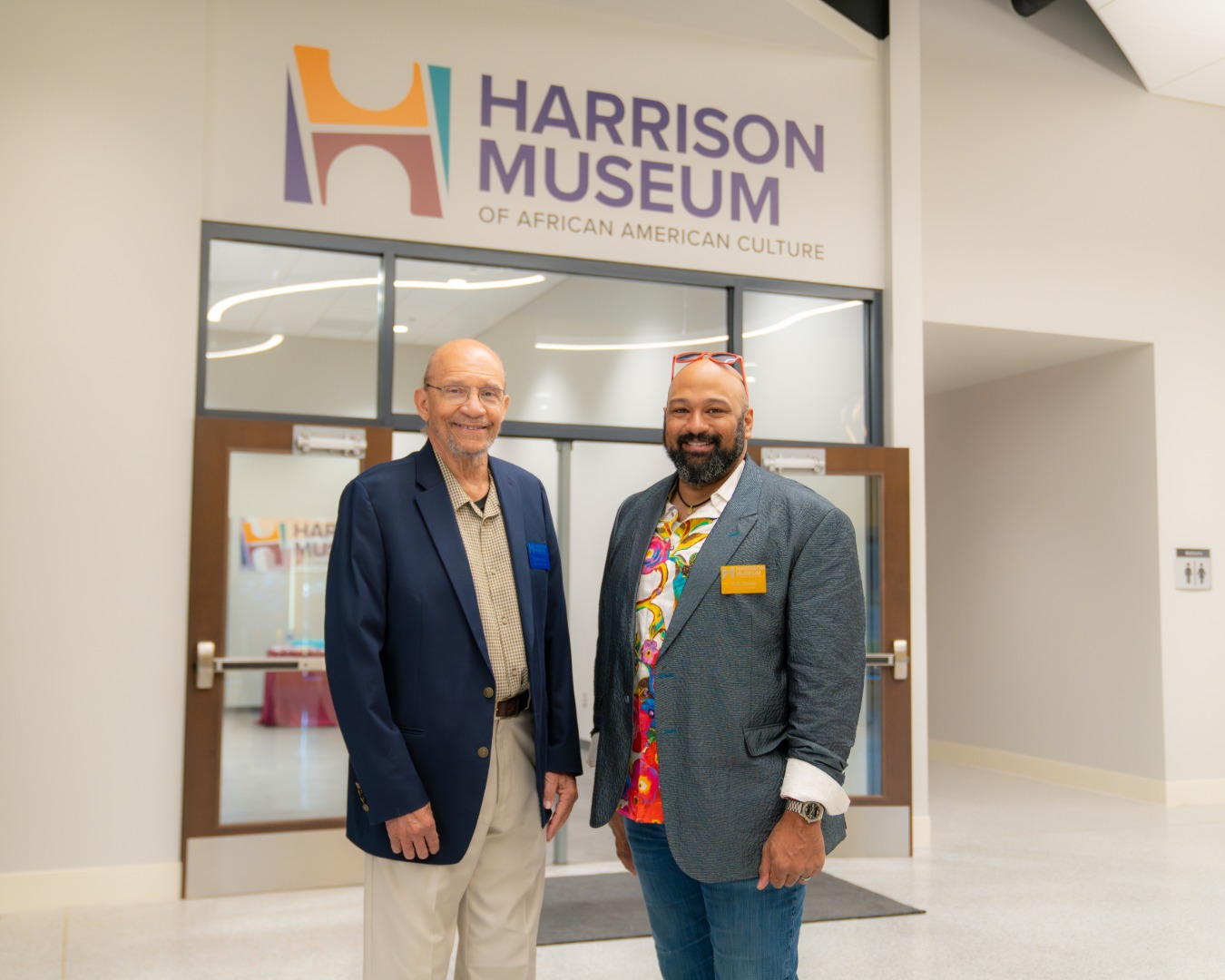
E.B. Smith, and colleague, standing outside of Harrison Museum’s new location in Melrose Plaza, Roanoke, Va.( Melrose Plaza)
The long-established Harrison Museum of African American culture has been a staple of Downtown Roanoke for decades. After their initial move to Downtown Roanoke in 2013, the Harrison Museum will return to Northwest Roanoke in what Executive Director, Eric Beasley, calls a leadership defining move. The museum made the move last summer and aims to enhance Northwest Roanoke’s connection to the region’s cultural ecosystem. This “cultural ecosystem” will be on display in the Harrison Museum’s new thematic exhibits, which will be in rotation every six months. This rotational programming will ensure fresh and relevant content for visitors as well as enlighten them to some of the hidden history of the Roanoke and New River Valley. “We’re moving beyond traditional exhibits to create experiences that link historical objects with the real stories of people’s lives and show how those stories still matter today,” said E.B. Smith.
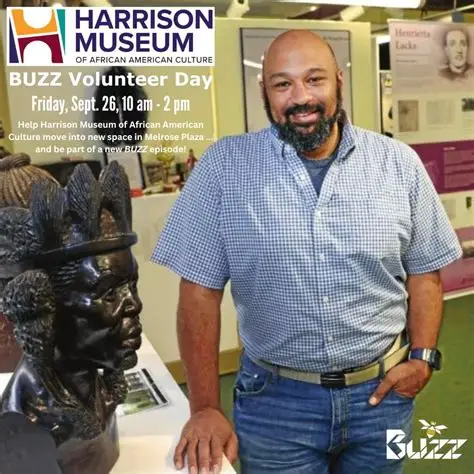
Executive Director for the Harrison Museum of African American Culture, Eric Beasley Smith, participates in “BUZZ Volunteer Day. Roanoke, Va. (BUZZ4Good)
Eric Beasley is more than the Executive Director of the Harrison Museum, he is a well-traveled Thespian, who’s been introduced to many stories, artists, and histories that traverse the African diaspora. E.B. Smith remarked that, “I think all of that gives you a really nuanced understanding of migration, of how cultural priorities are so nuanced and varied, but also an understanding of how those things tie us together, of course those common threads really can be found regardless of where we’re coming from.”
Smith further commented in an online interview earlier this week, regarding the motives behind the moving of the Harrison Museum and what the local community can expect from the new and improved space. “There was a lot that went in to that discussion, but, when it really boils down I think – the museum had been down at Center of the Square for quite some time, and I think over the last several years in particular the focus of Center in the Square and how it was imagined to show up in terms of the cultural landscape of the city had been shifting. — It was a chance to move back to the neighborhood where the museum was founded, we’re back in the Northwest, so that was really cool to be back in community with folks.”
As the interview progressed, the topic of reparations presented itself, as well as the initiative to distribute potential funds to those affected by urban renewal in Gainsboro and Northeast Roanoke. This project is led by the city’s Equity and Empowerment Advisory Board chair, Angela Penn, and Mayor Joe Cobb. If the reparations effort were to be approved, Roanoke could join other cities such as Charlottesville, Asheville, and Spartanburg in the effort to make up for historical wrongdoing. Although this initiative is progressive, E.B. Smith has differing opinions on what this could mean for the Black community in Roanoke and how the Harrison Museum is contributing to the reparative efforts. “I mean, it’s yet to be seen what reparations and reparative action will look like, it’s not clear if that’s strictly financial, if it’s policy driven, y’know I don’t know what it’s going to look like. But I think all of this work that we do, on some level, is reparative. It’s all about healing, and from my perspective the most important thing that we can do is continue to inspire that imagination about the future.”
In addition to speaking to E.B. Smith, I was also able to set up an interview with Virginia Tech’s Dr. Michelle Moseley, who currently serves as the co-director of the Material Culture MA program alongside her colleague Lauren DiSalvo. Dr. Moseley’s current research projects focus on female collectors and collections and recently published an article titled “At Home in the Early Modern Dutch Dollhouse: Gender, Materiality, and Collecting in the Seventeenth-and Eighteenth-century” while under contract with Amsterdam University Press.
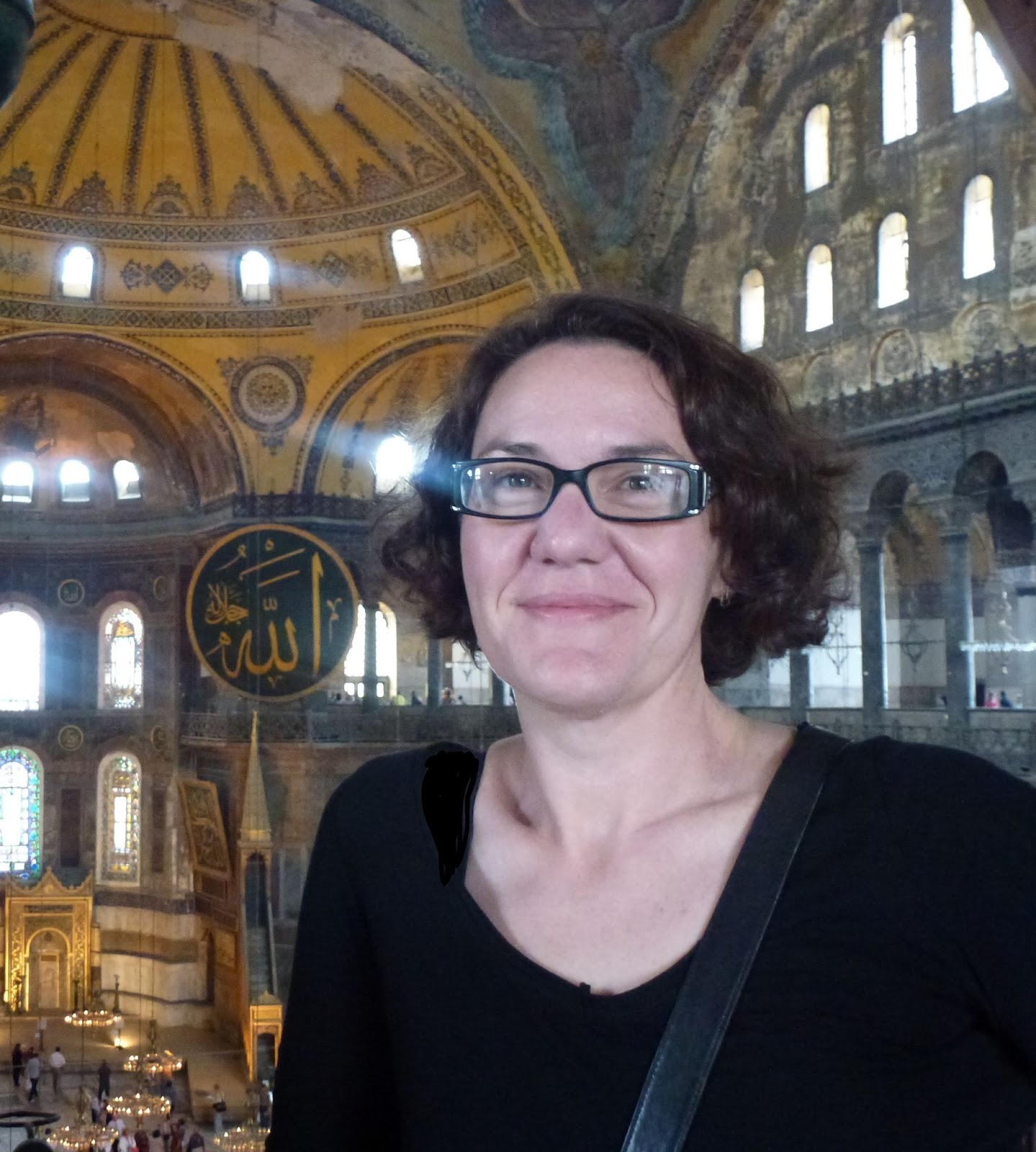
Co-Director of Material Culture MA program, Dr. Michelle Moseley, out on assignment while traveling abroad, location, unknown( Sophia Hage)
“I haven’t been to the new location yet but I’m aware of the new exhibition on Black community in medical history in Roanoke, which I think is going to be a great one. They do have a lot of photographs, a lot of archives, a lot of papers and these are important records for the community to understand Black History in the New River Valley and the contributions that this community has made to the larger scope of the NRV.” Dr. Moseley has been collecting for several years and has used what she’s collected to answer questions about the people who made them and what their culture is made up of.
To Dr. Moseley, these same questions can be asked and answered when viewing the collections that reside in the Harrison Museum. One archival object that Dr.Moseley is most excited about seeing is the Henrietta Lacks sculpture. Lacks, whose immortal cells are instrumental in the creation of various vaccines and restorative research projects, was a native of Roanoke. Moseley concluded with, “I know the Harrison Museum has had a big hand in promoting that particular work, as you know Henrietta Lacks is from Virginia, so she is such an important person, has such a big impact on our culture and I absolutely can’t wait to see that.”
(Roanoke, VA) — It’s been half a century since the bulldozing of historically black communities, Gainsborough and Northeast, but the city of Roanoke is moving towards an apology to those affected and their descendants.
Beginning in the 1930s, the federal government began creating color-coded maps that redlined Black and immigrant neighborhoods as risks for loans and housing assistance. These maps gauged roughly 250 neighborhoods across the various cities in Virginia including Norfolk, Richmond, and Roanoke.
Twenty years later in the 1950s, the Roanoke City Council labeled the Northeast area as a ghetto and proceeded to level over 1,000 homes, flattened roughly 200 homes, eviscerated a dozen churches, and uprooted nearly 1,000 graves. These efforts eventually made way for the construction of Interstate 581, the civic center, and the post office.
Late last year, the city’s Equity and Empowerment Advisory Board, chaired by Angela Penn, drafted an apology for the urban renewal efforts of the past. After previous stalled efforts, the apology could open the door for a reparations fund for families that suffered financial losses and opportunities for generational wealth.
After a meeting with council members on Jan. 8, Mayor Joe Cobb announced in an email that he plans to work with the council in the following months to review the draft and consider additional advice.
“Shortly after I came on to city council – I was selected on to city council in 2018, we began conversations with a group of African American elders and African American young adults to talk about an apology and reparative actions related to urban renewal which started in the mid to late 50s and then didn’t really finish until the 80s.”
“What were some of the key points that needed to be outlined in that apology and then what are some reparative actions because we all agree that an apology without action that seeks to repair the harm done is really just words on a page.”
If Roanoke’s draft apology is approved, not only would there be an additional tax on Berglund center tickets to generate revenue for the reparations fund, but Roanoke would join other cities that have formally apologized for their participation in urban renewal that resulted in the destruction of thriving Black communities. These cities include the Carolina’s Charlottesville, Asheville, and Spartanburg.
In an online interview Wednesday, Mayor Cobb went on to provide some background information surrounding the council’s decision to move forward with their reparations plan, the potential barriers it may face, and how the Roanoke community could benefit from such a plan.
Comments were slightly edited for length and clarity
Does the Equity and Primary Advisory Board have a concrete plan when it comes to distributing financial reparations? For example, the Roanoke Rambler wrote an outline with recommendations such as a tax on Berglund Center tickets, developing Henry Street, or history markers.
So the city in Virginia, because we’re a Dillon rule state, we cannot as a local government set up a reparation fund and award money to individuals. We have to have General Assembly approval to do that. What we can do is make investments, whether they’re capital investments or other investments that can improve the quality of life for people who either lived in and had to relocate in the urban renewal area. So it could be something like creating a program where people who were forced to move have greater access to capital or equity to purchase their own home for first time home buyers or for business owners to be able to start a business or for faith communities to be able to enhance their facility in some way. We’ve already done a lot of work in terms of historical markers in renaming things affected by urban renewal. A lot of that’s taken place in Gainsborough, a lot of it downtown. The Berglund Center is actually renamed a lot of its rooms after African American elders who were alive and still are but lived through that time of urban renewal. So one answer is yes, there are numerous potential action items we could take on, but we have to make sure that we do so in such a way that we have the authority as a local government.
For those who may be seeing this as a subtle resurfacing of DEI, what do you have to say to those who are against these efforts?
Because of this current presidential administration’s tirade and work against practices that reflect diversity, equity and inclusion, we’ve had to kind of scale back the priority outwardly of the equity and Empowerment Advisory Board. But as I remind people in Roanoke, DEI is in our DNA. If you just look at the history of Roanoke, we’re a place for immigrants, refugees, we’re kind of this multicultural melting pot of people and cultures and experiences, and that’s always been part of who we are and it’s just increasing and growing. So even though we may not outwardly always talk about it, it’s who we are and it’s how we go about our daily work and so it’s important for me and for us to reiterate that. Just because you did one thing or two things or three things, it doesn’t fully replace the centuries of harm that has come upon different people and different cultures.
Within five years, what do you hope to see from either Roanoke or similar cities such as Charlottesville, Asheville, and Spartanburg who are doing the same thing you’re doing?
Well I always hope that we can, when we take steps like this, that we can see tangible and sometimes intangible signs of healing in a community. I think if we never do the healing work, community healing work, the tendency is just to put band aids over very deep wounds. We have to embody this desire to be dedicated and committed to healing work as a community, and that’s not typically something that a local government is an expert in. So that’s where we have to really draw on partners in the community that understand the nature of healing work and why it’s so critical to making us stronger and healthier as a community.

 > THE NEWS FEED <