“Doomscrolling” is a rising phenomenon regarding the use of smartphones and social media. More and more, younger generations are sucked into addictive short form content that is made on social media apps. Doomscrolling can lead to mental and physical problems, but now people are combatting the addictiveness of these apps with app blocking programs to prevent further addiction.
Many people set New Year’s resolutions for themselves, but not many stick with them. Those who are still continuing their resolutions two months into the year share some insight into how they do it.
AI is growing in more ways than thought possible and people in almost all fields are starting to use it, including clinical professionals. Professionals from Virginia Tech’s Carilion School of Medicine explain what can come out of the use of AI.
With the rising use of AI in medicine, there can be a number of different outcomes when it comes to using this technology. AI could analyze data points faster, significantly better determine what and how much medicine a patient needs, determine risk levels quicker, make clinical work more efficient, and lower burnout. It could also harm humans’ ability to complete steps in a task or tool.
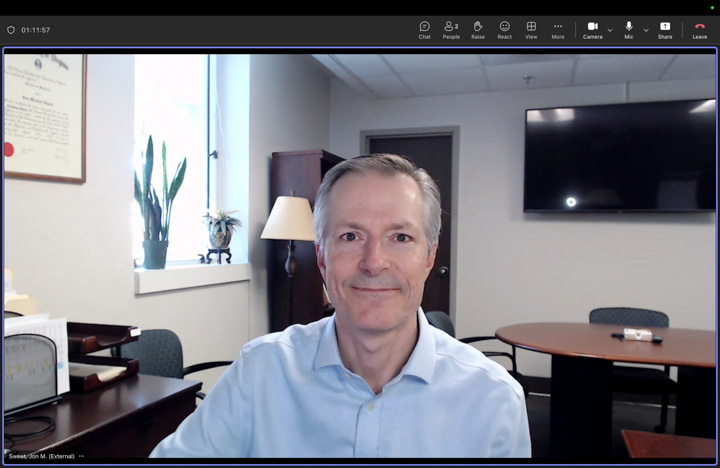
“Now we can leverage AI to help us determine what is the best medical chemotherapeutic regimen for that patient in front of you, which may be a different chemotherapeutic regimen from the patient you saw yesterday,” said Professor Jon Sweet, chair of the Virginia Tech Carilion School of Medicine. “As genomic information becomes way cheaper and much more widely deployed, AI will help us figure out which medications might work best for a certain person.”
Dr. Jon Sweet, chair of the Virginia Tech Carilion School of Medicine. Roanoke, VA. Feb 10 2026.
Sweet noted that with the help of AI, doctors will be able to analyze data points faster. Many electronic health records have some early warning signs with up to 70 data points to find an illness then alerts a clinician to start diagnostics or therapeutics. Sweet claimed with AI churning in the background, analyzing and identifying causes will most likely make it easier to efficiently make an accurate diagnosis from finding nodes during lung cancer screenings to detecting breast masses on mammograms.
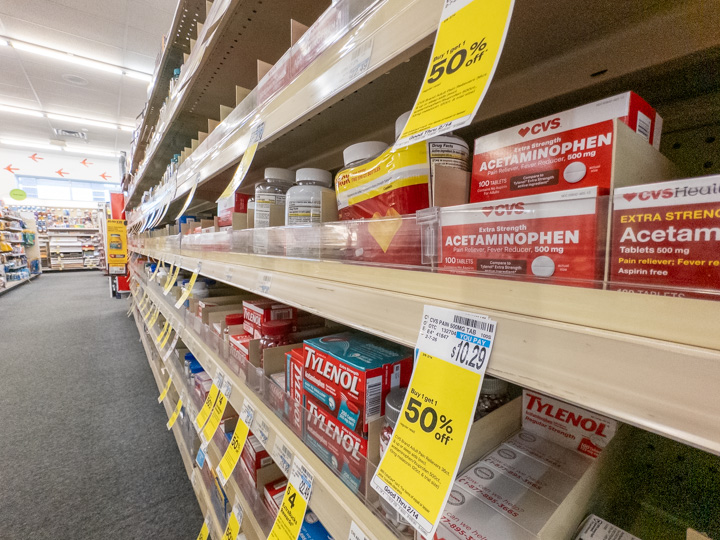
This quick and thorough analysis of patients will also determine the exact type and dosage of medicine based on their genomic makeup. Additionally, Sweet thinks that this will cut down on the cost of medicine.
Picture of medicine and their prices. Blacksburg, VA. Feb 13 2026.
Eventually, Sweet believes that AI will not only be able to identify diseases before they become noticeable to clinicians, but identify the risk levels of the patients. This will allow doctors to focus on higher-risk patients rather than putting efforts into curing those who may not need it. That is a point Sweet noted, the amount of overtreatment that is happening currently and how much money and how many materials are being wasted by it. He claimed that has been costly and can even be dangerous, and AI can help mitigate this problem.
“I think in efficiency in looking at information and potentially calling out what is not really relevant while looking for patterns, AI could help in following trends that could be really efficient for the practicing physician,” said Dr. Rebecca Pauly, vice dean of the Virginia Tech Carilion School of Medicine. “I think in some of the studies that have looked at, AI’s ability to interpret radiology has been quite efficient and accurate, as well as in reading EKGs. I look at it as an augmenting tool to what the physicians, time, energy, and mind can accomplish.”
According to the National Institutes of Health, by integrating AI into VR/AR technologies, the potential to boost radiological efficiency, improve diagnostic accuracy, and improve treatment planning exponentially exists.
“We have open notes so the patients can read their notes that the doctor writes, which is a very good way to communicate,” Sweet said. “And as you can imagine, the note that our AI scribe generates is easy to read, it’s organized, it’s pithy as opposed to what the doctor does with typos and doctor speak and all this imported crap. The modern note has become unintelligible to patients and families, but when you use AI to soften it up and make it helpful to the patients and the rest of the health care team, you make it better.
This efficiency that AI machines offer helps clinicians mitigate some of that clerical administrative burden that accompanies practicing medicine. The tedious recording of every patient’s data may be a thing of the past. Patients will be able to review their doctors’ written feedback much faster post-clinical session.
“There’s this concept in the broader house of the various medical specialties, where there’s a lot of burnout,” Sweet remarked. “Oftentimes, 40% of people who are burning out and are thinking about leaving medicine, which is very problematic because one, we actually need more healthcare providers around the country and especially in certain specialty areas.”
Sweet noted that of the 300 clinicians at the Virginia Tech Carilion School of Medicine’s Department of Internal Medicine there was a 48% burnout last year. Now, the burnout rate is at 38%. He credits this to the incorporation of AI in their workplace.
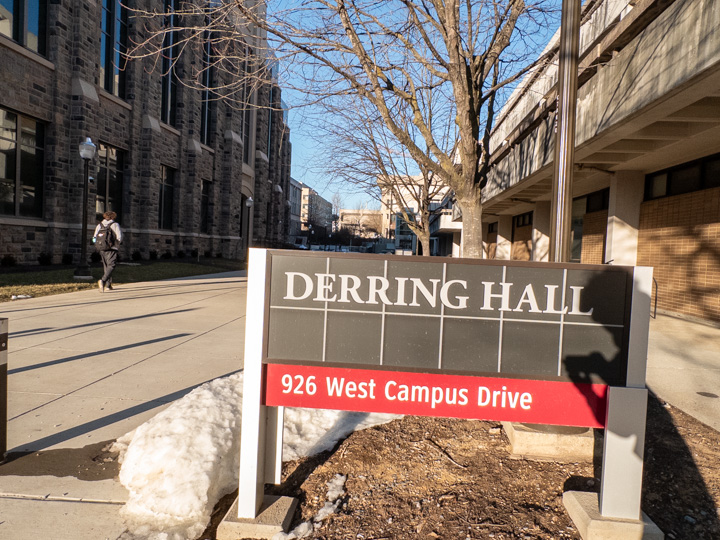
Picture of Derring Hall, one of the science focused buildings at Virginia Tech. Blacksburg, VA. Feb 13 2026.
Additionally, Sweet remarked about his wife. She is a busy family physician who sees patients all day long. When she incorporated AI into her work it saved her all her late nights of documentation and clinical work after a long day at the office. Even Sweet himself admitted that the use of ChatGPT has made his job much easier.
“We’ve used AI for API development processing, and it does fill some gaps of skills that you may not be super knowledgeable in,” said Dustin Womack, director of IT at the Virginia Tech Carilion School of Medicine. “I like to call it the microwave, you can put in and get the desired outcome, but you kind of miss the home cooked meal. You’re missing some of the steps in the processing and then long-term development and maintenance of a task or tool. I think that’s kind of important when we’re thinking about the risk and long-term usage of AI.”
AI is a rapidly developing and popular tool that humans will use for years and years to come. Although humans are starting to incorporate it into medical practices, patients still heavily rely on human clinicians for their medical needs. AI could heavily improve the medical industry and could change how humans go about seeking medical advice. It could also limit humans. Only time will tell.
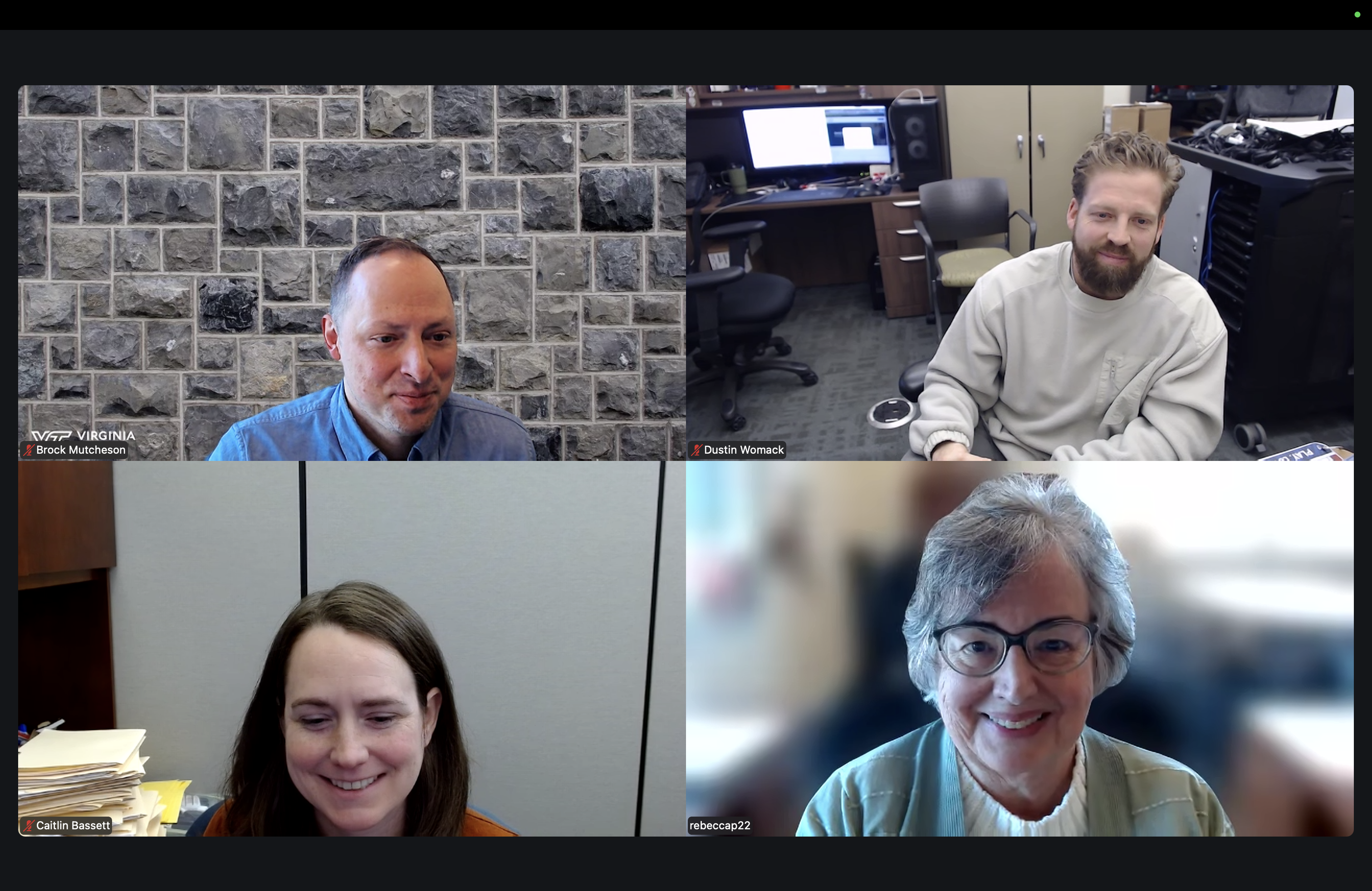
A zoom call with a group prioritized in data management from the Virginia Tech Carilion School of Medicine including Dr. Rebecca Pauly (bottom right) and Dustin Womack (top right). Roanoke, VA. Feb 12 2026.
As winter illnesses surge, a local epidemiologist claims that it is not the cold itself making people sick, but the crowding indoors and recycling of air that people often find themselves in during the winter months.
Many assume that dropping winter temperatures brings with it the flu season, increase in the common cold, and flare-ups in other health issues. With the high case rates of the influenza virus this past winter and sicknesses often flaring up during the colder months, questions arise about what role does cold weather actually play. During this time of year many other factors could be potential causes as well. From the large number of holidays with themes of coming together to celebrate, to the lack of outdoor areas for people to congregate during the colder months, the tight contact of the winter months could also be a factor. In addition to the rise of infectious diseases we see a rise of the effects of chronic diseases during this time.
Jason Deese, the District Epidemiologist with the New River Health District, sat down for an interview on Jan. 29 to explain how the cold winter weather actually affects the travel of infectious diseases and how the cold weather can trigger certain chronic diseases. And even though it is not his expertise, he was able to answer some questions on how the cold and winter weather can affect chronic diseases as well.
[Edited for Clarity]
How does cold weather affect the spread of illnesses like the flu or COVID-19?
It doesn’t necessarily directly affect it. It’s what we do in response to the cold air. So we’re sitting here in a closed space with limited air exchange, and when we breathe, talk, cough, sneeze, those droplets, or possibly aerosol particles concentrate in the air, and you’re more likely to end up breathing them in an infectious dose. That’s more or less how it happens.
There is some research out there about cool, dry air is maybe more efficient in carrying those particles so that they might remain suspended in the air for longer by outdoor air, the fact that it is cold air doesn’t make any difference. In fact, I’d say during covid, the best place you could be is outdoors in fresh air because when you are inside you are breathing concentrated droplets or aerosol.
Is it the cold itself or our winter behaviors that drive outbreaks?
The weather outside does not impact it directly. When you are indoors, your responsive cold air is to turn on heat, recycle the air to a certain degree so that we are losing heat. And you know, the most efficient model for keeping a place warm is basically to keep as much of that warm air trapped in the structure that you are in versus bringing in a whole bunch.
Does reduced sunlight and vitamin D impact immune function in winter?
Vitamin D does play a role in the body’s immune system, as many other nutritional components. Studies have shown, and I forget the exact percentage, people that live in North America during the winter do dip below what is considered optimal for vitamin D.
Are certain populations more vulnerable to winter-related infections?
In general, vulnerable would mean someone who’s got some type of issue with their immune system. The weaker immune systems tend to be in our older people. Additionally, very young people who haven’t established an immune system yet are vulnerable. People undergoing cancer therapy or therapy that suppresses the immune system, such as commercials on TV for Crohn’s disease or psoriasis, those are immune suppressing medications. Those types of things can make you a little bit more susceptible to various different types of infection. And that isn’t just necessarily during the winter, that will be at all times.
Here’s another example, the number one risk factor for bacterial meningitis infection is being a college freshman in a dormitory. Why do you think that is? Maybe not sanitary? What happens in the first few weeks of college. You’re interacting with a lot of new people. Maybe new study habits, burning the candle at both ends, partying at night, working in the day, wearing down your immune systems. Even people that start out perfectly healthy, can do things to themselves that can, you know, make them more susceptible to illness. Mono is another one that you know tends to spread in dorms with freshmen.
How does winter weather affect people with asthma and heart disease?
I’ll start out with heart disease, because when people go out in the cold, what happens? What happens to the blood vessels, they constrict and may lead to potential cardiac events? That’s fairly well established. In fact, when I was a kid, 12 or 13 years old, I saw a guy across the street shoveling his driveway and died of a heart attack. That’s actually fairly common. That plus doing activities that they’re not used to doing. If you did any shoveling snow in the last few days, it’s pretty vigorous activity. For some people, it is the first trip off the couch in a couple of weeks. It can put a lot of stress on the cardiovascular system.
There are many things that can precipitate asthma attacks in people, whether they be allergens, maybe dramatic changes in temperature. Some people stepping from a warm house and going and exercising out in the cold might precipitate asthma attacks. There’s potential there. It tends to be more likely in a cooler, drier environment.
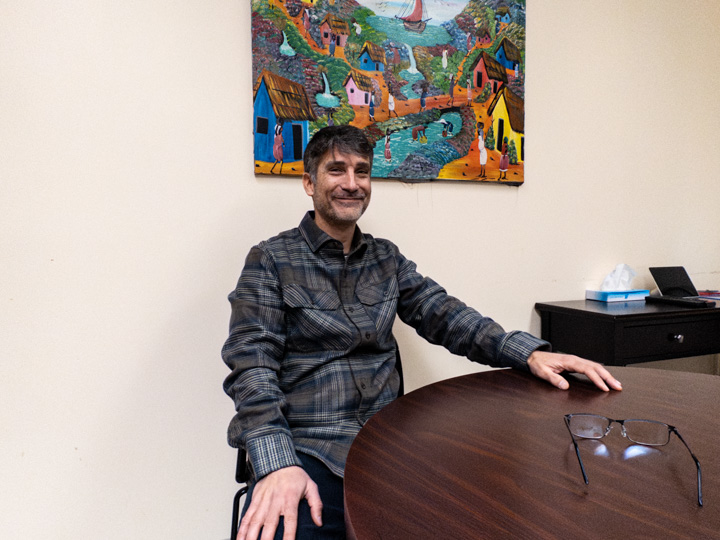
Jason Deese in the Montgomery Health District Office conference room. Christiansburg, Va. Jan 29 2026. Deese did not want to take a picture in the area he actually worked due to the worry that someone’s medical information could accidentally be out.

 > THE NEWS FEED <