
by Hayden McNeal, health & wellness reporter
AI is growing in more ways than thought possible and people in almost all fields are starting to use it, including clinical professionals. Professionals from Virginia Tech’s Carilion School of Medicine explain what can come out of the use of AI.
With the rising use of AI in medicine, there can be a number of different outcomes when it comes to using this technology. AI could analyze data points faster, significantly better determine what and how much medicine a patient needs, determine risk levels quicker, make clinical work more efficient, and lower burnout. It could also harm humans’ ability to complete steps in a task or tool.
“Now we can leverage AI to help us determine what is the best medical chemotherapeutic regimen for that patient in front of you, which may be a different chemotherapeutic regimen from the patient you saw yesterday,” said Professor Jon Sweet, chair of the Virginia Tech Carilion School of Medicine. “As genomic information becomes way cheaper and much more widely deployed, AI will help us figure out which medications might work best for a certain person.”
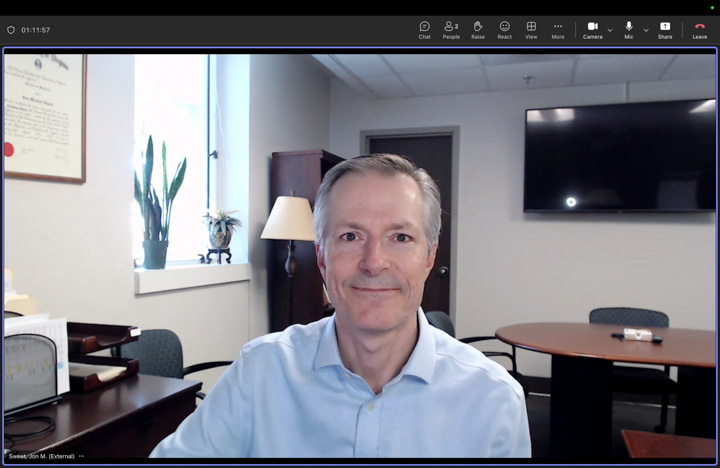
Sweet noted that with the help of AI, doctors will be able to analyze data points faster. Many electronic health records have some early warning signs with up to 70 data points to find an illness then alerts a clinician to start diagnostics or therapeutics. Sweet claimed with AI churning in the background, analyzing and identifying causes will most likely make it easier to efficiently make an accurate diagnosis from finding nodes during lung cancer screenings to detecting breast masses on mammograms.
This quick and thorough analysis of patients will also determine the exact type and dosage of medicine based on their genomic makeup. Additionally, Sweet thinks that this will cut down on the cost of medicine.
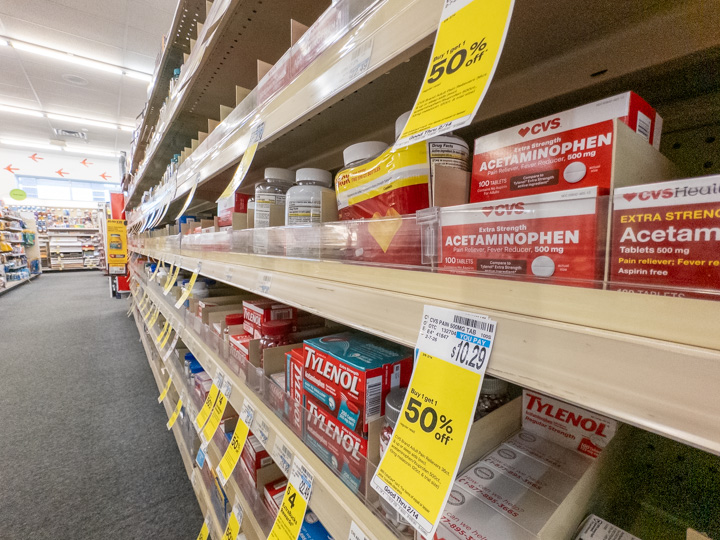
Eventually, Sweet believes that AI will not only be able to identify diseases before they become noticeable to clinicians, but identify the risk levels of the patients. This will allow doctors to focus on higher-risk patients rather than putting efforts into curing those who may not need it. That is a point Sweet noted, the amount of overtreatment that is happening currently and how much money and how many materials are being wasted by it. He claimed that has been costly and can even be dangerous, and AI can help mitigate this problem.
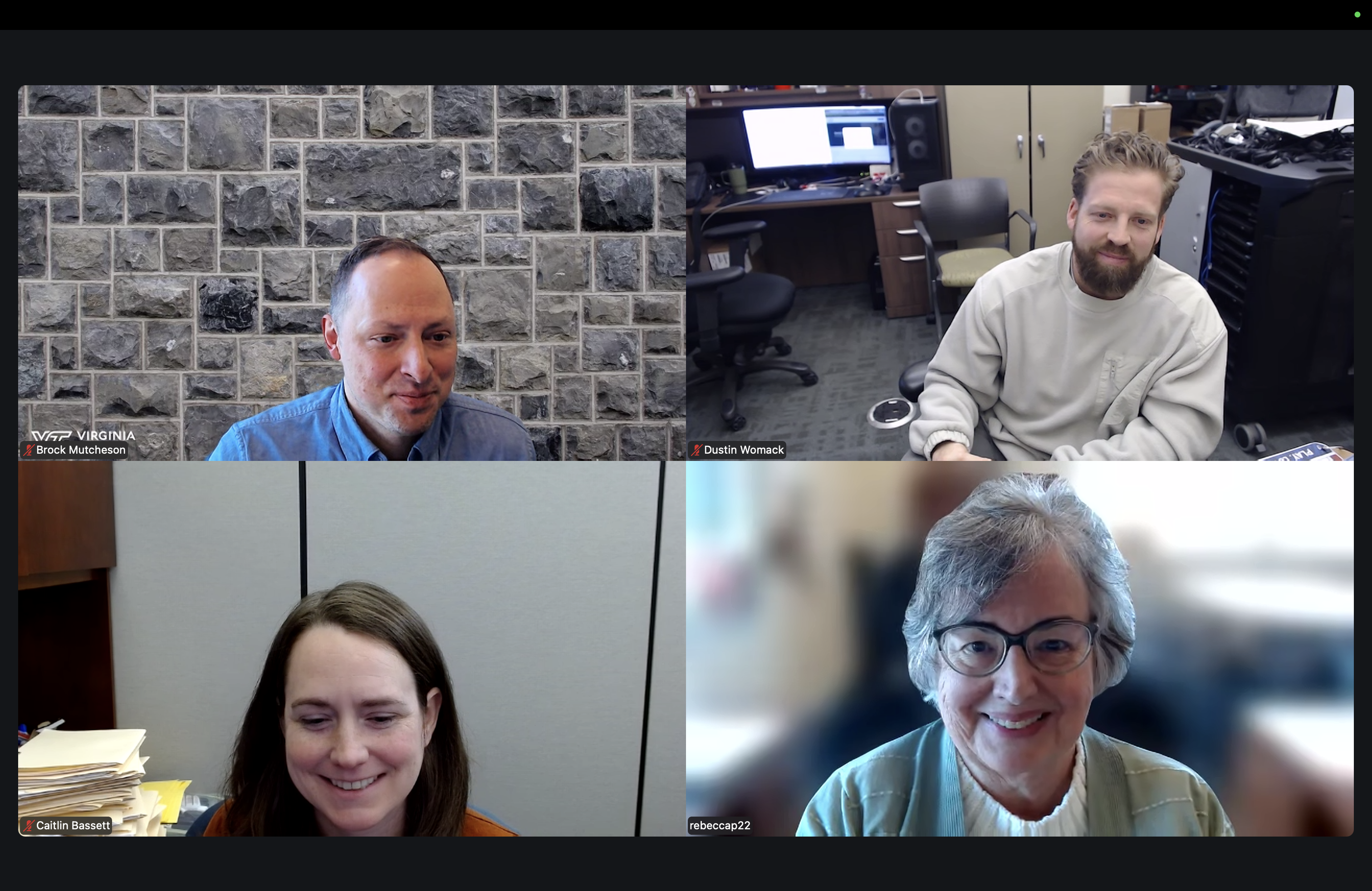
“I think in efficiency in looking at information and potentially calling out what is not really relevant while looking for patterns, AI could help in following trends that could be really efficient for the practicing physician,” said Dr. Rebecca Pauly, vice dean of the Virginia Tech Carilion School of Medicine. “I think in some of the studies that have looked at, AI’s ability to interpret radiology has been quite efficient and accurate, as well as in reading EKGs. I look at it as an augmenting tool to what the physicians, time, energy, and mind can accomplish.”
According to the National Institutes of Health, by integrating AI into VR/AR technologies, the potential to boost radiological efficiency, improve diagnostic accuracy, and improve treatment planning exponentially exists.
“We have open notes so the patients can read their notes that the doctor writes, which is a very good way to communicate,” Sweet said. “And as you can imagine, the note that our AI scribe generates is easy to read, it’s organized, it’s pithy as opposed to what the doctor does with typos and doctor speak and all this imported crap. The modern note has become unintelligible to patients and families, but when you use AI to soften it up and make it helpful to the patients and the rest of the health care team, you make it better.
This efficiency that AI machines offer helps clinicians mitigate some of that clerical administrative burden that accompanies practicing medicine. The tedious recording of every patient’s data may be a thing of the past. Patients will be able to review their doctors’ written feedback much faster post-clinical session.
“There’s this concept in the broader house of the various medical specialties, where there’s a lot of burnout,” Sweet remarked. “Oftentimes, 40% of people who are burning out and are thinking about leaving medicine, which is very problematic because one, we actually need more healthcare providers around the country and especially in certain specialty areas.”
Sweet noted that of the 300 clinicians at the Virginia Tech Carilion School of Medicine’s Department of Internal Medicine there was a 48% burnout last year. Now, the burnout rate is at 38%. He credits this to the incorporation of AI in their workplace.
Additionally, Sweet remarked about his wife. She is a busy family physician who sees patients all day long. When she incorporated AI into her work it saved her all her late nights of documentation and clinical work after a long day at the office. Even Sweet himself admitted that the use of ChatGPT has made his job much easier.
“We’ve used AI for API development processing, and it does fill some gaps of skills that you may not be super knowledgeable in,” said Dustin Womack, director of IT at the Virginia Tech Carilion School of Medicine. “I like to call it the microwave, you can put in and get the desired outcome, but you kind of miss the home cooked meal. You’re missing some of the steps in the processing and then long-term development and maintenance of a task or tool. I think that’s kind of important when we’re thinking about the risk and long-term usage of AI.”
AI is a rapidly developing and popular tool that humans will use for years and years to come. Although humans are starting to incorporate it into medical practices, patients still heavily rely on human clinicians for their medical needs. AI could heavily improve the medical industry and could change how humans go about seeking medical advice. It could also limit humans. Only time will tell.
 > THE NEWS FEED <