
By Deric Q. Allen, Politics & Government reporter
(Roanoke, Va) — The Harrison Museum of African American Culture had announced their relocation to Melrose Plaza in the latter part of last year. Recently, they announced that they will temporarily open their doors as they launch their “Next 40 Years Campaign.”
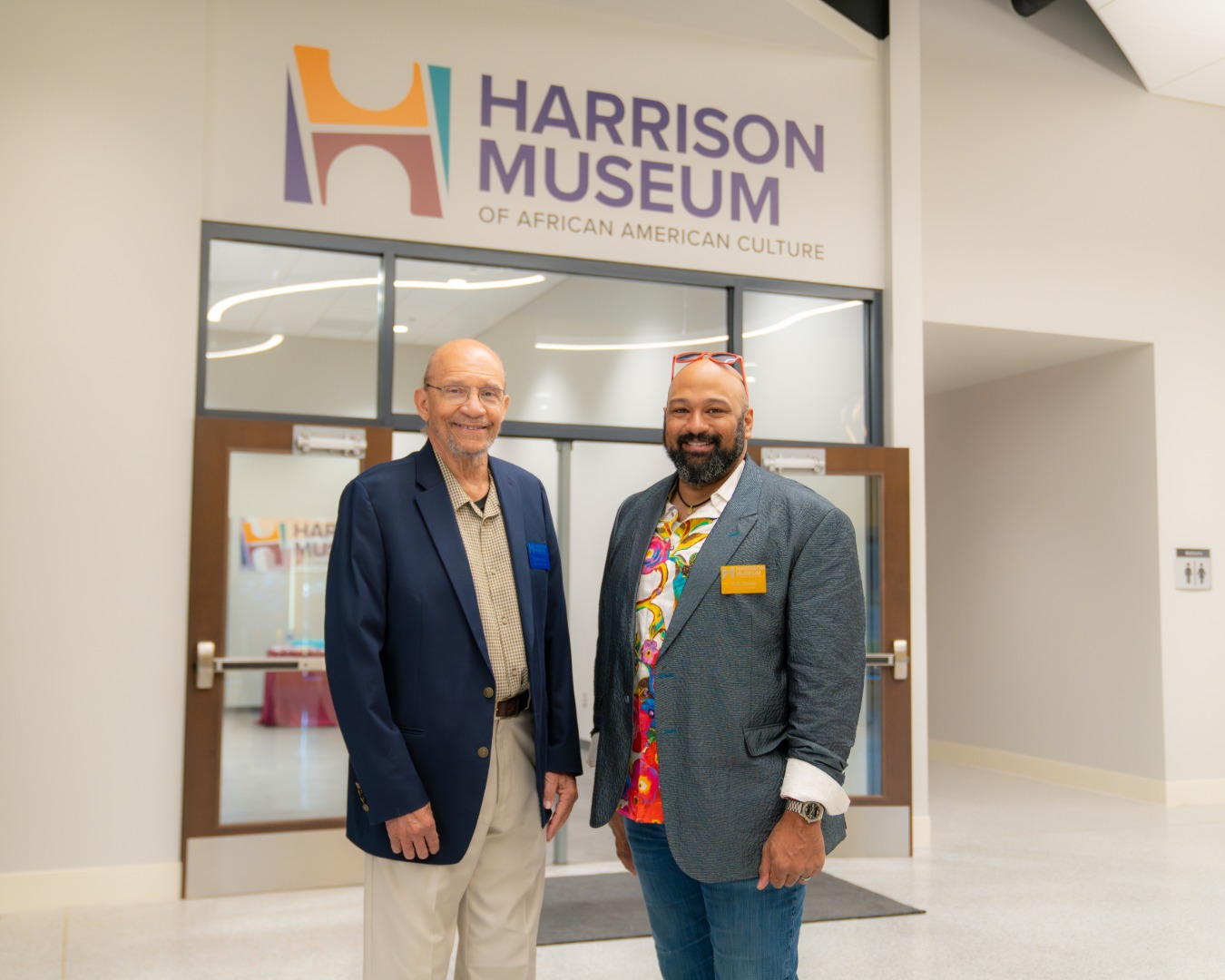
The long-established Harrison Museum of African American culture has been a staple of Downtown Roanoke for decades. After their initial move to Downtown Roanoke in 2013, the Harrison Museum will return to Northwest Roanoke in what Executive Director, Eric Beasley, calls a leadership defining move. The museum made the move last summer and aims to enhance Northwest Roanoke’s connection to the region’s cultural ecosystem. This “cultural ecosystem” will be on display in the Harrison Museum’s new thematic exhibits, which will be in rotation every six months. This rotational programming will ensure fresh and relevant content for visitors as well as enlighten them to some of the hidden history of the Roanoke and New River Valley. “We’re moving beyond traditional exhibits to create experiences that link historical objects with the real stories of people’s lives and show how those stories still matter today,” said E.B. Smith.
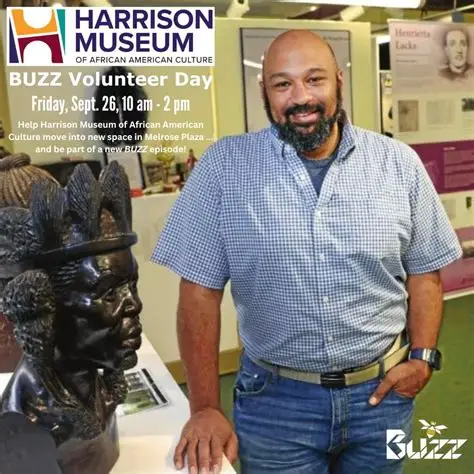
Eric Beasley is more than the Executive Director of the Harrison Museum, he is a well-traveled Thespian, who’s been introduced to many stories, artists, and histories that traverse the African diaspora. E.B. Smith remarked that, “I think all of that gives you a really nuanced understanding of migration, of how cultural priorities are so nuanced and varied, but also an understanding of how those things tie us together, of course those common threads really can be found regardless of where we’re coming from.”
Smith further commented in an online interview earlier this week, regarding the motives behind the moving of the Harrison Museum and what the local community can expect from the new and improved space. “There was a lot that went in to that discussion, but, when it really boils down I think – the museum had been down at Center of the Square for quite some time, and I think over the last several years in particular the focus of Center in the Square and how it was imagined to show up in terms of the cultural landscape of the city had been shifting. — It was a chance to move back to the neighborhood where the museum was founded, we’re back in the Northwest, so that was really cool to be back in community with folks.”
As the interview progressed, the topic of reparations presented itself, as well as the initiative to distribute potential funds to those affected by urban renewal in Gainsboro and Northeast Roanoke. This project is led by the city’s Equity and Empowerment Advisory Board chair, Angela Penn, and Mayor Joe Cobb. If the reparations effort were to be approved, Roanoke could join other cities such as Charlottesville, Asheville, and Spartanburg in the effort to make up for historical wrongdoing. Although this initiative is progressive, E.B. Smith has differing opinions on what this could mean for the Black community in Roanoke and how the Harrison Museum is contributing to the reparative efforts. “I mean, it’s yet to be seen what reparations and reparative action will look like, it’s not clear if that’s strictly financial, if it’s policy driven, y’know I don’t know what it’s going to look like. But I think all of this work that we do, on some level, is reparative. It’s all about healing, and from my perspective the most important thing that we can do is continue to inspire that imagination about the future.”
In addition to speaking to E.B. Smith, I was also able to set up an interview with Virginia Tech’s Dr. Michelle Moseley, who currently serves as the co-director of the Material Culture MA program alongside her colleague Lauren DiSalvo. Dr. Moseley’s current research projects focus on female collectors and collections and recently published an article titled “At Home in the Early Modern Dutch Dollhouse: Gender, Materiality, and Collecting in the Seventeenth-and Eighteenth-century” while under contract with Amsterdam University Press.
“I haven’t been to the new location yet but I’m aware of the new exhibition on Black community in medical history in Roanoke, which I think is going to be a great one. They do have a lot of photographs, a lot of archives, a lot of papers and these are important records for the community to understand Black History in the New River Valley and the contributions that this community has made to the larger scope of the NRV.” Dr. Moseley has been collecting for several years and has used what she’s collected to answer questions about the people who made them and what their culture is made up of.
To Dr. Moseley, these same questions can be asked and answered when viewing the collections that reside in the Harrison Museum. One archival object that Dr.Moseley is most excited about seeing is the Henrietta Lacks sculpture. Lacks, whose immortal cells are instrumental in the creation of various vaccines and restorative research projects, was a native of Roanoke. Moseley concluded with, “I know the Harrison Museum has had a big hand in promoting that particular work, as you know Henrietta Lacks is from Virginia, so she is such an important person, has such a big impact on our culture and I absolutely can’t wait to see that.”
 > THE NEWS FEED <