

By Madi Pool , health and wellness reporter
Participating in “Dry January” as seen on social media is on the rise for college students due to many health benefits stemming from the trend.
Dry January is taking all 31 days of January and choosing to not drink any alcohol. The trend has continued to rise in popularity due to social media and many influencers hopping on the trend. When doing the trend many have seen some significant benefits to their health and have even chosen to continue with sobriety for months after January or even the entire year.
The popularity in dry January brought to social media actually stems more from a fear of alcohol and some of its side effects that have been brought to light and caused concern for people especially those aging from 18 to 29 years old.
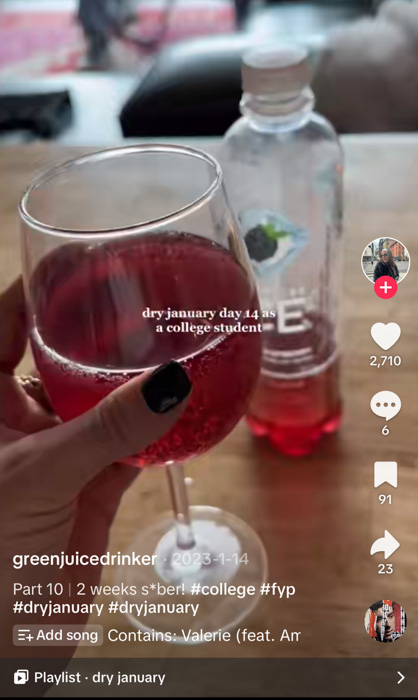

It is no secret that college students like to drink and have fun but they don’t always know what this alcohol can do to their body especially if it is a consistent part of their week. Research shows 80% of college students consume alcohol to some degree and estimated 50% of those students engage in binge drinking. They don’t realize what this may be doing to their body in the moment and down the road for their health in the future.
Taking just 31 days to not drink and show their body what it is capable of feeling has been rejuvenating for some as they have taken on dry January. Reagan Shiley, a student at Radford University is in her junior year and has decided to participate in dry January this year and she says the changes she has seen to her health have changed her mindset on drinking as a whole.
“I am currently on my 27th day of dry January and I have never felt better.” says Shiley. She feels she has been more energized, less bloated, more efficient, and even able to focus better due to cutting out alcohol. “I saw people on social media talking about a few health trends for the new year and I knew I wanted to participate in one to better myself and I felt this was the most obtainable for me.” Other trends like “75 Hard” or just “going to the gym more in the new year” are goals we see for everyone in the new year but dry January is one of the only long lasting trends society is seeing.
Students are able to learn a lot about themselves when participating in the trend as well as aspects they would not expect if they did not take on the trend. College students don’t realize how much of a social aspect there is to drinking or what some say “peer pressure” there is to drinking. Many students feel the need to drink because their peers are or because if everyone is drunk they can’t be the only sober ones. But by participating in the trend some have been able to see there is a balance and finding a healthy balance between the two is possible.
“A big concern for me going into this challenge was what my friends would think or say to me, and they did make comments or jokes at first but once they realized I still want to hangout with them and can still have fun without drinking they barely even noticed I wasn’t drinking with them.” says Shiley.
As more and more people participate and are able to see these health benefits more will be inclined to the trend and caring less about what their friends have to say. Dry January has shown that you can experience benefits like weight loss, better sleep, balanced mood, clearer skin, less acid reflux, better liver function and a lower risk for cancer. These are all essential to college students and perfect for the 18 to 29 age range.
Shiley states her favorite part to this whole trend “I think out of all the benefits I have seen from this trend my favorite has to be waking up knowing I don’t feel hungover or sluggish and can be productive with my day or my weekends.”
Shiley will continue participating and believes she will have no trouble making it to day 31 and claims she may even go longer or at least cut back on her alcohol habits once she does start drinking again. That is what the trend hopes people are able to take away from the experience. It is shown that about 75% of people who participate in the trend are able to complete it. But what is next after doing so? According to data, 25% of people who completed dry January reported reduced alcohol consumption even after the month was over. It was particularly noticeable in younger generations like Gen Z and specifically college students where participation in the trend is higher.
Dry January is not only for the young generation though, people of all ages have participated in the trend and are able to learn a lot about themselves from it. Katrina Lamberton, was 42 when she decided to take on the dry January trend in 2024. She said the trend saved her life for the better and she has still not had a drop of alcohol to this day over a year later. “I did dry January for more than just the physical benefits. I felt it was really good for my mental health as well.” says Lamberton. “I felt I had more control over my life when I stopped drinking, I made better decisions, I woke up feeling better about myself, and I got more done so I never felt a reason to go back to alcohol.”
 > THE NEWS FEED <